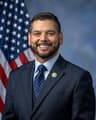
Raul Ruiz (D-CA)
Supporting the designation of the week of August 24 through August 28, 2026, as the fourth annual "National Community Health Worker Awareness Week".
A Democratic resolution with 14 Democratic cosponsors · See all 14 cosponsors
Last activity — Referred to the House Committee on Energy and Commerce.
In committee
Introduced and handed to a committee in the chamber it started in.
The committee holds it, and most bills are never heard from again. A hearing or a committee vote would be news; silence is the usual outcome, and it kills the bill without anyone voting against it.
Its path through Congress
- Introduced
- In Committee
A House resolution is the House speaking for itself: stating a position, honouring someone, or setting its own rules. Adopting it is the whole process. Once the House agrees to it, it is officially the House's word; it is not a law, so the Senate and the President have no part in it.
What this bill would do
This bill supports designating the week of August 24 through August 28, 2026, as the fourth annual National Community Health Worker Awareness Week. It highlights community health workers as frontline public health workers who are trusted members of their communities. The text notes that these workers act as a link between health and social services and the community. They help improve access to services, increase health knowledge, and provide cultural mediation. The House of Representatives supports the goals of this awareness week and recognizes the significant contributions these workers make to health and social care systems.
Yes· 3 of 30
- Scored +8
Would households on low incomes be better off under this?
Specifically targets underserved areas to reduce barriers to health and social services.
- Scored +7
Would immigrants be better off under this?
Cultural mediation and navigation of social services are critical for immigrant populations.
- Scored +7
Does this make health care easier to get in general?
The resolution recognizes workers who facilitate access to services and reduce barriers in underserved areas.
The opposite
No question was scored the opposite.
Who it would affect, and how
Potential Positive Impacts for People
-
Recognition and Awareness: Under Resolved, paragraphs (1), (2), and (3), the House of Representatives supports the goals of National Community Health Worker Awareness Week and encourages collaboration at all levels of government to raise awareness of their important role. This could benefit community health workers by bringing national attention to their valuable contributions to health and social care systems.
-
Support for Community Health Improvements: Under Resolved, paragraph (4), the bill supports the work of community health workers to improve the health of communities across the United States. This is a positive outcome because these workers provide care coordination, health education, direct screenings, and connect community members to necessary health and social services.
Potential Negative Impacts for People
- No Negative Impacts Identified: Based strictly on the provided text, there are no specific sections or provisions that outline negative consequences or burdens for individuals or groups of people in the United States.
Groups and Interests Ranking
Every group the model scored this bill for, from -10 to +10. Tap or hover a score for the reason it gave.
- Demographic And Interest Groups
- Would households on low incomes be better off under this? — Specifically targets underserved areas to reduce barriers to health and social services. Would immigrants be better off under this? — Cultural mediation and navigation of social services are critical for immigrant populations. Would Black Americans be better off under this? — Focuses on cultural competence and service delivery in underserved, diverse communities. Would Asian Americans be better off under this? — Increases awareness of culturally appropriate health education and mediation. Would Hispanic Americans be better off under this? — Explicitly mentions promotores de salud, who are central to Hispanic community health. Would Native Americans be better off under this? — Mentions community health representatives, often utilized in Native American healthcare. Would people in rural areas be better off under this? — Provides critical health links in rural areas with fewer traditional clinics. Would people with disabilities be better off under this? — Helps navigate health and social service systems to obtain necessary care. Would people in cities be better off under this? — Targets underserved urban pockets with limited healthcare access. Would women be better off under this? — Strong focus on maternal and child health services. Would children be better off under this? — Recognizes the role of CHWs in maternal and child health services. Would retired people be better off under this? — Supports management of chronic diseases and access to primary care. Would people over 65 be better off under this? — Helps seniors navigate complex health systems and manage chronic conditions. Would farmers be better off under this? — Improves health outreach in rural areas where farmers reside. Would LGBTQ people be better off under this? — Culturally competent care and system navigation are vital for LGBTQ health access. Would men be better off under this? — Improves general access to chronic disease management and screenings. Would people in middle age be better off under this? — Supports chronic disease intervention and primary care access. Would people in their twenties and thirties be better off under this? — Increases awareness of health navigation and primary care services. Would students be better off under this? — Increases awareness of health and social services available to students. Would white Americans be better off under this? — Broad improvements to public health systems benefit all citizens. Would middle-income households be better off under this? — General improvement in public health infrastructure can have broad positive effects.
- Healthcare
- Does this make health care easier to get in general? — The resolution recognizes workers who facilitate access to services and reduce barriers in underserved areas. Does this make mental health care easier to get? — Community health workers act as links to social and health services, potentially improving mental health access. Does this do more about addiction and overdose deaths? — Community health workers often provide the critical link for those needing addiction and recovery services. Does this make the country readier for the next outbreak? — Frontline community health workers are essential for public health outreach and immunization efforts.
- Social Issues And Justice
- Does this narrow racial gaps in how people are treated? — Community health workers bridge gaps in underserved areas and provide culturally competent care to diverse populations. Is this likely to lift people out of poverty? — By linking underserved communities to social services, these workers help address root causes of poverty. Is this likely to reduce homelessness? — Community health workers often act as navigators to social services including housing assistance.
- Environment Energy And Infrastructure
- Does this invest in rural communities? — Community health workers are critical for delivering health services to rural and isolated populations.
- Economy And Finance
- Is this likely to create jobs? — Increased awareness and recognition of community health workers may lead to expanded workforce opportunities.
- 11/5/2026
- 2 Cosponsors added.
- 10/26/2026
- 6 Cosponsors added.
- 9/24/2026
- 1 Cosponsor added.
- 9/21/2026
- 1 Cosponsor added.
- 9/16/2026
- 1 Cosponsor added.
- 9/14/2026
- 2 Cosponsors added.
- 8/31/2026
- 1 Cosponsor added.
- 4/16/2026
- Submitted in House
- Referred to the House Committee on Energy and Commerce.
3 bills Congress.gov lists as related to this one — companions in the other chamber, earlier versions, and bills this one absorbed or was folded into.
- 119-HRES-607: Supporting the designation of the week of August 25 through August 29, 2025, as the third annual "National Community Health Worker Awareness Week".
- 119-SRES-334: A resolution supporting the designation of the week of August 25 through August 29, 2025, as the third annual "National Community Health Worker Awareness Week".
- 119-SRES-906: A resolution supporting the designation of the week of August 24 through August 28, 2026, as the fourth annual "National Community Health Worker Awareness Week".
 Jake Auchincloss
Democrat · Massachusetts
 Gabe Amo
Democrat · Rhode Island
 Joyce Beatty
Democrat · Ohio
 Nanette Barragán
Democrat · California
 Gilbert Cisneros
Democrat · California
 Donald Davis
Democrat · North Carolina
 Adelita Grijalva
Democrat · Arizona
 Jonathan Jackson
Democrat · Illinois
 Sarah McBride
Democrat · Delaware
 Eleanor Norton
Democrat · District of Columbia
 Melanie Stansbury
Democrat · New Mexico
 Lateefah Simon
Democrat · California
 Mark Takano
Democrat · California
 Jill Tokuda
Democrat · Hawaii