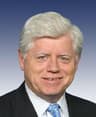
John Larson (D-CT)
Impeaching Donald J. Trump, President of the United States, for high crimes and misdemeanors.
A Democratic resolution with 2 Democratic cosponsors · See all 2 cosponsors
Last activity — Referred to the House Committee on the Judiciary.
In committee
Introduced and handed to a committee in the chamber it started in.
The committee holds it, and most bills are never heard from again. A hearing or a committee vote would be news; silence is the usual outcome, and it kills the bill without anyone voting against it.
Its path through Congress
- Introduced
- In Committee
A House resolution is the House speaking for itself: stating a position, honouring someone, or setting its own rules. Adopting it is the whole process. Once the House agrees to it, it is officially the House's word; it is not a law, so the Senate and the President have no part in it.
What this bill would do
This resolution formally impeaches Donald J. Trump, President of the United States, for high crimes and misdemeanors. It outlines multiple articles of impeachment detailing alleged violations of his constitutional oath of office. The charges cover a wide range of actions including war powers usurpation, militarization of domestic law enforcement, and unconstitutional detentions and deportations. Additional articles address retaliation against protected speech, abuse of the pardon power, crippling consumer and environmental programs, and bypassing Congress's power of the purse. The measure also cites contempt of Congress, perverting law enforcement for political persecution, suspending laws, flouting the Fourteenth Amendment, issuing specious national emergencies, and violating emoluments clauses.
Yes
No question was scored yes.
The opposite· 3 of 9
- Scored -6
Would immigrants be better off under this?
Immigrant communities and green card holders are reported to have been terrified by illegal detentions and deportations.
- Scored -5
Does this narrow racial gaps in how people are treated?
The resolution details alleged unconstitutional detentions and deportations targeting immigrants based on race and ethnicity.
- Scored -5
Does this protect what people are allowed to say in public life?
The text outlines presidential actions suppressing protected speech and retaliating against dissent.
Who it would affect, and how
Potential Positive Impacts for People
- As an expert legislative analyst, I must report that the provided text does not contain any specific sections or provisions that outline positive outcomes or benefits for individuals or groups of people in the United States.
Potential Negative Impacts for People
-
The text states in Article I that the President has initiated war and committed murder against unproved drug traffickers, engaged in war crimes, and blockaded Venezuela, which could risk blowback and endanger United States citizens.
-
Article II notes that the President has illegally declared national emergencies and summoned the National Guard to intimidate citizens from peaceful protest, which could burden individuals exercising their First Amendment rights.
-
According to Article III, the President has illegally detained and deported immigrants and citizens based on race, ethnicity, or political opposition, which has terrified immigrant communities and green card holders.
-
Article IV points out that the President has suppressed protected speech, fired or demoted investigators based on political opinions, and issued an executive order on K-12 schooling that impairs critical thinking.
-
Article V highlights that the President issued pardons to insurrectionists who aimed to overturn the 2020 election, including individuals convicted of violent crimes such as child sexual assault and rape, which could threaten public safety.
Groups and Interests Ranking
Every group the model scored this bill for, from -10 to +10. Tap or hover a score for the reason it gave.
- Demographic And Interest Groups
- Would immigrants be better off under this? — Immigrant communities and green card holders are reported to have been terrified by illegal detentions and deportations. Would Hispanic Americans be better off under this? — Article III highlights unconstitutional detentions and deportations impacting Hispanic and immigrant communities. Would households on low incomes be better off under this? — The resolution details the crippling of federal programs designed to protect consumers and the needy. Would children be better off under this? — Executive orders cited in the text regarding K-12 schooling are alleged to impair critical thinking. Would students be better off under this? — Curricular executive orders are described as an attempt to propagandize students rather than foster critical thinking. Would people in cities be better off under this? — Domestic law enforcement militarization specifically targeted major urban centers like Los Angeles, Chicago, and Portland.
- Social Issues And Justice
- Does this protect what people are allowed to say in public life? — The text outlines presidential actions suppressing protected speech and retaliating against dissent. Does this narrow racial gaps in how people are treated? — The resolution details alleged unconstitutional detentions and deportations targeting immigrants based on race and ethnicity.
- Environment Energy And Infrastructure
- Does this better protect air, water and wildlife? — The resolution notes the crippling and dismantling of agencies and programs designed to protect the environment.
- 4/13/2026
- 2 Cosponsors added.
- 4/6/2026
- Submitted in House
- Referred to the House Committee on the Judiciary.
 Steve Cohen
Democrat · Tennessee
 Bonnie Watson Coleman
Democrat · New Jersey