
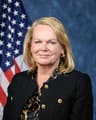
Kat Cammack (R-FL)
Supporting the designation of March 21, 2026, as "National Women in Agriculture Day".
A Republican resolution with 8 Democratic cosponsors · See all 9 cosponsors
Last activity — Referred to the House Committee on Agriculture.
In committee
Introduced and handed to a committee in the chamber it started in.
The committee holds it, and most bills are never heard from again. A hearing or a committee vote would be news; silence is the usual outcome, and it kills the bill without anyone voting against it.
Its path through Congress
- Introduced
- In Committee
A House resolution is the House speaking for itself: stating a position, honouring someone, or setting its own rules. Adopting it is the whole process. Once the House agrees to it, it is officially the House's word; it is not a law, so the Senate and the President have no part in it.
What this bill would do
This resolution supports designating March 21, 2026, as "National Women in Agriculture Day." It recognizes the significant role women play as producers, educators, and leaders within the agricultural industry. The text notes that women make up more than one-third of agricultural producers in the United States. It also highlights the contribution of women-led farms to total agriculture sales. Additionally, the resolution notes that 2026 is the International Year of the Woman Farmer. Finally, it encourages citizens to recognize and empower women to enter this high-demand field.
Yes· 3 of 9
- Scored +3
Would women be better off under this?
The resolution celebrates, recognizes, and encourages the empowerment of women in the agricultural field.
- Scored +2
Would farmers be better off under this?
The resolution acknowledges the significant economic and leadership contributions of women to the farming industry.
- Scored +2
Does this narrow the gap between how men and women are treated?
The resolution recognizes and seeks to empower women's roles as leaders and producers in agriculture.
The opposite
No question was scored the opposite.
Who it would affect, and how
Potential Positive Impacts for People
-
Recognition of female professionals: The resolution supports recognizing women working in agriculture as producers, educators, leaders, and mentors (Resolution section 2). This acknowledges their importance to the industry.
-
Workforce encouragement: The resolution encourages empowering women to enter the agricultural field, which is described as a high-demand field of work (Resolution section 3(B)(i)).
-
Leadership opportunities: The resolution encourages women to cultivate opportunities to lead within the industry (Resolution section 3(B)(ii)).
Potential Negative Impacts for People
- No negative impacts are identified in the provided text.
Groups and Interests Ranking
Every group the model scored this bill for, from -10 to +10. Tap or hover a score for the reason it gave.
- Demographic And Interest Groups
- Would women be better off under this? — The resolution celebrates, recognizes, and encourages the empowerment of women in the agricultural field. Would farmers be better off under this? — The resolution acknowledges the significant economic and leadership contributions of women to the farming industry. Would business owners be better off under this? — The resolution supports the leadership and entrepreneurial roles of women in the agricultural industry. Would people in rural areas be better off under this? — The resolution focuses on strengthening the agricultural workforce which is central to rural communities.
- Economy And Finance
- Does this make it easier to run a small business? — The resolution highlights the significant sales contributions of women-led farming operations. Is this likely to create jobs? — The resolution encourages empowering women to enter the high-demand agricultural field.
- Social Issues And Justice
- Does this narrow the gap between how men and women are treated? — The resolution recognizes and seeks to empower women's roles as leaders and producers in agriculture.
- Education And Technology
- Does this make it easier to use public money at a school other than the local one? — The resolution notes women's vital role in agricultural education and postsecondary science programs.
- Environment Energy And Infrastructure
- Does this invest in rural communities? — The resolution promotes women's involvement in the vital agricultural workforce and food resources.
- 3/24/2026
- 1 Cosponsor added.
- 3/19/2026
- Submitted in House
- Referred to the House Committee on Agriculture.
- 8 Cosponsors added.
 Sanford Bishop
Democrat · Georgia
 Shontel Brown
Democrat · Ohio
 Eric Crawford
Republican · Arkansas
 Angie Craig
Democrat · Minnesota
 Donald Davis
Democrat · North Carolina
 April McClain Delaney
Democrat · Maryland
 Chellie Pingree
Democrat · Maine
 Jimmy Panetta
Democrat · California
 Andrea Salinas
Democrat · Oregon