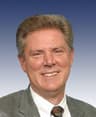
Frank Pallone (D-NJ)
Calling on the Secretary of Education to work with stakeholders to immediately eliminate race-based Native logos, mascots, and names from State educational institutions, and calling on State educational institutions and national sports franchises to cease the unsanctioned use of such logos, mascots, and names.
A Democratic resolution with no cosponsors
Last activity — Referred to the House Committee on Education and Workforce.
In committee
Introduced and handed to a committee in the chamber it started in.
The committee holds it, and most bills are never heard from again. A hearing or a committee vote would be news; silence is the usual outcome, and it kills the bill without anyone voting against it.
Its path through Congress
- Introduced
- In Committee
A House resolution is the House speaking for itself: stating a position, honouring someone, or setting its own rules. Adopting it is the whole process. Once the House agrees to it, it is officially the House's word; it is not a law, so the Senate and the President have no part in it.
What this bill would do
This resolution calls on the Secretary of Education to collaborate with stakeholders to remove race-based Native logos, mascots, and names from State educational institutions. It specifically addresses schools that use words and symbols that are described as harmful to Native Americans. The resolution also calls on State educational institutions and national sports franchises to stop the unsanctioned use of these names and logos. The goal is to overcome stereotypes and support the self-esteem of Native students. By doing so, the resolution aims to give Native students the same academic opportunities as their non-Native peers.
Yes· 3 of 4
- Scored +8
Would Native Americans be better off under this?
The bill aims to reduce the use of harmful stereotypes and increase the academic opportunity of Native students by removing race-based mascots.
- Scored +7
Does this narrow racial gaps in how people are treated?
The resolution seeks to eliminate race-based logos and mascots that the text describes as harmful and stereotypical to Native Americans.
- Scored +6
Would children be better off under this?
The resolution targets the removal of harmful symbols in kindergarten, elementary, and secondary schools to protect the self-esteem of Native youth.
The opposite
No question was scored the opposite.
Who it would affect, and how
Potential Positive Impacts for People
-
Elimination of race-based logos, mascots, and names: This action is intended to help overcome stereotypes and raise the self-esteem of Native students (Resolution Section 3).
-
Collaboration between the Secretary of Education and stakeholders: The Secretary is encouraged to work with Tribal Nations, Native American groups, and schools to eliminate harmful imagery (Resolution Section 2).
-
Reduction of harmful school environments: The resolution seeks to address the use of names and symbols in kindergarten, elementary, and secondary schools that are described as harmful to Native Americans (Resolution Section 2).
Potential Negative Impacts for People
- No specific negative impacts are explicitly detailed within the provided text.
Groups and Interests Ranking
Every group the model scored this bill for, from -10 to +10. Tap or hover a score for the reason it gave.
- Demographic And Interest Groups
- Would Native Americans be better off under this? — The bill aims to reduce the use of harmful stereotypes and increase the academic opportunity of Native students by removing race-based mascots. Would children be better off under this? — The resolution targets the removal of harmful symbols in kindergarten, elementary, and secondary schools to protect the self-esteem of Native youth. Would students be better off under this? — The resolution works to create a more equitable and less discriminatory environment for Native students in educational institutions.
- Social Issues And Justice
- Does this narrow racial gaps in how people are treated? — The resolution seeks to eliminate race-based logos and mascots that the text describes as harmful and stereotypical to Native Americans.
- 2/9/2026
- Submitted in House
- Referred to the House Committee on Education and Workforce.