
A Democratic bill with 1 Democratic cosponsor · See the cosponsor
Last activity — Referred to the House Committee on House Administration.
In committee
Introduced and handed to a committee in the chamber it started in.
The committee holds it, and most bills are never heard from again. A hearing or a committee vote would be news; silence is the usual outcome, and it kills the bill without anyone voting against it.
Its path through Congress
- Introduced
- In Committee
What this bill would do
The AI Ads Act amends the Federal Election Campaign Act of 1971. It clarifies that prohibitions against fraudulent misrepresentation of campaign authority and fraudulent solicitation of funds include content generated by artificial intelligence. The bill also extends these prohibitions to any person, regardless of whether they are a candidate. It expands the scope of who can be misrepresented to include candidates, political parties, and other real or fictitious political committees or organizations.
Yes· 3 of 9
- Scored +7
Does this make elections run better?
Combats AI-driven fraud and misrepresentation in federal elections.
- Scored +5
Does this give people more protection from unfair business practices?
Protects citizens from AI-generated fraudulent solicitations of funds.
- Scored +4
Does this put more rules on large technology companies?
Imposes legal constraints on the use of generative AI for fraudulent political purposes.
The opposite
No question was scored the opposite.
Who it would affect, and how
Potential Positive Impacts for People
-
Protection against AI fraud: By including content generated by artificial intelligence in the prohibition of fraudulent misrepresentation and solicitation of funds, the bill addresses modern technology used for deception (Section 2).
-
Broader accountability: The bill expands the prohibition of fraudulent misrepresentation to apply to any person, rather than just candidates or their agents, which increases who can be held responsible for such actions (Section 3(a)).
-
Increased protection for organizations: The bill extends protections against fraudulent misrepresentation to include political parties and other real or fictitious political committees or organizations (Section 3(a) and 3(b)).
Potential Negative Impacts for People
- No negative impacts for individuals or groups are explicitly mentioned in the provided text.
Groups and Interests Ranking
Every group the model scored this bill for, from -10 to +10. Tap or hover a score for the reason it gave.
- Governance And Ideology
- Does this make elections run better? — Combats AI-driven fraud and misrepresentation in federal elections. Does this limit or expose the money behind campaigns? — Strengthens laws against fraudulent solicitation of campaign funds using AI. Does this give the federal government more power? — Expands federal oversight of AI-generated content in political campaigns.
- Demographic And Interest Groups
- Would retired people be better off under this? — Reduces risk of AI-powered fraudulent solicitation of funds targeted at retirees. Would people over 65 be better off under this? — Protects older adults who may be more susceptible to AI-generated financial scams and fraud.
- Economy And Finance
- Does this give people more protection from unfair business practices? — Protects citizens from AI-generated fraudulent solicitations of funds.
- Education And Technology
- Does this put more rules on large technology companies? — Imposes legal constraints on the use of generative AI for fraudulent political purposes.
- National Security And Foreign Policy
- Does this better protect the country from computer attacks? — Addresses the use of generative AI as a tool for fraudulent activity and misinformation.
- Social Issues And Justice
- Does this protect the right to vote? — Reduces the potential for AI-driven misinformation to deceive voters regarding campaign authority.
- 9/14/2026
- 1 Cosponsor added.
- 7/30/2026
- Referred to the House Committee on House Administration.
- Introduced in House
2 bills Congress.gov lists as related to this one — companions in the other chamber, earlier versions, and bills this one absorbed or was folded into.
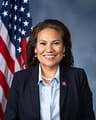 Veronica Escobar
Democrat · Texas