
James Himes (D-CT)
Lori Jackson-Nicolette Elias Domestic Violence Survivor Protection Act
A Democratic bill with 19 Democratic cosponsors · See all 19 cosponsors
Last activity — Referred to the House Committee on the Judiciary.
In committee
Introduced and handed to a committee in the chamber it started in.
The committee holds it, and most bills are never heard from again. A hearing or a committee vote would be news; silence is the usual outcome, and it kills the bill without anyone voting against it.
Its path through Congress
- Introduced
- In Committee
What this bill would do
This bill is called the Lori Jackson-Nicolette Elias Domestic Violence Survivor Protection Act. It aims to protect more victims of domestic violence by stopping their abusers from getting or having firearms and ammunition. The bill updates federal definitions to include dating partners and former dating partners under domestic violence court orders and firearm restrictions. It updates federal laws to prevent individuals subject to covered domestic violence court orders from buying or possessing firearms. Additionally, the bill creates a grant program for states, Indian tribes, and local governments to help them remove firearms from people who have active domestic violence protection orders against them.
Yes· 3 of 4
- Scored +9
Would women be better off under this?
The bill directly addresses and seeks to mitigate the high risk of firearm-related fatalities among women in domestic violence situations.
- Scored +8
Does this narrow the gap between how men and women are treated?
The bill expands protections for domestic violence victims, who are disproportionately women, by restricting firearm access for abusers.
- Scored +8
Does this put more limits on buying or owning guns?
The bill implements stricter firearm restrictions for individuals subject to domestic violence court orders.
The opposite· 3 of 5
- Scored -6
Would gun owners be better off under this?
The bill mandates the surrender of firearms and restricts possession for specific groups of owners.
- Scored -5
Does this protect the right to own guns?
The bill restricts firearm possession and ownership for specific individuals subject to court orders.
- Scored -4
Would men be better off under this?
The bill imposes significant firearm restrictions on individuals, which may disproportionately affect men involved in domestic disputes.
Who it would affect, and how
Potential Positive Impacts for People
-
Section 3: Expands the definition of an intimate partner and misdemeanor crimes of domestic violence to explicitly include dating partners and former dating partners. This is positive because it extends federal firearm restrictions to protect individuals in dating relationships who previously may not have been covered under older federal loopholes.
-
Sections 4 and 5: Updates federal law to prohibit anyone subject to a ``covered domestic violence court order'' from purchasing, receiving, or possessing firearms and ammunition. This provides a clearer and broader standard to keep guns out of the hands of dangerous abusers.
-
Section 6: Creates a grant program for states, local governments, and Indian tribes to help them safely remove, store, and return firearms from individuals who are subject to domestic violence protection orders. This provision also requires law enforcement and courts to partner with local domestic violence programs to help ensure the ongoing safety of victims.
Potential Negative Impacts for People
- Section 6: Requires individuals who are subject to a domestic violence protection order or a firearm surrender order to turn over all of their firearms and ammunition within 24 hours, and file a sworn declaration and itemized receipt with the court within 48 hours. This could be viewed as burdensome or restrictive for individuals who are served with these orders, particularly if they face logistical challenges in meeting the strict 24-hour and 48-hour deadlines.
Groups and Interests Ranking
Every group the model scored this bill for, from -10 to +10. Tap or hover a score for the reason it gave.
- Social Issues And Justice
- Does this narrow the gap between how men and women are treated? — The bill expands protections for domestic violence victims, who are disproportionately women, by restricting firearm access for abusers. Does this put more limits on buying or owning guns? — The bill implements stricter firearm restrictions for individuals subject to domestic violence court orders. Does this protect the right to own guns? — The bill restricts firearm possession and ownership for specific individuals subject to court orders.
- Governance And Ideology
- Does this give the federal government more power? — The bill expands federal firearms regulations and provides federal grants to influence state and local policies. Does this protect the right to fair treatment by the courts? — The bill places immediate firearm-related restrictions on individuals based on ex parte orders before a full hearing occurs. Does this leave more decisions to the states? — The bill sets a national standard that preempts varying state approaches to firearm possession for domestic violence cases.
- Demographic And Interest Groups
- Would women be better off under this? — The bill directly addresses and seeks to mitigate the high risk of firearm-related fatalities among women in domestic violence situations. Would gun owners be better off under this? — The bill mandates the surrender of firearms and restricts possession for specific groups of owners. Would men be better off under this? — The bill imposes significant firearm restrictions on individuals, which may disproportionately affect men involved in domestic disputes.
- 9/21/2026
- 1 Cosponsor added.
- 8/31/2026
- 1 Cosponsor added.
- 8/13/2026
- 2 Cosponsors added.
- 8/3/2026
- 4 Cosponsors added.
- 7/30/2026
- Referred to the House Committee on the Judiciary.
- 11 Cosponsors added.
- Introduced in House
One bill Congress.gov lists as related to this one — companions in the other chamber, earlier versions, and bills this one absorbed or was folded into.
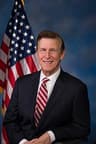 Donald Beyer
Democrat · Virginia
 Mark DeSaulnier
Democrat · California
 Maxwell Frost
Democrat · Florida
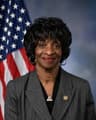 Valerie Foushee
Democrat · North Carolina
 Jahana Hayes
Democrat · Connecticut
 Pramila Jayapal
Democrat · Washington
 Jonathan Jackson
Democrat · Illinois
 Raja Krishnamoorthi
Democrat · Illinois
 Stephen Lynch
Democrat · Massachusetts
 Betty McCollum
Democrat · Minnesota
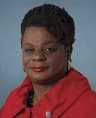 Gwen Moore
Democrat · Wisconsin
 Seth Moulton
Democrat · Massachusetts
 Eleanor Norton
Democrat · District of Columbia
 Scott Peters
Democrat · California
 Brittany Pettersen
Democrat · Colorado
 Mike Quigley
Democrat · Illinois
 Deborah Ross
Democrat · North Carolina
 Shri Thanedar
Democrat · Michigan
 Bonnie Watson Coleman
Democrat · New Jersey