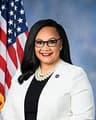
Nikema Williams (D-GA)
Polling Place Standards Act
A Democratic bill with 7 Democratic cosponsors · See all 7 cosponsors
Last activity — Referred to the House Committee on House Administration.
In committee
Introduced and handed to a committee in the chamber it started in.
The committee holds it, and most bills are never heard from again. A hearing or a committee vote would be news; silence is the usual outcome, and it kills the bill without anyone voting against it.
Its path through Congress
- Introduced
- In Committee
What this bill would do
The Polling Place Standards Act directs State and local election officials to follow new standards for Federal elections. It requires at least one covered polling place or vote center for every 2,000 registered voters in a State. These locations must be geographically diverse and not concentrated in a single area. Additionally, the bill mandates that polling places be adequately staffed to handle ballots safely, timely, and according to accessibility laws. These requirements do not apply if a State allows voters to use drop boxes or mail in their ballots. Finally, the bill establishes a grant program to help States meet these new standards.
Yes· 3 of 7
- Scored +7
Does this make elections run better?
The bill aims to standardize and improve the efficiency of the voting process through mandated staffing and location requirements.
- Scored +6
Does this make casting a ballot easier in practice?
Mandating specific polling place ratios and staffing requirements directly increases ease of voting access.
- Scored +5
Does this protect the right to vote?
The bill enhances voting access by mandating minimum polling place numbers and geographic diversity.
The opposite
- Scored -3
Does this leave more decisions to the states?
The bill imposes federal requirements on state-level election management.
Who it would affect, and how
Potential Positive Impacts for People
-
Increased Availability of Polling Locations: The bill requires at least one covered polling place or vote center for every 2,000 registered voters, which aims to ensure voters have access to voting sites (Section 321(a)).
-
Geographic Accessibility: By requiring that polling places are not concentrated in one area and are located in geographically diverse areas, the bill aims to spread access across the State (Section 321(b)).
-
Improved Voting Efficiency and Safety: The mandate for adequate staffing is intended to ensure ballots are processed in a timely manner, equipment and ballots are stored securely, and accessibility laws are followed (Section 321(d)(1)).
-
Reduced Wait Times: When determining if a location is adequately staffed, officials must consider whether the wait time for a voter to cast a ballot is 30 minutes or less (Section 321(d)(2)(A)(iii)).
-
Financial Support for Implementation: The creation of a grant program allows the Commission to award grants to States to help them carry out these new requirements (Section 298).
Potential Negative Impacts for People
- Exceptions to Requirements: The requirements for minimum polling places and geographic diversity do not apply to States that allow voters to cast ballots via drop boxes or by mail (Section 321(c)).
Groups and Interests Ranking
Every group the model scored this bill for, from -10 to +10. Tap or hover a score for the reason it gave.
- Social Issues And Justice
- Does this make casting a ballot easier in practice? — Mandating specific polling place ratios and staffing requirements directly increases ease of voting access. Does this protect the right to vote? — The bill enhances voting access by mandating minimum polling place numbers and geographic diversity.
- Demographic And Interest Groups
- Would people with disabilities be better off under this? — The bill mandates compliance with accessibility laws to ensure polling places are usable for all. Would households on low incomes be better off under this? — Ensuring polling places are local and available helps reduce barriers for low-income voters. Would people in rural areas be better off under this? — Requirements for geographic diversity and minimum polling locations may help increase access in rural areas.
- Governance And Ideology
- Does this make elections run better? — The bill aims to standardize and improve the efficiency of the voting process through mandated staffing and location requirements. Does this give the federal government more power? — The bill expands federal oversight of state and local election procedures through new standards and grants. Does this leave more decisions to the states? — The bill imposes federal requirements on state-level election management.
- 7/22/2026
- Referred to the House Committee on House Administration.
- 7 Cosponsors added.
- Introduced in House
 Yvette Clarke
Democrat · New York
 Shomari Figures
Democrat · Alabama
 Henry Johnson
Democrat · Georgia
 Eleanor Norton
Democrat · District of Columbia
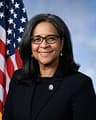 Marilyn Strickland
Democrat · Washington
 Terri Sewell
Democrat · Alabama
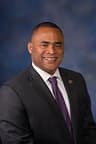 Marc Veasey
Democrat · Texas