
Josh Riley (D-NY)
Protecting Childcare from Private Equity Act
A Democratic bill with 5 Democratic cosponsors · See all 5 cosponsors
Last activity — Referred to the Committee on Financial Services, and in addition to the Committee on Education and Workforce, for a period to be subsequently determined by the Speaker, in each case for consideration of such provisions as fall within the jurisdiction of the committee concerned.
In committee
Introduced and handed to a committee in the chamber it started in.
The committee holds it, and most bills are never heard from again. A hearing or a committee vote would be news; silence is the usual outcome, and it kills the bill without anyone voting against it.
Its path through Congress
- Introduced
- In Committee
What this bill would do
This bill, known as the "Protecting Childcare from Private Equity Act," aims to regulate certain private funds that own childcare centers. It requires the Securities and Exchange Commission to collect information regarding the ownership, purchase, and sale of these childcare entities. The bill also establishes a 4-year period of restrictions on newly acquired childcare entities to prevent interest sales or specific capital distributions. Additionally, it mandates a study by the Comptroller General to examine how private equity ownership impacts childcare quality, availability, and costs. Finally, it requires an annual report from the Commission to Congress containing anonymized data.
Yes· 3 of 9
- Scored +5
Does this make what the government does easier for the public to see?
The bill mandates the collection and reporting of data regarding private equity ownership of childcare centers.
- Scored +5
Does this give people more protection from unfair business practices?
The bill increases transparency and limits capital extraction by large private funds in the childcare sector.
- Scored +4
Does this make child care cost less?
By limiting rapid capital extraction, the bill seeks to protect childcare quality, availability, and tuition costs.
The opposite· 3 of 4
- Scored -4
Would business owners be better off under this?
The bill places significant restrictions on how private equity funds can manage and exit childcare investments.
- Scored -4
Would people with substantial wealth be better off under this?
The restrictions on capital distributions and selling interests impact large-scale investors.
- Scored -4
Would the very wealthiest people be better off under this?
The bill limits financial flexibility for large private funds.
Who it would affect, and how
Potential Positive Impacts for People
-
Information Gathering on Ownership: The Securities and Exchange Commission will require covered private funds to provide information on the ownership, purchase, and sale of legal entities that provide childcare (Section 2(a)). This provides transparency regarding who owns these centers.
-
Restrictions on Capital Movement: For a 4-year period after a fund first controls a childcare entity, the fund cannot sell any interest in that entity, and the entity cannot make dividend payments, capital distributions, or share buybacks to the fund (Section 3(a)). This limits how funds can move money out of the childcare providers they control.
-
Research on Quality and Costs: The Comptroller General will conduct a study to determine the effects of private equity ownership on quality of care, availability of spots, tuition, and employee wages (Section 4(a)). This study aims to find how ownership affects these specific factors.
Potential Negative Impacts for People
- Restrictions on Financial Transactions: Under Section 3(a), covered private funds are prohibited from selling interests in a childcare entity or receiving dividend payments, capital distributions, or share buybacks for a 4-year period after gaining control. This places specific limitations on how these funds can manage their investments in the childcare sector.
Groups and Interests Ranking
Every group the model scored this bill for, from -10 to +10. Tap or hover a score for the reason it gave.
- Governance And Ideology
- Does this make what the government does easier for the public to see? — The bill mandates the collection and reporting of data regarding private equity ownership of childcare centers. Does this give the federal government more power? — The bill increases federal oversight through SEC data collection and a Comptroller General study.
- Demographic And Interest Groups
- Would children be better off under this? — The bill aims to protect the quality and availability of childcare for children. Would households on low incomes be better off under this? — Improved childcare availability and stability may benefit low-income families. Would middle-income households be better off under this? — Stabilizing childcare costs could benefit middle-class families. Would union members be better off under this? — The bill includes a study on the impact of ownership on employee wages. Would women be better off under this? — Stable childcare is often a significant factor in women's workforce participation. Would billionaires be better off under this? — The bill's limitations on capital movement directly affect large-scale private equity interests. Would business owners be better off under this? — The bill places significant restrictions on how private equity funds can manage and exit childcare investments. Would people with substantial wealth be better off under this? — The restrictions on capital distributions and selling interests impact large-scale investors. Would the very wealthiest people be better off under this? — The bill limits financial flexibility for large private funds.
- Economy And Finance
- Does this give people more protection from unfair business practices? — The bill increases transparency and limits capital extraction by large private funds in the childcare sector.
- Social Issues And Justice
- Does this make child care cost less? — By limiting rapid capital extraction, the bill seeks to protect childcare quality, availability, and tuition costs.
- 7/22/2026
- Referred to the Committee on Financial Services, and in addition to the Committee on Education and Workforce, for a period to be subsequently determined by the Speaker, in each case for consideration of such provisions as fall within the jurisdiction of the committee concerned.
- 5 Cosponsors added.
- Introduced in House
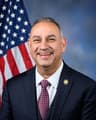 Gilbert Cisneros
Democrat · California
 Greg Casar
Democrat · Texas
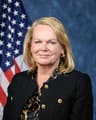 April McClain Delaney
Democrat · Maryland
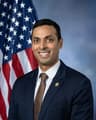 Suhas Subramanyam
Democrat · Virginia
 Eugene Vindman
Democrat · Virginia