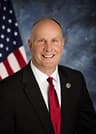
A Republican bill with 4 Democratic cosponsors · See all 10 cosponsors
Last activity — Ordered to be Reported in the Nature of a Substitute by the Yeas and Nays: 41 - 0.
Introduced, nothing more yet
Formally proposed, and not yet handed to a committee.
Nearly every bill is sent to a committee within days. Introduction alone is not a sign of support, of momentum, or of any likelihood of passing — any member may introduce any bill.
Its path through Congress
- Introduced
What this bill would do
The Medicare Access to Rural Anesthesiology Act seeks to amend the Social Security Act regarding payment for anesthesia services. It targets specific rural hospitals and critical access hospitals that employ or contract with an anesthesiologist. For these qualifying hospitals, Medicare Part A payments for anesthesia services provided by an anesthesiologist would be made on a reasonable cost basis. To qualify, hospitals must meet certain surgical volume requirements and ensure the anesthesiologist does not bill under Part B. This change aims to reclassify these services as part of inpatient hospital services rather than separate medical services.
Yes· 3 of 18
- Scored +6
Would people in rural areas be better off under this?
Directly targets rural and critical access hospitals to protect local anesthesia and surgical services.
- Scored +6
Does this make health care easier to get in general?
Ensures continued local access to surgical and anesthesia care in rural and critical access hospitals.
- Scored +5
Would people over 65 be better off under this?
Beneficial for older Medicare beneficiaries relying on rural and critical access hospitals.
The opposite
No question was scored the opposite.
Who it would affect, and how
Potential Positive Impacts for People
-
Payment Adjustment for Rural Hospitals: Certain rural and critical access hospitals will receive payment for anesthesia services on a reasonable cost basis rather than through Part B billing (Section 2(a)(1)). This change applies to hospitals that meet specific surgical volume limits and staffing requirements.
-
Streamlined Service Classification: Anesthesia services provided by anesthesiologists in these specific hospitals will be treated as part of inpatient hospital services (Section 2(a)(2)).
Potential Negative Impacts for People
-
Strict Eligibility Requirements for Hospitals: To receive the new payment structure, hospitals must prove they have a specific volume of surgical procedures, not exceeding 800 (or a number determined by the Secretary), in the previous year (Section 2(a)(1)(ii)).
-
Staffing Limitations: The benefit is limited to hospitals that employ or contract with no more than one full-time equivalent physician who is an anesthesiologist (Section 2(a)(1)(ii)(I)).
-
Billing Restrictions: Anesthesiologists must agree not to bill under Part B for the professional services they furnish at these hospitals to qualify for the arrangement (Section 2(a)(1)(ii)(I)(cc)).
Groups and Interests Ranking
Every group the model scored this bill for, from -10 to +10. Tap or hover a score for the reason it gave.
- Demographic And Interest Groups
- Would people in rural areas be better off under this? — Directly targets rural and critical access hospitals to protect local anesthesia and surgical services. Would retired people be better off under this? — Supports Medicare beneficiaries relying on rural healthcare facilities. Would people over 65 be better off under this? — Beneficial for older Medicare beneficiaries relying on rural and critical access hospitals. Would households on low incomes be better off under this? — Preserves local healthcare services for lower-income rural populations who face travel barriers. Would veterans be better off under this, taking everything together? — Often relies on rural health facilities where community care options are vital. Would children be better off under this? — Maintains pediatric surgical and anesthesia access in rural areas. Would farmers be better off under this? — Helps ensure agricultural communities maintain local hospital services. Would people in middle age be better off under this? — Supports local healthcare availability for middle-aged residents in rural communities. Would middle-income households be better off under this? — Ensures access to necessary surgical care without requiring long-distance travel. Would Native Americans be better off under this? — May benefit Native American populations living in remote rural areas with participating hospitals. Would people with disabilities be better off under this? — Preserves local medical access for individuals with mobility challenges in rural regions. Would women be better off under this? — Supports local access to obstetrical and general surgeries requiring anesthesia for women in rural areas. Would people in their twenties and thirties be better off under this? — Helps young families in rural areas access local medical procedures. Would business owners be better off under this? — Aids rural hospitals in managing operational and staffing costs.
- Healthcare
- Does this make health care easier to get in general? — Ensures continued local access to surgical and anesthesia care in rural and critical access hospitals. Does this put more money into Medicare, the health coverage for people over 65? — Provides reasonable cost-based Medicare Part A payments for specific rural hospital anesthesia services.
- Environment Energy And Infrastructure
- Does this invest in rural communities? — Helps sustain critical healthcare infrastructure in rural communities.
- Economy And Finance
- Is this likely to create jobs? — Supports the retention of anesthesiologists in qualifying rural hospitals.
- 9/14/2026
- 1 Cosponsor added.
- 9/10/2026
- 1 Cosponsor added.
- 9/8/2026
- 1 Cosponsor added.
- 9/3/2026
- 1 Cosponsor added.
- 9/2/2026
- 1 Cosponsor added.
- 8/3/2026
- 1 Cosponsor added.
- 7/15/2026
- Committee Consideration and Mark-up Session Held
- Ordered to be Reported in the Nature of a Substitute by the Yeas and Nays: 41 - 0.
- 7/14/2026
- 4 Cosponsors added.
- 7/13/2026
- Referred to the House Committee on Ways and Means.
- Introduced in House
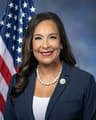 Monica De La Cruz
Republican · Texas
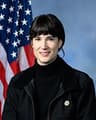 Marie Perez
Democrat · Washington
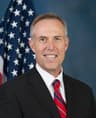 Jared Huffman
Democrat · California
 Daniel Meuser
Republican · Pennsylvania
 Gregory Murphy
Republican · North Carolina
 Barry Moore
Republican · Alabama
 Austin Scott
Republican · Georgia
 Thomas Suozzi
Democrat · New York
 Eric Sorensen
Democrat · Illinois
 David Valadao
Republican · California