
A Republican bill with 2 Democratic cosponsors · See all 6 cosponsors
Last activity — Received in the Senate and Read twice and referred to the Committee on Environment and Public Works.
In the other chamber's committee
Passed one chamber and has been handed to a committee in the other.
The committee decides whether it goes any further, and most bills that reach a committee never leave it. A committee that simply does nothing kills a bill without anyone ever voting against it, so no news from here is usually the news.
Its path through Congress
- Introduced
- Passed House 394–3
- In Senate committee
What this bill would do
This bill is known as the American Enrichment Deployment Act. It updates the licensing procedures for uranium enrichment facilities under the Atomic Energy Act of 1954. The bill permits the construction of a uranium enrichment facility before a license is officially issued, under the same terms and conditions as other fuel cycle facilities. It also requires the Nuclear Regulatory Commission to issue or revise regulations to carry out these changes within 180 days. Finally, the bill ensures that the National Environmental Policy Act of 1969, public hearing rights, and inspection authorities still apply.
Yes· 3 of 8
- Scored +4
Does this cut the pollution that drives climate change?
Facilitating the deployment of nuclear energy infrastructure supports low-carbon power generation alternatives.
- Scored +3
Would business owners be better off under this?
Energy companies and industrial contractors benefit from streamlined facility licensing and construction rules.
- Scored +3
Is this likely to grow the economy?
Streamlining the deployment of nuclear fuel cycle facilities supports industrial capacity and economic activity in the energy sector.
The opposite
No question was scored the opposite.
How the text last changed
Reported in House (11/5/2026), compared with Introduced in House. Each change is on the Text tab.
The newer version of the bill adjusts rules for licensing uranium enrichment facilities and clarifies the authority of the Nuclear Regulatory Commission. It changes the specific subsections replaced in the Atomic Energy Act of 1954 and adds provisions regarding environmental reviews, commission authority, and facility inspections. The deadline of not later than 180 days for the Nuclear Regulatory Commission to issue or revise regulations remains unchanged.
What Congress actually voted on
One recorded vote has been taken on this bill.
- The House: a fast-track vote, needing two-thirds to pass The House sets aside its normal procedure to move quickly: no amendments, little debate, and a two-thirds bar instead of a simple majority. It is used for measures expected to be uncontroversial, so a bill that fails here failed despite broad expectations that it would not. Passed 394 yes · 3 no
11/09/2026 · Roll call 316 · recorded as “On Motion to Suspend the Rules and Pass, as Amended”
Who it would affect, and how
Potential Positive Impacts for People
- Section 2: This section permits the construction of a uranium enrichment facility prior to the issuance of a license under the same terms and conditions as other fuel cycle facilities. This could be considered positive because it aims to enable the timely and safe deployment of such facilities.
Potential Negative Impacts for People
- Section 2: The provided text does not explicitly identify any negative consequences, burdens, specific sections, or provisions that would cause harm to individuals or groups of people in the United States.
Groups and Interests Ranking
Every group the model scored this bill for, from -10 to +10. Tap or hover a score for the reason it gave.
- Demographic And Interest Groups
- Would business owners be better off under this? — Energy companies and industrial contractors benefit from streamlined facility licensing and construction rules. Would union members be better off under this? — Industrial and construction unions may benefit from increased construction activity on nuclear fuel facilities. Would people in rural areas be better off under this? — Proximity to new industrial and energy developments can sometimes spur regional economic benefits for rural areas.
- Economy And Finance
- Is this likely to grow the economy? — Streamlining the deployment of nuclear fuel cycle facilities supports industrial capacity and economic activity in the energy sector. Is this likely to create jobs? — Updating licensing procedures for uranium enrichment facilities could stimulate domestic energy sector employment and project development.
- Environment Energy And Infrastructure
- Does this cut the pollution that drives climate change? — Facilitating the deployment of nuclear energy infrastructure supports low-carbon power generation alternatives. Does this invest in rural communities? — New energy facilities are frequently sited in rural or industrial areas, potentially bringing localized economic investment.
- Governance And Ideology
- Does this give the federal government more power? — The bill mandates updated regulations by the federal Nuclear Regulatory Commission within 180 days.
Handed to a committee to examine
What changed from Engrossed in House: No change to the wording. Only the printed details that record the bill’s progress, such as the heading and dates, are different.
The version one chamber actually passed
What changed from Reported in House: No change to the wording. Only the printed details that record the bill’s progress, such as the heading and dates, are different.
A committee approved it and sent it to the floor
What changed from Introduced in House
The newer version of the bill adjusts rules for licensing uranium enrichment facilities and clarifies the authority of the Nuclear Regulatory Commission. It changes the specific subsections replaced in the Atomic Energy Act of 1954 and adds provisions regarding environmental reviews, commission authority, and facility inspections. The deadline of not later than 180 days for the Nuclear Regulatory Commission to issue or revise regulations remains unchanged.
Each change
-
Section 2(a)(1) changes the Atomic Energy Act amendments to strike subsections (a) through (c) instead of just subsections (a) and (b), and adds a provision specifying that construction of a uranium enrichment facility before a license is issued is permitted under the same terms and conditions as other fuel cycle facilities.
-
Section 2(a) removes a provision that struck the word "construction" from the first sentence of subsection (c), and adds a rule of construction stating that the permission to begin construction does not modify the Nuclear Regulatory Commission's authority to issue or deny licenses.
-
Section 2(a) changes the paragraph numbering and updates the redesignation of subsections from (c) through (f) to be subsections (d) through (f) redesignated as (b) through (d).
-
Section 2(c)(1) removes a provision regarding the commission's authority to regulate construction and deny licenses for failing to meet construction requirements, and instead adds a provision stating that the National Environmental Policy Act of 1969 applies to the issuance of licenses for uranium enrichment facilities.
-
Section 2(c) adds a provision ensuring that the amendments do not affect the authority of the Nuclear Regulatory Commission to conduct inspections of uranium enrichment facilities.
Written by an AI model from a comparison of this version’s text with the one before it, not by a person. .
-
- 11/10/2026
- Received in the Senate and Read twice and referred to the Committee on Environment and Public Works.
- 11/9/2026
- Motion to reconsider laid on the table Agreed to without objection.
- Passed/agreed to in House: On motion to suspend the rules and pass the bill, as amended Agreed to by the Yeas and Nays: (2/3 required): 394 - 3 (Roll no. 316). (text: CR H6100-6101)
- On motion to suspend the rules and pass the bill, as amended Agreed to by the Yeas and Nays: (2/3 required): 394 - 3 (Roll no. 316). (text: CR H6100-6101)
- Considered as unfinished business. (consideration: CR H6108)
- At the conclusion of debate, the Yeas and Nays were demanded and ordered. Pursuant to the provisions of clause 8, rule XX, the Chair announced that further proceedings on the motion would be postponed.
- DEBATE - The House proceeded with forty minutes of debate on H.R. 9612.
- Considered under suspension of the rules. (consideration: CR H6100-6102)
- Mr. Latta moved to suspend the rules and pass the bill, as amended.
- 11/5/2026
- Reported (Amended) by the Committee on Energy and Commerce. H. Rept. 119-875.
- Placed on the Union Calendar, Calendar No. 772.
- 9/10/2026
- 1 Cosponsor added.
- 9/1/2026
- 1 Cosponsor added.
- 8/27/2026
- 1 Cosponsor added.
- 7/16/2026
- 1 Cosponsor added.
- 7/14/2026
- Subcommittee Consideration and Mark-up Session Held
- Forwarded by Subcommittee to Full Committee by Voice Vote.
- 7/9/2026
- Referred to the Subcommittee on Energy.
- Referred to the House Committee on Energy and Commerce.
- 2 Cosponsors added.
- Introduced in House
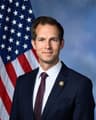 Jake Auchincloss
Democrat · Massachusetts
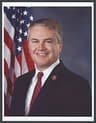 James Comer
Republican · Kentucky
 Erin Houchin
Republican · Indiana
 Mike Kennedy
Republican · Utah
 Victoria Spartz
Republican · Indiana
 Kim Schrier
Democrat · Washington