
A Democratic bill with 8 Democratic cosponsors · See all 8 cosponsors
Last activity — Referred to the Committee on Science, Space, and Technology, and in addition to the Committee on Transportation and Infrastructure, for a period to be subsequently determined by the Speaker, in each case for consideration of such provisions as fall within the jurisdiction of the committee concerned.
In committee
Introduced and handed to a committee in the chamber it started in.
The committee holds it, and most bills are never heard from again. A hearing or a committee vote would be news; silence is the usual outcome, and it kills the bill without anyone voting against it.
Its path through Congress
- Introduced
- In Committee
What this bill would do
This bill creates the Next Generation Shipping Innovation Program within the Department of Transportation to support zero-emission and clean alternative fuel vessels. The program provides grants, low-interest loans, and loan guarantees to eligible entities for research, design, development, and deployment projects. It also establishes the Next Generation Shipping Advisory Committee to advise the Secretary of Transportation and report on program progress. The legislation prioritizes projects that reduce emissions, protect the environment, utilize project labor or community benefits agreements, and support workforce training. Additionally, the bill explicitly prohibits the use of program funds for automated vessels or automated cargo handling systems.
Yes· 3 of 15
- Scored +8
Does this cut the pollution that drives climate change?
The bill funds the research and deployment of zero-emission vessels and clean alternative fuel technologies to mitigate maritime emissions.
- Scored +7
Would union members be better off under this?
The bill promotes project labor agreements and mandates prevailing wage rates for construction-related work.
- Scored +7
Does this put more money into scientific research?
The bill authorizes $1 billion annually to support research, design, and development of zero-emission vessel technologies.
The opposite
No question was scored the opposite.
Who it would affect, and how
Potential Positive Impacts for People
-
Support for Workers' Wages: Under Section 3(g), all laborers and mechanics working on construction, alteration, installation, or repair projects funded by the program must be paid prevailing wages determined by the Secretary of Labor, ensuring fair pay for workers.
-
Workforce Training and Development: Under Section 3(c)(8), the program prioritizes projects that support workforce training and development, including domestic maritime training centers of excellence and nonprofit institutions providing Coast Guard-approved training, which helps workers build valuable skills for new technology.
-
Environmental and Health Protections: Under Section 3(c)(7), the program prioritizes projects that advance environmental justice and actively engage communities affected by maritime transport, helping to protect local populations from pollution and environmental burdens.
-
Financial Support for Clean Technology: Under Section 3(b), the Secretary of Transportation can provide grants, low-interest loans, and loan guarantees to eligible entities, making it easier to develop and deploy cleaner, zero-emission shipping technologies.
Potential Negative Impacts for People
-
Exclusion of Foreign Governments: Under Section 2(7)(B), foreign governments are explicitly excluded from being eligible entities, which restricts participation in the funding program to domestic and approved U.S.-based groups.
-
Administrative Spending: Under Section 3(f), the Secretary of Transportation is permitted to use up to 10 percent of the funds made available for the program to cover administrative costs, which reduces the total amount of money going directly to actual projects and communities.
Groups and Interests Ranking
Every group the model scored this bill for, from -10 to +10. Tap or hover a score for the reason it gave.
- Demographic And Interest Groups
- Would union members be better off under this? — The bill promotes project labor agreements and mandates prevailing wage rates for construction-related work. Would business owners be better off under this? — The bill offers financial mechanisms like grants and low-interest loans to vessel owners and manufacturers. Would households on low incomes be better off under this? — The bill's emphasis on environmental justice aims to benefit communities often disproportionately affected by pollution. Would people in cities be better off under this? — The bill seeks to reduce environmental impacts in communities affected by maritime transport. Would Black Americans be better off under this? — The bill includes mandates to advance environmental justice in affected communities. Would Hispanic Americans be better off under this? — The bill includes mandates to advance environmental justice in affected communities.
- Environment Energy And Infrastructure
- Does this cut the pollution that drives climate change? — The bill funds the research and deployment of zero-emission vessels and clean alternative fuel technologies to mitigate maritime emissions. Does this better protect air, water and wildlife? — The bill encourages technologies that reduce underwater noise emissions and provide biofouling reduction benefits. Does this improve buses, trains and other public transport? — The bill funds the development of charging and fueling infrastructure for maritime transport.
- Economy And Finance
- Does this strengthen the rights of workers to organise? — The bill prioritizes projects that utilize project labor agreements and requires prevailing wages for construction and repair work. Does this make it easier to run a small business? — The bill provides financial assistance through grants and low-interest loans to various eligible entities including manufacturers.
- Education And Technology
- Does this put more money into scientific research? — The bill authorizes $1 billion annually to support research, design, and development of zero-emission vessel technologies. Does this make college cost less? — The bill supports workforce training through centers of excellence and nonprofit institutions.
- Governance And Ideology
- Does this make what the government does easier for the public to see? — The bill requires the Secretary to make all funding applications and selections publicly available on a website.
- Social Issues And Justice
- Does this narrow racial gaps in how people are treated? — The bill directs the Secretary to prioritize projects that advance environmental justice and engage affected communities.
- 9/28/2026
- 1 Cosponsor added.
- 7/16/2026
- 1 Cosponsor added.
- 7/15/2026
- 1 Cosponsor added.
- 6/25/2026
- Referred to the Committee on Science, Space, and Technology, and in addition to the Committee on Transportation and Infrastructure, for a period to be subsequently determined by the Speaker, in each case for consideration of such provisions as fall within the jurisdiction of the committee concerned.
- 5 Cosponsors added.
- Introduced in House
One bill Congress.gov lists as related to this one — companions in the other chamber, earlier versions, and bills this one absorbed or was folded into.
 Suzanne Bonamici
Democrat · Oregon
 André Carson
Democrat · Indiana
 Sean Casten
Democrat · Illinois
 Troy Carter
Democrat · Louisiana
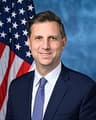 Seth Magaziner
Democrat · Rhode Island
 Kevin Mullin
Democrat · California
 Eleanor Norton
Democrat · District of Columbia
 Debbie Wasserman Schultz
Democrat · Florida