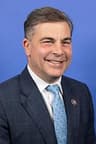
Mike Carey (R-OH)
Save Our Pedestrians Act of 2026
A Republican bill with 1 Democratic cosponsor · See the cosponsor
Last activity — Referred to the House Committee on Transportation and Infrastructure.
In committee
Introduced and handed to a committee in the chamber it started in.
The committee holds it, and most bills are never heard from again. A hearing or a committee vote would be news; silence is the usual outcome, and it kills the bill without anyone voting against it.
Its path through Congress
- Introduced
- In Committee
What this bill would do
The "Save Our Pedestrians Act of 2026" aims to amend title 23 of the United States Code. It directs the Secretary of Transportation to mandate that States set aside specific funds for highway safety. These funds must be used for improvement projects intended to lower injuries and deaths at high-risk pedestrian crossings. High-risk crossings are defined as those with a high frequency of incidents between motor vehicles and pedestrians. This requirement would apply to funds apportioned to a State starting in fiscal year 2027 and every year after.
Yes
- Scored +5
Does this repair or build roads and bridges?
The bill mandates that states use funds for highway safety improvement projects at high-risk crossings.
- Scored +3
Would people in cities be better off under this?
The bill encourages consultation with local governments to identify high-risk pedestrian crossings, which are frequent in urban areas.
The opposite
No question was scored the opposite.
Who it would affect, and how
Potential Positive Impacts for People
-
Reduced Injuries and Fatalities: The bill requires that 5 percent of certain funds be spent on highway safety improvement projects designed to reduce the number of injuries and fatalities at high-risk pedestrian crossings (Section 2, subsection m(1)).
-
Targeted Safety Improvements: The bill focuses resources on "high-risk pedestrian crossings," which are locations identified by the State as having a high frequency of injuries or fatalities resulting from incidents between motor vehicles and pedestrians (Section 2, subsection m(2)).
-
Local Collaboration: The identification of high-risk areas involves consultation between the State and units of local government (Section 2, subsection m(2)).
Potential Negative Impacts for People
- No negative impacts or burdens are explicitly mentioned in the provided text.
Groups and Interests Ranking
Every group the model scored this bill for, from -10 to +10. Tap or hover a score for the reason it gave.
- Environment Energy And Infrastructure
- Does this repair or build roads and bridges? — The bill mandates that states use funds for highway safety improvement projects at high-risk crossings.
- Demographic And Interest Groups
- Would people in cities be better off under this? — The bill encourages consultation with local governments to identify high-risk pedestrian crossings, which are frequent in urban areas.
- 6/24/2026
- Referred to the House Committee on Transportation and Infrastructure.
- 1 Cosponsor added.
- Introduced in House
 Emilia Sykes
Democrat · Ohio