
A Democratic bill with 4 Democratic cosponsors · See all 4 cosponsors
Last activity — Referred to the House Committee on Energy and Commerce.
In committee
Introduced and handed to a committee in the chamber it started in.
The committee holds it, and most bills are never heard from again. A hearing or a committee vote would be news; silence is the usual outcome, and it kills the bill without anyone voting against it.
Its path through Congress
- Introduced
- In Committee
What this bill would do
This bill, known as the "Reproductive Health Care Training Act of 2026," establishes an education program to expand training and access to abortion care. The Secretary of Health and Human Services, through the Health Resources and Services Administration, will award grants or contracts to eligible entities. These entities include accredited health professions schools and various healthcare safety net providers. The program aims to expand education for students, residents, and advanced practice clinicians in covered States. It also seeks to prepare these individuals to serve as abortion providers. The act authorizes $25,000,000 for each fiscal year from 2027 through 2031.
Yes· 3 of 13
- Scored +8
Would women be better off under this?
The bill expands access to and training for reproductive health services including abortion care.
- Scored +8
Does this make abortion easier to get?
The bill establishes a $25,000,000 annual program to expand training and clinical access for abortion care.
- Scored +7
Does this make health care easier to get in general?
The bill aims to increase access to care by training more providers and using telehealth technologies.
The opposite
No question was scored the opposite.
Who it would affect, and how
Potential Positive Impacts for People
-
Expanded Training and Access: The program aims to expand and support education for students, residents, or advanced practice clinicians to serve as abortion providers (Section 2(a)).
-
Support for Underrepresented Groups: The bill prioritizes institutions that are minority serving or provide training to increase underrepresented minority health professions (Section 2(d)(3)).
-
Focus on Underserved Communities: Funds can be used to develop training that includes care for racial and ethnic minority groups, people with disabilities, Tribal, and medically underserved communities (Section 2(e)(2)(A)).
-
Improved Access via Technology: The program supports the use of telehealth technologies and practices related to abortion care (Section 2(e)(2)(C)).
-
Financial Assistance for Trainees: The act allows for the provision of scholarships or stipends to health care students, residents, or advanced practice clinicians pursuing training in abortion care (Section 2(e)(7)).
-
Increased Provider Recruitment: The bill includes activities to improve the recruitment and retention of health care students and advanced practice clinicians from medically underserved communities (Section 2(e)(4)).
Potential Negative Impacts for People
- No negative impacts or burdens are explicitly stated in the provided text.
Groups and Interests Ranking
Every group the model scored this bill for, from -10 to +10. Tap or hover a score for the reason it gave.
- Demographic And Interest Groups
- Would women be better off under this? — The bill expands access to and training for reproductive health services including abortion care. Would Native Americans be better off under this? — The bill includes specific provisions to address the care needs of Tribal communities. Would Black Americans be better off under this? — The bill prioritizes training for underrepresented minority health professions. Would Hispanic Americans be better off under this? — The bill prioritizes training for underrepresented minority health professions. Would households on low incomes be better off under this? — The bill targets training and care for medically underserved communities which often include low-income populations. Would people with disabilities be better off under this? — The bill explicitly includes the needs of people with disabilities in its training and access objectives.
- Healthcare
- Does this make abortion easier to get? — The bill establishes a $25,000,000 annual program to expand training and clinical access for abortion care. Does this make health care easier to get in general? — The bill aims to increase access to care by training more providers and using telehealth technologies.
- Social Issues And Justice
- Does this narrow racial gaps in how people are treated? — The bill prioritizes institutions that serve underrepresented minority health professions and focuses on care for racial and ethnic minority groups. Does this expand the rights of people with disabilities? — The bill includes specific training and addressing challenges related to care for people with disabilities. Is this likely to lift people out of poverty? — The bill provides scholarships and stipends to health care students pursuing specialized training.
- Education And Technology
- Does this make college cost less? — The bill allows for the provision of scholarships or stipends to students pursuing specific medical training. Does this get reliable internet to more people? — The bill supports the use of telehealth technologies to expand access to care.
- 6/24/2026
- Referred to the House Committee on Energy and Commerce.
- 4 Cosponsors added.
- Introduced in House
One bill Congress.gov lists as related to this one — companions in the other chamber, earlier versions, and bills this one absorbed or was folded into.
 Lizzie Fletcher
Democrat · Texas
 Kelly Morrison
Democrat · Minnesota
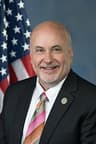 Mark Pocan
Democrat · Wisconsin
 Kim Schrier
Democrat · Washington