
Lateefah Simon (D-CA)
Safeguarding American Families and Expanding Social Security Act of 2026
A Democratic bill with 4 Democratic cosponsors · See all 4 cosponsors
Last activity — Referred to the Committee on Ways and Means, and in addition to the Committee on Education and Workforce, for a period to be subsequently determined by the Speaker, in each case for consideration of such provisions as fall within the jurisdiction of the committee concerned.
In committee
Introduced and handed to a committee in the chamber it started in.
The committee holds it, and most bills are never heard from again. A hearing or a committee vote would be news; silence is the usual outcome, and it kills the bill without anyone voting against it.
Its path through Congress
- Introduced
- In Committee
What this bill would do
This bill, titled the "Safeguarding American Families and Expanding Social Security Act of 2026," aims to improve retirement security for American families. It proposes increasing Social Security benefits for current and future beneficiaries while strengthening the system for future generations. The legislation changes how taxable wages and self-employment income are determined above the contribution and benefit base after 2025. It also adjusts the primary insurance amount formula and includes surplus earnings in benefit determinations. Additionally, the bill mandates the use of a new Consumer Price Index for Elderly Consumers to compute cost-of-living increases.
Yes· 3 of 8
- Scored +9
Would people over 65 be better off under this?
The bill increases Social Security benefits and utilizes a specialized Consumer Price Index for Elderly Consumers for cost-of-living adjustments.
- Scored +9
Would retired people be better off under this?
The bill increases benefit amounts and adjusts cost-of-living calculations specifically for those in early retirement age.
- Scored +8
Does this strengthen Social Security?
The bill increases benefits through a higher percentage factor for low earners, includes surplus earnings, and adjusts bend points.
The opposite
No question was scored the opposite.
Who it would affect, and how
Potential Positive Impacts for People
-
Increased benefits for the lowest earners: The bill increases the percentage factor used for the lowest portion of earnings from 90 percent to 95 percent (Section 3(a)).
-
Benefit increases through surplus earnings: The act includes 5 percent of an individual's surplus average indexed monthly earnings in the determination of primary insurance amounts (Section 3(a)(1)(A)(iv)).
-
Adjustments for future eligibility: For individuals becoming eligible for benefits in years after 2030, the bill provides a specific schedule for increasing the amount established for bend points (Section 3(a)(2)(B)(iii)).
-
Protection for existing beneficiaries: The bill includes a provision to recompute primary insurance amounts for individuals who became eligible before 2026, ensuring that if the new calculation is lower, the original higher amount still applies (Section 3(c)(3)(D)).
-
Tailored cost-of-living adjustments: By using a "Consumer Price Index for Elderly Consumers," cost-of-living increases will be based on expenditures typical for individuals in early retirement age (Section 4(a) and Section 4(b)(1)).
Potential Negative Impacts for People
- Changes to taxable wages and self-employment income: The bill introduces an "applicable percentage" for determining taxable wages and self-employment income above the contribution and benefit base, which starts at 80 percent in 2026 and decreases by 20 percentage points annually until it reaches 0 percent in 2030 (Section 2(a)(1)(A) and Section 2(b)(1)(A)).
Groups and Interests Ranking
Every group the model scored this bill for, from -10 to +10. Tap or hover a score for the reason it gave.
- Demographic And Interest Groups
- Would retired people be better off under this? — The bill increases benefit amounts and adjusts cost-of-living calculations specifically for those in early retirement age. Would people over 65 be better off under this? — The bill increases Social Security benefits and utilizes a specialized Consumer Price Index for Elderly Consumers for cost-of-living adjustments. Would households on low incomes be better off under this? — The bill raises the percentage factor for the lowest portion of earnings used to determine benefits. Would business owners be better off under this? — The bill reduces the taxable portion of self-employment income above the contribution base. Would high-income households be better off under this? — The bill reduces the portion of high wages and self-employment income subject to Social Security taxes.
- Social Issues And Justice
- Does this strengthen Social Security? — The bill increases benefits through a higher percentage factor for low earners, includes surplus earnings, and adjusts bend points.
- Economy And Finance
- Does this cut taxes for small businesses? — The bill reduces the percentage of taxable wages and self-employment income subject to Social Security taxes for those earning above the contribution base. Is this likely to grow the economy? — By reducing the payroll tax burden on high earners, the bill may increase disposable income for growth.
- 7/21/2026
- 1 Cosponsor added.
- 7/20/2026
- 1 Cosponsor added.
- 7/16/2026
- 2 Cosponsors added.
- 6/23/2026
- Referred to the Committee on Ways and Means, and in addition to the Committee on Education and Workforce, for a period to be subsequently determined by the Speaker, in each case for consideration of such provisions as fall within the jurisdiction of the committee concerned.
- Introduced in House
One bill Congress.gov lists as related to this one — companions in the other chamber, earlier versions, and bills this one absorbed or was folded into.
 Christopher Deluzio
Democrat · Pennsylvania
 Ilhan Omar
Democrat · Minnesota
 Shri Thanedar
Democrat · Michigan
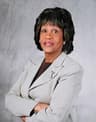 Maxine Waters
Democrat · California