
A Republican bill with 16 Republican cosponsors · See all 16 cosponsors
Last activity — Placed on the Union Calendar, Calendar No. 610.
Cleared committee, waiting for its first floor vote
A committee approved it and it is on the calendar of the chamber it started in.
This is further than most bills get, and still no promise of a vote: the calendar is a queue, and the majority leadership decides what is called. A bill can sit here until the Congress ends.
Its path through Congress
- Introduced
- On Calendar
What this bill would do
H.R. 941, known as the Small LENDER Act, amends the Equal Credit Opportunity Act regarding small business lending data collection. It gives financial institutions until June 1, 2031, before they are required to comply with certain data collection rules, and provides a two-year safe harbor where compliance is not enforced. The bill exempts financial institutions that originated less than 2,500 small business credit transactions in each of the two previous calendar years, or that have less than $10,000,000,000 in assets. It requires financial institutions to inform applicants in writing that providing data is not required and will not affect credit evaluations. Additionally, it prohibits financial institutions from compiling information using visual observation or any manner other than direct provision by the applicant. Finally, it redefines a small business as an entity with gross annual revenues of $1,000,000 or less.
Yes· 3 of 6
- Scored +6
Would business owners be better off under this?
The bill provides significant regulatory relief and exemptions for small business owners and the small financial institutions that lend to them.
- Scored +5
Does this make it easier to run a small business?
The bill reduces the regulatory and reporting burden on small financial institutions through exemptions and a delayed compliance date.
- Scored +4
Would farmers be better off under this?
Small agricultural lenders will benefit from the exemptions and reduced reporting requirements provided by the bill.
The opposite· 3 of 9
- Scored -4
Does this narrow racial gaps in how people are treated?
By delaying the collection of small business lending data, the bill hinders the ability to monitor and address potential disparities in credit access.
- Scored -3
Would Black Americans be better off under this?
The delay in data collection may obscure patterns of lending disparities that impact minority-owned businesses.
- Scored -3
Would Hispanic Americans be better off under this?
Limiting the collection of lending data can reduce the ability to track and address equity gaps in credit access for Hispanic business owners.
Who it would affect, and how
Potential Positive Impacts for People
-
Clear Applicant Rights: Under section 2 amending subsection (c), financial institutions must inform applicants in writing that they are not required to provide the requested information and that their response will not affect the credit evaluation. This protects applicants from feeling pressured.
-
Simpler Forms: Under section 2 amending subsection (c), the Director of the Bureau of Consumer Financial Protection must establish a single-page model form written in plain English for providing information to applicants. This makes the process easier for people to understand.
-
Protection Against Guesswork: Under section 2 amending subsection (d)(5), financial institutions are prohibited from compiling and maintaining information determined using visual observation or any manner other than being provided by the applicant. This ensures accuracy and protects people from being categorized by guesswork.
-
Relief for Smaller Lenders: Under section 2 amending subsection (f)(5), financial institutions are exempt from the data collection requirements if they originated less than 2,500 small business credit transactions in each of the two previous years or have less than $10,000,000,000 in assets. This protects smaller institutions and community lenders from heavy reporting burdens.
Potential Negative Impacts for People
- Delayed Implementation: Under section 2 amending subsection (f)(4), the Bureau cannot require compliance until June 1, 2031, and cannot enforce compliance during a subsequent two-year safe harbor period. This delays the collection and reporting of small business lending data for a significant time.
Groups and Interests Ranking
Every group the model scored this bill for, from -10 to +10. Tap or hover a score for the reason it gave.
- Social Issues And Justice
- Does this narrow racial gaps in how people are treated? — By delaying the collection of small business lending data, the bill hinders the ability to monitor and address potential disparities in credit access.
- Demographic And Interest Groups
- Would business owners be better off under this? — The bill provides significant regulatory relief and exemptions for small business owners and the small financial institutions that lend to them. Would farmers be better off under this? — Small agricultural lenders will benefit from the exemptions and reduced reporting requirements provided by the bill. Would people in rural areas be better off under this? — Small, local financial institutions common in rural areas will benefit from the exemptions from new data collection rules. Would white Americans be better off under this? — Small business owners who operate within the exempt financial institutions will face fewer regulatory hurdles. Would middle-income households be better off under this? — The bill provides relief from administrative burdens for small financial institutions that serve many middle-class small business owners. Would Black Americans be better off under this? — The delay in data collection may obscure patterns of lending disparities that impact minority-owned businesses. Would Asian Americans be better off under this? — The delay in mandatory reporting could hinder efforts to ensure equitable lending practices for Asian-American small businesses. Would Hispanic Americans be better off under this? — Limiting the collection of lending data can reduce the ability to track and address equity gaps in credit access for Hispanic business owners. Would Native Americans be better off under this? — The bill's delay in data collection requirements may impact the ability to monitor lending equity for Native American entrepreneurs. Would households on low incomes be better off under this? — Reducing data transparency in lending can make it more difficult to identify and remedy credit access issues facing lower-income entrepreneurs. Would women be better off under this? — The reduction in data collection may make it more difficult to identify and correct gender-based gaps in small business lending.
- Governance And Ideology
- Does this make what the government does easier for the public to see? — The bill delays the requirement for financial institutions to report data that facilitates public insight into small business lending practices.
- Economy And Finance
- Does this make it easier to run a small business? — The bill reduces the regulatory and reporting burden on small financial institutions through exemptions and a delayed compliance date. Does this give people more protection from unfair business practices? — The bill delays the implementation of data collection rules intended to provide transparency in small business lending.
- 6/18/2026
- Reported (Amended) by the Committee on Financial Services. H. Rept. 119-702.
- Placed on the Union Calendar, Calendar No. 610.
- 5/4/2026
- 1 Cosponsor added.
- 4/21/2026
- Committee Consideration and Mark-up Session Held
- Ordered to be Reported by the Yeas and Nays: 26 - 22.
- 4/20/2026
- 1 Cosponsor added.
- 10/28/2025
- 1 Cosponsor added.
- 7/29/2025
- 1 Cosponsor added.
- 7/2/2025
- 1 Cosponsor added.
- 5/14/2025
- 1 Cosponsor added.
- 5/13/2025
- 1 Cosponsor added.
- 5/8/2025
- 1 Cosponsor added.
- 2/12/2025
- 2 Cosponsors added.
- 2/4/2025
- Referred to the House Committee on Financial Services.
- 6 Cosponsors added.
- Introduced in House
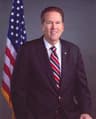 Vern Buchanan
Republican · Florida
 Bill Huizenga
Republican · Michigan
 Ashley Hinson
Republican · Iowa
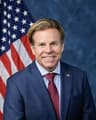 Mike Haridopolos
Republican · Florida
 Trent Kelly
Republican · Mississippi
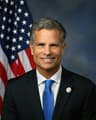 Daniel Meuser
Republican · Pennsylvania
 Ryan Mackenzie
Republican · Pennsylvania
 Tim Moore
Republican · North Carolina
 Zachary Nunn
Republican · Iowa
 John Rose
Republican · Tennessee
 Jefferson Shreve
Republican · Indiana
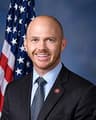 William Timmons
Republican · South Carolina
 Joe Wilson
Republican · South Carolina
 Steve Womack
Republican · Arkansas
 Ann Wagner
Republican · Missouri
 Roger Williams
Republican · Texas