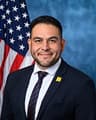
A Democratic bill with 1 Republican cosponsor · See all 19 cosponsors
Last activity — Referred to the House Committee on Agriculture.
In committee
Introduced and handed to a committee in the chamber it started in.
The committee holds it, and most bills are never heard from again. A hearing or a committee vote would be news; silence is the usual outcome, and it kills the bill without anyone voting against it.
Its path through Congress
- Introduced
- In Committee
What this bill would do
The Protecting America's Herds Act seeks to create a grant program to prepare for and respond to New World screwworm outbreaks. The Secretary of Agriculture will award these grants on a competitive basis to cooperative extension services. Funds can be used for training personnel, supporting livestock inspections, educating producers, and providing technical assistance. Priority will be given to services in States or Tribal communities at higher risk of introduction or spread. The Secretary is also required to coordinate with various agricultural and health officials.
Yes· 3 of 10
- Scored +5
Would farmers be better off under this?
The bill provides training, inspections, and technical assistance to help producers manage livestock health risks.
- Scored +4
Would business owners be better off under this?
Livestock producers receive direct technical assistance and education to protect their businesses from infestation.
- Scored +3
Would Native Americans be better off under this?
The bill gives priority to Tribal communities at elevated risk of screwworm introduction or spread.
The opposite
No question was scored the opposite.
Who it would affect, and how
Potential Positive Impacts for People
-
Personnel Training: Grant funds can be used to train cooperative extension service personnel in identifying, treating, managing, preventing, and reporting New World screwworm (Section 2(c)(1)).
-
Livestock Inspection Support: The bill allows for the support of livestock inspections and the training of inspectors to handle New World screwworm (Section 2(c)(2)).
-
Producer Education: This provision supports educating producers through workshops, field demonstrations, outreach campaigns, and educational materials (Section 2(c)(3)).
-
Technical Assistance: Funds may support the provision of direct technical assistance to livestock producers regarding monitoring, treatment, biosecurity practices, and reporting (Section 2(c)(4)).
-
Targeted Risk Management: The Secretary will prioritize cooperative extension services in States or Tribal communities that face an elevated risk of New World screwworm introduction or spread (Section 2(d)).
Potential Negative Impacts for People
- No negative impacts or burdens are explicitly mentioned in the provided text.
Groups and Interests Ranking
Every group the model scored this bill for, from -10 to +10. Tap or hover a score for the reason it gave.
- Demographic And Interest Groups
- Would farmers be better off under this? — The bill provides training, inspections, and technical assistance to help producers manage livestock health risks. Would business owners be better off under this? — Livestock producers receive direct technical assistance and education to protect their businesses from infestation. Would Native Americans be better off under this? — The bill gives priority to Tribal communities at elevated risk of screwworm introduction or spread. Would people in rural areas be better off under this? — The bill invests in agricultural protection and training within rural and high-risk areas. Would households on low incomes be better off under this? — The focus on Tribal communities can support economic stability for low-income agricultural populations.
- Economy And Finance
- Does this make it easier to run a small business? — The bill provides technical assistance and education directly to livestock producers to manage biological risks. Is this likely to create jobs? — The bill funds training for personnel within cooperative extension services to manage screwworm outbreaks.
- Environment Energy And Infrastructure
- Does this invest in rural communities? — The bill prioritizes funding for Tribal communities and specific States at risk of livestock infestations. Does this better protect air, water and wildlife? — The bill helps manage and mitigate the impact of the New World screwworm on agricultural environments.
- Social Issues And Justice
- Is this likely to lift people out of poverty? — Protecting livestock assets can help prevent economic losses for producers in high-risk communities.
- 9/8/2026
- 1 Cosponsor added.
- 8/20/2026
- 1 Cosponsor added.
- 8/13/2026
- 1 Cosponsor added.
- 7/13/2026
- 1 Cosponsor added.
- 7/2/2026
- 1 Cosponsor added.
- 6/24/2026
- 1 Cosponsor added.
- 6/18/2026
- Referred to the House Committee on Agriculture.
- 13 Cosponsors added.
- Introduced in House
 Janelle Bynum
Democrat · Oregon
 Henry Cuellar
Democrat · Texas
 Sharice Davids
Democrat · Kansas
 Lizzie Fletcher
Democrat · Texas
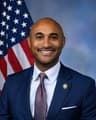 Shomari Figures
Democrat · Alabama
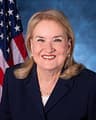 Sylvia Garcia
Democrat · Texas
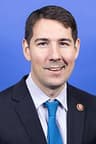 Josh Harder
Democrat · California
 Teresa Leger Fernandez
Democrat · New Mexico
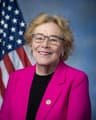 Zoe Lofgren
Democrat · California
 Michael McCaul
Republican · Texas
 Chellie Pingree
Democrat · Maine
 Jimmy Panetta
Democrat · California
 Josh Riley
Democrat · New York
 Greg Stanton
Democrat · Arizona
 Melanie Stansbury
Democrat · New Mexico
 Andrea Salinas
Democrat · Oregon
 Bennie Thompson
Democrat · Mississippi
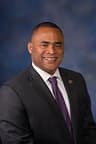 Marc Veasey
Democrat · Texas
 Eugene Vindman
Democrat · Virginia