A Republican bill with 19 Democratic cosponsors · See all 22 cosponsors
Last activity — Referred to the House Committee on Energy and Commerce.
In committee
Introduced and handed to a committee in the chamber it started in.
The committee holds it, and most bills are never heard from again. A hearing or a committee vote would be news; silence is the usual outcome, and it kills the bill without anyone voting against it.
Its path through Congress
- Introduced
- In Committee
What this bill would do
The bill is known as the Health Care Workforce Innovation Act of 2025. It amends the Public Health Service Act to create a new health care workforce innovation program. This program awards grants or contracts to support innovative, community-driven education and training for allied health professionals. The main goal is to expand the supply of these workers in underserved communities and rural areas. Eligible entities include federally qualified health centers, rural health clinics, and nonprofit post-secondary vocational programs. The bill authorizes appropriations for fiscal years 2026 through 2028.
Yes· 3 of 10
- Scored +7
Would people in rural areas be better off under this?
The bill specifically emphasizes expanding the supply of health professionals in rural areas.
- Scored +7
Does this make health care easier to get in general?
The bill funds training for allied health professionals to expand service supply in underserved and rural communities.
- Scored +5
Would people in their twenties and thirties be better off under this?
The bill creates new career paths through apprenticeships and vocational partnerships for students.
The opposite
No question was scored the opposite.
Who it would affect, and how
Potential Positive Impacts for People
-
Support for Underserved and Rural Areas: Section 2, adding section 755(b)(5)(A), focuses on expanding the supply of allied health professionals in underserved communities and rural areas to meet local health care needs.
-
Expanded Training Partnerships: Section 2, adding section 755(b)(5)(C)(i)(I), allows entities to establish or expand partnerships with high schools, vocational schools, and 2-year colleges to provide education and training opportunities.
-
Career Development and Apprenticeships: Section 2, adding section 755(b)(5)(C)(i)(II), provides funding for pre-apprenticeship and apprenticeship programs, internships, and career ladders for health care technical, support, and entry-level occupations.
-
Priority for Disadvantaged Backgrounds: Section 2, adding section 755(b)(5)(D), gives priority to applicants that increase the number of individuals from underserved and disadvantaged backgrounds working in these health care professions.
Potential Negative Impacts for People
- Restriction on Construction Costs: Section 2, adding section 755(b)(5)(C)(ii), explicitly states that grant or contract amounts shall not be used to support construction costs, which may limit physical building and expansion projects for entities trying to train workers.
Groups and Interests Ranking
Every group the model scored this bill for, from -10 to +10. Tap or hover a score for the reason it gave.
- Demographic And Interest Groups
- Would people in rural areas be better off under this? — The bill specifically emphasizes expanding the supply of health professionals in rural areas. Would households on low incomes be better off under this? — The bill targets underserved and disadvantaged communities for increased healthcare access and job training. Would people in their twenties and thirties be better off under this? — The bill creates new career paths through apprenticeships and vocational partnerships for students. Would Hispanic Americans be better off under this? — The bill supports the recruitment of individuals from underserved populations into healthcare roles. Would people in cities be better off under this? — The bill provides support for health care professional shortages in underserved areas.
- Healthcare
- Does this make health care easier to get in general? — The bill funds training for allied health professionals to expand service supply in underserved and rural communities. Does this put more money into medical research? — The bill authorizes funding for community-driven models to improve health outcomes through better workforce training.
- Social Issues And Justice
- Does this narrow racial gaps in how people are treated? — The bill prioritizes the recruitment of individuals from underserved and disadvantaged backgrounds into health care careers. Is this likely to lift people out of poverty? — The bill promotes career ladders and vocational training for entry-level health care occupations.
- Education And Technology
- Does this make college cost less? — The bill funds vocational training, apprenticeships, and partnerships with post-secondary institutions.
- 9/24/2026
- 1 Cosponsor added.
- 8/31/2026
- 1 Cosponsor added.
- 7/14/2026
- 1 Cosponsor added.
- 7/13/2026
- 1 Cosponsor added.
- 6/23/2026
- 2 Cosponsors added.
- 6/10/2026
- 1 Cosponsor added.
- 5/12/2026
- 1 Cosponsor added.
- 3/3/2026
- 1 Cosponsor added.
- 2/11/2026
- 1 Cosponsor added.
- 1/22/2026
- 1 Cosponsor added.
- 11/19/2025
- 1 Cosponsor added.
- 7/14/2025
- 2 Cosponsors added.
- 7/2/2025
- 1 Cosponsor added.
- 6/24/2025
- 2 Cosponsors added.
- 3/25/2025
- 2 Cosponsors added.
- 2/4/2025
- Referred to the House Committee on Energy and Commerce.
- 3 Cosponsors added.
- Introduced in House
One bill Congress.gov lists as related to this one — companions in the other chamber, earlier versions, and bills this one absorbed or was folded into.
 Gabe Amo
Democrat · Rhode Island
 Janelle Bynum
Democrat · Oregon
 Angie Craig
Democrat · Minnesota
 Suzan DelBene
Democrat · Washington
 Sharice Davids
Democrat · Kansas
 Maxine Dexter
Democrat · Oregon
 Josh Gottheimer
Democrat · New Jersey
 Marie Perez
Democrat · Washington
 Laura Gillen
Democrat · New York
 Bill Huizenga
Republican · Michigan
 Michael Lawler
Republican · New York
 Seth Moulton
Democrat · Massachusetts
 Jerrold Nadler
Democrat · New York
 Eleanor Norton
Democrat · District of Columbia
 Emily Randall
Democrat · Washington
 Adam Smith
Democrat · Washington
 Thomas Suozzi
Democrat · New York
 Kim Schrier
Democrat · Washington
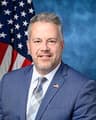 Eric Sorensen
Democrat · Illinois
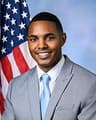 Ritchie Torres
Democrat · New York
 Shri Thanedar
Democrat · Michigan
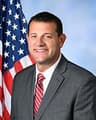 David Valadao
Republican · California