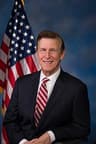
Donald Beyer (D-VA)
Comprehensive Paid Leave for Federal Employees Act
A Democratic bill with 1 Republican cosponsor · See all 16 cosponsors
Last activity — Referred to the Subcommittee on Oversight and Investigations.
In committee
Introduced and handed to a committee in the chamber it started in.
The committee holds it, and most bills are never heard from again. A hearing or a committee vote would be news; silence is the usual outcome, and it kills the bill without anyone voting against it.
Its path through Congress
- Introduced
- In Committee
What this bill would do
This bill, known as the "Comprehensive Paid Leave for Federal Employees Act," aims to provide paid family and medical leave to various Federal employees. It amends existing laws to expand the scope of leave to include medical needs and family-related situations. The legislation updates service requirements and definitions for various government roles, including the Postal Service and the Library of Congress. It specifically expands leave categories to include protections for victims of certain types of violence. The Act also coordinates leave provisions across several different federal agencies and judicial entities.
Yes· 3 of 11
- Scored +6
Would women be better off under this?
The bill greatly expands protections for pregnancy loss, fertility treatments, and victims of gender-based violence.
- Scored +5
Does this narrow the gap between how men and women are treated?
The bill provides specific leave protections for pregnancy loss, infertility, and surrogacy, which disproportionately impacts women.
- Scored +4
Would households on low incomes be better off under this?
The provision of paid leave provides significant financial stability for federal employees facing medical or family crises.
The opposite
- Scored -2
Does this reduce what the federal government spends?
The expansion of paid leave across multiple federal agencies and judicial entities increases federal administrative and compensation costs.
Who it would affect, and how
Potential Positive Impacts for People
-
Expanded Leave for Families: The bill expands the types of leave available to include pregnancy loss, unsuccessful assisted reproductive technology procedures, and failed adoptions (Section 2, Section s 6382(a)(1)(C)).
-
Support for Victims of Violence: Employees can use leave to seek medical attention, mental health services, or legal assistance related to domestic violence, dating violence, sexual assault, sex trafficking, or stalking (Section 2, Section 6382(a)(1)(F)).
-
Safety and Housing Assistance: Leave can be used to secure safe housing, including relocating or installing safety measures, for victims of qualifying acts of violence (Section 2, Section 6382(a)(1)(F)(v)).
-
Care for Family Members: The expanded leave allows employees to assist family members who are victims of the violence mentioned above (Section 2, Section 6382(a)(1)(F)(vi)).
-
Broader Coverage for Federal Employees: The bill extends leave provisions to various groups including the U.S. Postal Service, the Postal Regulatory Commission, and the Government Accountability Office (Section 2 and Section 4).
Potential Negative Impacts for People
-
Work Obligation Requirement: To receive paid leave, an employee must agree in writing to work for their employing agency for a period of time equal to the total amount of paid leave granted (Section 2, Section 6382(d)(2)(F)).
-
Financial Recovery for Unmet Obligations: If an employee fails to complete the required work obligation, the employing agency may recover the amount of Government contributions paid for the employee's health coverage during the leave period (Section 2, Section 6382(d)(2)(G)(i)).
Groups and Interests Ranking
Every group the model scored this bill for, from -10 to +10. Tap or hover a score for the reason it gave.
- Demographic And Interest Groups
- Would women be better off under this? — The bill greatly expands protections for pregnancy loss, fertility treatments, and victims of gender-based violence. Would households on low incomes be better off under this? — The provision of paid leave provides significant financial stability for federal employees facing medical or family crises. Would veterans be better off under this, taking everything together? — The bill mandates an upgrade to the leave programs available to employees within the Department of Veterans Affairs. Would people in their twenties and thirties be better off under this? — The expanded leave for adoption and fertility support is highly relevant to younger workers establishing families.
- Social Issues And Justice
- Does this narrow the gap between how men and women are treated? — The bill provides specific leave protections for pregnancy loss, infertility, and surrogacy, which disproportionately impacts women. Does this make child care cost less? — The bill allows leave for employees to enroll family members in new care arrangements, which can facilitate better childcare stability. Does this change how police departments operate? — The bill provides resources for victims of violence to seek legal and medical services which can support the stability of communities.
- Healthcare
- Does this make mental health care easier to get? — The bill allows employees to use paid leave specifically to seek mental health or counseling services related to qualifying acts of violence.
- National Security And Foreign Policy
- Does this increase the pay, pensions or support veterans receive? — The bill directs the Secretary of Veterans Affairs to modify and conform the veterans' leave program to these expanded standards.
- Economy And Finance
- Does this strengthen the rights of workers to organise? — The bill expands leave entitlements for a wide range of federal employees, enhancing their job security during family or medical crises. Does this reduce what the federal government spends? — The expansion of paid leave across multiple federal agencies and judicial entities increases federal administrative and compensation costs.
- Governance And Ideology
- Does this make what the government does easier for the public to see? — The bill codifies clear, standardized leave policies across various federal agencies and the judicial branch.
- 8/27/2026
- 1 Cosponsor added.
- 6/30/2026
- 4 Cosponsors added.
- 6/26/2026
- Referred to the Subcommittee on Oversight and Investigations.
- 6/18/2026
- 6 Cosponsors added.
- 6/15/2026
- 3 Cosponsors added.
- 6/11/2026
- Referred to the Committee on Oversight and Government Reform, and in addition to the Committees on Veterans' Affairs, and House Administration, for a period to be subsequently determined by the Speaker, in each case for consideration of such provisions as fall within the jurisdiction of the committee concerned.
- 2 Cosponsors added.
- Introduced in House
 Julia Brownley
Democrat · California
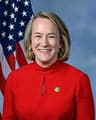 Nikki Budzinski
Democrat · Illinois
 Steve Cohen
Democrat · Tennessee
 Brian Fitzpatrick
Republican · Pennsylvania
 Josh Gottheimer
Democrat · New Jersey
 Chrissy Houlahan
Democrat · Pennsylvania
 Greg Landsman
Democrat · Ohio
 Summer Lee
Democrat · Pennsylvania
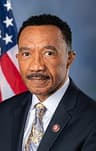 Kweisi Mfume
Democrat · Maryland
 Grace Meng
Democrat · New York
 Seth Magaziner
Democrat · Rhode Island
 Eleanor Norton
Democrat · District of Columbia
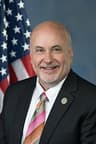 Mark Pocan
Democrat · Wisconsin
 Adam Smith
Democrat · Washington
 Debbie Wasserman Schultz
Democrat · Florida
 Bonnie Watson Coleman
Democrat · New Jersey