
James McGovern (D-MA)
Connecticut River Watershed Partnership Act
A Democratic bill with 5 Democratic cosponsors · See all 5 cosponsors
Last activity — Referred to the Committee on Natural Resources, and in addition to the Committee on Transportation and Infrastructure, for a period to be subsequently determined by the Speaker, in each case for consideration of such provisions as fall within the jurisdiction of the committee concerned.
In committee
Introduced and handed to a committee in the chamber it started in.
The committee holds it, and most bills are never heard from again. A hearing or a committee vote would be news; silence is the usual outcome, and it kills the bill without anyone voting against it.
Its path through Congress
- Introduced
- In Committee
What this bill would do
The Connecticut River Watershed Partnership Act directs efforts to restore and protect the 5-State Connecticut River Watershed region. The bill establishes a nonregulatory program led by the Secretary of the Interior to coordinate conservation and protection activities. It also creates a voluntary grant program to provide matching funds to eligible entities for watershed projects. This program aims to improve water quality, manage fish and wildlife populations, and increase community resilience. The legislation emphasizes collaboration between various federal, state, tribal, and local entities. Finally, it authorizes necessary appropriations to fund these efforts through the year 2030.
Yes· 3 of 9
- Scored +8
Does this better protect air, water and wildlife?
The bill establishes a program to restore, protect, and manage fish, wildlife, and water quality throughout the Connecticut River Watershed.
- Scored +5
Would Native Americans be better off under this?
The bill promotes the practice and awareness of traditional Tribal river and watershed-sited cultural practices and ecological knowledge.
- Scored +5
Does this narrow racial gaps in how people are treated?
The bill prioritizes funding and higher cost-sharing for environmental justice communities, which includes significant representation of communities of color.
The opposite
No question was scored the opposite.
Who it would affect, and how
Potential Positive Impacts for People
-
Environmental and Habitat Improvements: The program seeks to restore fish, wildlife, and plant populations, as well as improve water quality and manage flood damage (Section 3(d)).
-
Enhanced Public Access and Recreation: The bill aims to improve opportunities for public access and recreation, specifically by enhancing trails, sidewalks, and bike lanes (Section 3(d)).
-
Support for Vulnerable Communities: The act prioritizes engagement with environmental justice communities, providing them with increased capacity for restoration and protection activities (Section 3(d)).
-
Economic and Food Security Benefits: The program supports farmland conservation and food equity through habitat protection and climate resilience on working farms and forests (Section 3(d)).
-
Increased Financial Support for Justice-Oriented Projects: Projects serving environmental justice communities can receive a higher Federal cost share of up to 90 percent, or even 100 percent in cases of significant financial hardship (Section 4(d)).
-
Cultural Preservation: The act promotes the practice and awareness of traditional Tribal river and Watershed-related cultural practices and ecological knowledge (Section 3(d)).
Potential Negative Impacts for People
- Financial Burden on Grant Recipients: The grant program is based on a competitive matching system, meaning recipients are responsible for providing a non-Federal share of project costs through cash or in-kind contributions (Section 4(d)(2)).
Groups and Interests Ranking
Every group the model scored this bill for, from -10 to +10. Tap or hover a score for the reason it gave.
- Environment Energy And Infrastructure
- Does this better protect air, water and wildlife? — The bill establishes a program to restore, protect, and manage fish, wildlife, and water quality throughout the Connecticut River Watershed. Does this invest in rural communities? — The bill supports farmland conservation and climate resilience on working farms and forests. Does this improve buses, trains and other public transport? — The bill aims to improve access to open space by enhancing on-street active transportation like bike lanes and sidewalks.
- Demographic And Interest Groups
- Would Native Americans be better off under this? — The bill promotes the practice and awareness of traditional Tribal river and watershed-sited cultural practices and ecological knowledge. Would households on low incomes be better off under this? — The bill targets environmental justice communities which include low-income communities through increased federal cost-sharing for projects. Would people in cities be better off under this? — The bill improves active transportation infrastructure such as sidewalks and bike lanes which benefits urban and populated areas.
- Social Issues And Justice
- Does this narrow racial gaps in how people are treated? — The bill prioritizes funding and higher cost-sharing for environmental justice communities, which includes significant representation of communities of color. Is this likely to lift people out of poverty? — The bill supports food equity through farmland conservation and climate resilience on working farms.
- Education And Technology
- Does this put more money into scientific research? — The bill increases scientific capacity to support planning, monitoring, and research activities for the watershed.
- 6/9/2026
- Referred to the Committee on Natural Resources, and in addition to the Committee on Transportation and Infrastructure, for a period to be subsequently determined by the Speaker, in each case for consideration of such provisions as fall within the jurisdiction of the committee concerned.
- 5 Cosponsors added.
- Introduced in House
3 bills Congress.gov lists as related to this one — companions in the other chamber, earlier versions, and bills this one absorbed or was folded into.
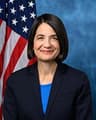 Becca Balint
Democrat · Vermont
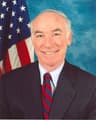 Joe Courtney
Democrat · Connecticut
 Maggie Goodlander
Democrat · New Hampshire
 Jahana Hayes
Democrat · Connecticut
 Richard Neal
Democrat · Massachusetts