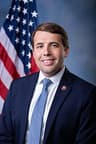
Chris Pappas (D-NH)
SAFEGUARD Veterans Act of 2026
A Democratic bill with 3 Republican cosponsors · See all 16 cosponsors
Last activity — Referred to the Subcommittee on Disability Assistance and Memorial Affairs.
In committee
Introduced and handed to a committee in the chamber it started in.
The committee holds it, and most bills are never heard from again. A hearing or a committee vote would be news; silence is the usual outcome, and it kills the bill without anyone voting against it.
Its path through Congress
- Introduced
- In Committee
What this bill would do
The SAFEGUARD Veterans Act of 2026 aims to stop the fraud and exploitation of veterans by reinstating criminal penalties for people who charge unauthorized fees for help with veterans' benefit claims. It requires that anyone assisting with these claims must be recognized by the Secretary of Veterans Affairs. The bill also mandates new online tools and warnings to help veterans find accredited representatives and report unauthorized fees. Additionally, it improves the VA's accreditation system and restricts the use of automated telephone equipment to call federal agencies.
Yes· 3 of 15
- Scored +10
Would veterans be better off under this, taking everything together?
The bill is specifically designed to protect veterans from fraud and exploitation in the claims process.
- Scored +8
Does this increase the pay, pensions or support veterans receive?
Directly protects the integrity of the veterans benefits claims process and prevents fraud.
- Scored +7
Does this give people more protection from unfair business practices?
Protects veterans from financial exploitation and fraudulent fees associated with benefit claims.
The opposite
- Scored -4
Does this leave more decisions to the states?
Explicitly overrides state laws concerning fee agreements for VA claim representatives.
- Scored -3
Would business owners be better off under this?
Imposes criminal penalties and professional bans on unaccredited representatives charging fees.
Who it would affect, and how
Potential Positive Impacts for People
-
Criminal Penalties for Fraud: People who charge unauthorized fees for preparing or prosecuting benefit claims can face fines, up to one year in prison, or both, which helps protect veterans from financial exploitation (Sec. 2).
-
Representative Verification: Veterans can use a new online tool to search for accredited persons and see who has been suspended or excluded, ensuring they use legitimate help (Sec. 3).
-
Increased Transparency: The bill requires the VA to provide notices and warnings on website portals about the fees agents may charge and provides a way for claimants to report unaccredited representatives (Sec. 3).
-
Security Warnings: Veterans will receive messages discouraging them from sharing their bank or Department account login credentials with others, protecting their personal and financial information (Sec. 4).
-
Easier Reporting: New questions on claim forms allow the VA to identify and gather information on people charging for "coaching" or assistance (Sec. 5).
-
Reduced Automated Harassment: The bill restricts the use of automated telephone equipment to make repeated calls to federal agencies unless operated by the person the information relates to (Sec. 7).
Potential Negative Impacts for People
-
Restrictions on Assistance: Individuals who are not recognized by the Secretary or under direct supervision of a recognized agent/attorney are prohibited from assisting claimants with the preparation, presentation, or prosecution of claims (Sec. 2).
-
Loss of Professional Status: Individuals who violate fee rules will be barred from being recognized as an agent or attorney for one year for the first violation and 10 years for subsequent violations (Sec. 2).
-
Supremacy Over State Law: The provisions regarding the recognition of agents and attorneys will supersede any existing state laws, including those regarding fee agreements or authority to charge for services (Sec. 2).
Groups and Interests Ranking
Every group the model scored this bill for, from -10 to +10. Tap or hover a score for the reason it gave.
- Demographic And Interest Groups
- Would veterans be better off under this, taking everything together? — The bill is specifically designed to protect veterans from fraud and exploitation in the claims process. Would households on low incomes be better off under this? — Prevents low-income veterans from being defrauded of their benefit funds. Would retired people be better off under this? — Retired veterans are a key demographic protected by the fraud prevention measures. Would people over 65 be better off under this? — Seniors are often targeted by fraudulent schemes and will benefit from increased protections. Would people with disabilities be better off under this? — Many disabled veterans rely on claims assistance and are protected from predatory fees. Would middle-income households be better off under this? — Protects financial assets and benefit claims from unauthorized fees. Would business owners be better off under this? — Imposes criminal penalties and professional bans on unaccredited representatives charging fees.
- National Security And Foreign Policy
- Does this increase the pay, pensions or support veterans receive? — Directly protects the integrity of the veterans benefits claims process and prevents fraud. Does this better protect the country from computer attacks? — Warns veterans against sharing login credentials to prevent identity theft and account compromise.
- Governance And Ideology
- Does this make what the government does easier for the public to see? — Creates a searchable online tool for accredited representatives and provides clearer warnings to claimants. Does this give the federal government more power? — Federal law specifically supersedes state laws regarding the recognition of agents for VA claims. Does this protect people from being watched or searched? — Protects against unauthorized access to account credentials and limits automated harassment calls to agencies. Does this leave more decisions to the states? — Explicitly overrides state laws concerning fee agreements for VA claim representatives.
- Economy And Finance
- Does this give people more protection from unfair business practices? — Protects veterans from financial exploitation and fraudulent fees associated with benefit claims.
- Healthcare
- Does this help veterans get medical care? — Improves access to legitimate benefit claims which can facilitate healthcare services for veterans.
- Education And Technology
- Does this give people more control over their personal data? — Includes mandates for warnings against sharing account login credentials.
- Social Issues And Justice
- Is this likely to lift people out of poverty? — Prevents veterans from losing funds to fraudulent representatives, supporting financial stability.
- 10/1/2026
- 1 Cosponsor added.
- 9/10/2026
- 1 Cosponsor added.
- 8/20/2026
- 2 Cosponsors added.
- 6/29/2026
- 2 Cosponsors added.
- 6/23/2026
- Referred to the Subcommittee on Disability Assistance and Memorial Affairs.
- 6/2/2026
- Referred to the Committee on Veterans' Affairs, and in addition to the Committee on Energy and Commerce, for a period to be subsequently determined by the Speaker, in each case for consideration of such provisions as fall within the jurisdiction of the committee concerned.
- 10 Cosponsors added.
- Introduced in House
3 bills Congress.gov lists as related to this one — companions in the other chamber, earlier versions, and bills this one absorbed or was folded into.
 Don Bacon
Republican · Nebraska
 Nikki Budzinski
Democrat · Illinois
 Janelle Bynum
Democrat · Oregon
 Ed Case
Democrat · Hawaii
 Joe Courtney
Democrat · Connecticut
 Sean Casten
Democrat · Illinois
 Angie Craig
Democrat · Minnesota
 Jared Golden
Democrat · Maine
 William Keating
Democrat · Massachusetts
 Thomas Kean
Republican · New Jersey
 Michael Lawler
Republican · New York
 Eleanor Norton
Democrat · District of Columbia
 Jimmy Panetta
Democrat · California
 Dina Titus
Democrat · Nevada
 Gabe Vasquez
Democrat · New Mexico
 Eugene Vindman
Democrat · Virginia