
Glenn Grothman (R-WI)
State Emissions Authority Act of 2026
A Republican bill with 8 Republican cosponsors · See all 8 cosponsors
Last activity — Referred to the House Committee on Energy and Commerce.
In committee
Introduced and handed to a committee in the chamber it started in.
The committee holds it, and most bills are never heard from again. A hearing or a committee vote would be news; silence is the usual outcome, and it kills the bill without anyone voting against it.
Its path through Congress
- Introduced
- In Committee
What this bill would do
This bill is called the State Emissions Authority Act of 2026. It was introduced in the House of Representatives on June 2, 2026. The main purpose of the bill is to amend the Clean Air Act. Specifically, it repeals the mandatory requirements for State motor vehicle inspection and maintenance programs.
Yes· 3 of 6
- Scored +5
Does this leave more decisions to the states?
By removing federal requirements, states are granted greater autonomy to decide whether to implement vehicle inspection and maintenance programs.
- Scored +2
Would households on low incomes be better off under this?
Eliminating mandatory vehicle inspection requirements can save low-income vehicle owners time and potential repair or testing fees.
- Scored +2
Would middle-income households be better off under this?
Removes the burden and cost of mandatory vehicle inspections for middle-class vehicle owners.
The opposite· 3 of 4
- Scored -5
Does this give the federal government more power?
The bill reduces federal mandates on states, shifting regulatory control regarding vehicle inspection programs.
- Scored -4
Does this cut the pollution that drives climate change?
Repealing mandatory vehicle inspection and maintenance programs may lead to higher vehicle emissions and reduced air quality oversight.
- Scored -4
Does this better protect air, water and wildlife?
The bill weakens federal enforcement mechanisms under the Clean Air Act regarding vehicle emissions.
Who it would affect, and how
Potential Positive Impacts for People
- Relief from Mandatory Vehicle Programs: Section 2 of the bill repeals the mandatory requirements for State motor vehicle inspection and maintenance programs. This might be considered positive because it removes these specific federal mandates for states under the Clean Air Act.
Potential Negative Impacts for People
- No Negative Impacts Listed: Based strictly on the provided text, there are no specific negative consequences or burdens for individuals or groups mentioned.
Groups and Interests Ranking
Every group the model scored this bill for, from -10 to +10. Tap or hover a score for the reason it gave.
- Environment Energy And Infrastructure
- Does this better protect air, water and wildlife? — The bill weakens federal enforcement mechanisms under the Clean Air Act regarding vehicle emissions. Does this cut the pollution that drives climate change? — Repealing mandatory vehicle inspection and maintenance programs may lead to higher vehicle emissions and reduced air quality oversight.
- Demographic And Interest Groups
- Would business owners be better off under this? — Reduces compliance burdens and associated expenses for businesses operating motor vehicles. Would households on low incomes be better off under this? — Eliminating mandatory vehicle inspection requirements can save low-income vehicle owners time and potential repair or testing fees. Would middle-income households be better off under this? — Removes the burden and cost of mandatory vehicle inspections for middle-class vehicle owners. Would people in rural areas be better off under this? — Rural residents benefit from the removal of federally mandated vehicle inspections that can be inconvenient to access. Would people in cities be better off under this? — Urban areas often rely on vehicle inspection programs to maintain air quality standards, so repealing them could negatively affect local environmental health.
- Economy And Finance
- Does this make it easier to run a small business? — By repealing mandatory vehicle inspection programs, the bill slightly reduces regulatory burdens on businesses and vehicle owners.
- Governance And Ideology
- Does this leave more decisions to the states? — By removing federal requirements, states are granted greater autonomy to decide whether to implement vehicle inspection and maintenance programs. Does this give the federal government more power? — The bill reduces federal mandates on states, shifting regulatory control regarding vehicle inspection programs.
- 6/4/2026
- 1 Cosponsor added.
- 6/2/2026
- Referred to the House Committee on Energy and Commerce.
- 7 Cosponsors added.
- Introduced in House
 Mike Bost
Republican · Illinois
 James Baird
Republican · Indiana
 Russ Fulcher
Republican · Idaho
 Scott Fitzgerald
Republican · Wisconsin
 Brad Finstad
Republican · Minnesota
 David Joyce
Republican · Ohio
 Barry Moore
Republican · Alabama
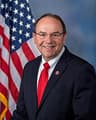 Thomas Tiffany
Republican · Wisconsin