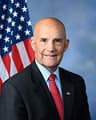
Keith Self (R-TX)
Veterans Hearing Aid Improvement Act of 2026
A Republican bill with 1 Democratic cosponsor · See all 2 cosponsors
Last activity — Referred to the Subcommittee on Health.
In committee
Introduced and handed to a committee in the chamber it started in.
The committee holds it, and most bills are never heard from again. A hearing or a committee vote would be news; silence is the usual outcome, and it kills the bill without anyone voting against it.
Its path through Congress
- Introduced
- In Committee
What this bill would do
The Veterans Hearing Aid Improvement Act of 2026 directs the Secretary of Veterans Affairs to start a two-year demonstration project regarding the coverage of over-the-counter hearing aids. This project aims to evaluate the fiscal impact and effectiveness of these devices compared to professionally fitted prescription hearing aids. Eligible veterans must have mild-to-moderate hearing loss and access to mobile technology. The project will take place at at least two different medical facilities across various locations. Additionally, the Comptroller General is required to conduct a study on hearing aid assistance for veterans with mild-to-moderate hearing loss.
Yes· 3 of 8
- Scored +6
Would veterans be better off under this, taking everything together?
The bill directly seeks to improve the provision and effectiveness of hearing aid benefits for veterans.
- Scored +6
Does this increase the pay, pensions or support veterans receive?
The bill establishes a demonstration project to improve the coverage and effectiveness of hearing aid assistance for veterans.
- Scored +5
Would people over 65 be better off under this?
The bill addresses hearing loss, a condition that often impacts older populations, through a new demonstration project.
The opposite
- Scored -2
Does this get reliable internet to more people?
The bill requires participants to have access to mobile data or Wi-Fi to utilize the hearing aid technology, creating a potential barrier for those without reliable connectivity.
Who it would affect, and how
Potential Positive Impacts for People
-
Evaluation of Cost-Effective Options: The demonstration project seeks to evaluate the fiscal impact of covering FDA-cleared, over-the-counter hearing aids (Section 2(a) and 2(e)(1)). This could lead to more efficient use of Department of Veterans Affairs funds.
-
Increased Access to Hearing Solutions: The project will be implemented at medical facilities that have a demonstrated ability to reduce access barriers for diverse veteran populations in both rural and urban settings (Section 2(d)).
-
Personalized Technology Options: The bill defines over-the-counter hearing aids as devices that include features allowing for personalization through technology, such as software or smartphone applications (Section 2(i)).
-
Comprehensive Needs Assessment: The Comptroller General will conduct a study to provide recommendations on changes to programs and benefits to better meet the needs of veterans with mild-to-moderate hearing loss (Section 3(b) and 3(c)(2)).
Potential Negative Impacts for People
-
Technology Barriers: To be eligible for the demonstration project, a veteran must have access to a mobile phone device and mobile data or Wi-Fi to operate the hearing aid functionality (Section 2(c)(3)).
-
Clinical Restrictions: Participation is limited to those whose hearing loss is deemed mild-to-moderate and who have no "red flag" conditions or contraindications as specified by the FDA (Section 2(c)(2)).
Groups and Interests Ranking
Every group the model scored this bill for, from -10 to +10. Tap or hover a score for the reason it gave.
- Demographic And Interest Groups
- Would veterans be better off under this, taking everything together? — The bill directly seeks to improve the provision and effectiveness of hearing aid benefits for veterans. Would people over 65 be better off under this? — The bill addresses hearing loss, a condition that often impacts older populations, through a new demonstration project. Would people in rural areas be better off under this? — The project specifically requires medical facilities to include locations that reduce access barriers in rural settings. Would households on low incomes be better off under this? — The study of over-the-counter hearing aids seeks to provide more affordable options for medical needs.
- National Security And Foreign Policy
- Does this increase the pay, pensions or support veterans receive? — The bill establishes a demonstration project to improve the coverage and effectiveness of hearing aid assistance for veterans.
- Healthcare
- Does this make health care easier to get in general? — The demonstration project aims to evaluate the effectiveness of over-the-counter hearing aids to increase access for veterans with mild-to-moderate hearing loss.
- Economy And Finance
- Does this reduce what the federal government spends? — The bill evaluates the fiscal impact of covering over-the-counter hearing aids to potentially find more cost-effective coverage options.
- Education And Technology
- Does this get reliable internet to more people? — The bill requires participants to have access to mobile data or Wi-Fi to utilize the hearing aid technology, creating a potential barrier for those without reliable connectivity.
- Social Issues And Justice
- Is this likely to lift people out of poverty? — By evaluating cost-effective hearing aid options, the bill may help reduce out-of-pocket medical expenses for low-income veterans.
- 6/5/2026
- Referred to the Subcommittee on Health.
- 5/21/2026
- Referred to the House Committee on Veterans' Affairs.
- 2 Cosponsors added.
- Introduced in House
One bill Congress.gov lists as related to this one — companions in the other chamber, earlier versions, and bills this one absorbed or was folded into.
 Kevin Mullin
Democrat · California
 Derrick Van Orden
Republican · Wisconsin