
A Democratic bill with 6 Democratic cosponsors · See all 6 cosponsors
Last activity — Referred to the House Committee on Education and Workforce.
In committee
Introduced and handed to a committee in the chamber it started in.
The committee holds it, and most bills are never heard from again. A hearing or a committee vote would be news; silence is the usual outcome, and it kills the bill without anyone voting against it.
Its path through Congress
- Introduced
- In Committee
What this bill would do
The Holiday Pay Act seeks to amend the Fair Labor Standards Act of 1938. It would require employers to pay employees working on a legal public holiday at a rate of at least one and one-half times their regular wage. The bill defines a legal public holiday as any holiday specified in section 6103(a) of title 5, United States Code. It also includes various technical updates to enforcement and compensation language throughout the existing law. These changes ensure that holiday pay is protected under the Act's enforcement provisions.
Yes· 3 of 6
- Scored +6
Would households on low incomes be better off under this?
Low-income workers often work hourly wages and will benefit directly from the increased holiday pay rate.
- Scored +5
Would union members be better off under this?
The bill strengthens wage protections which aligns with union interests regarding fair compensation.
- Scored +5
Does this give the federal government more power?
The bill expands federal authority by amending the Fair Labor Standards Act to include holiday pay requirements.
The opposite
- Scored -5
Would business owners be better off under this?
Employers will face increased labor costs due to the mandatory holiday pay rate.
Who it would affect, and how
Potential Positive Impacts for People
-
Increased Compensation for Holiday Work: Employees working on legal public holidays would receive compensation at a rate not less than one and one-half times their regular rate (Section 2(a)).
-
Stronger Enforcement Protections: The bill updates enforcement sections to include "unpaid legal public holiday compensation," which allows for the recovery of these wages (Section 2(d)).
-
Statute of Limitations Protection: The bill adds "unpaid legal public holiday compensation" to the Portal-to-Portal Act of 1947, affecting how these claims are handled (Section 2(f)).
Potential Negative Impacts for People
- No specific negative impacts are explicitly stated within the text of the bill.
Groups and Interests Ranking
Every group the model scored this bill for, from -10 to +10. Tap or hover a score for the reason it gave.
- Demographic And Interest Groups
- Would households on low incomes be better off under this? — Low-income workers often work hourly wages and will benefit directly from the increased holiday pay rate. Would union members be better off under this? — The bill strengthens wage protections which aligns with union interests regarding fair compensation. Would middle-income households be better off under this? — Middle-class hourly workers will see an increase in their compensation when working on holidays. Would business owners be better off under this? — Employers will face increased labor costs due to the mandatory holiday pay rate.
- Governance And Ideology
- Does this protect the right to fair treatment by the courts? — The bill enhances worker protections by providing paths for recovery of unpaid holiday wages. Does this give the federal government more power? — The bill expands federal authority by amending the Fair Labor Standards Act to include holiday pay requirements.
- Social Issues And Justice
- Is this likely to lift people out of poverty? — By increasing holiday pay, the bill provides higher income for working families.
- 10/1/2026
- 1 Cosponsor added.
- 9/15/2026
- 1 Cosponsor added.
- 8/31/2026
- 2 Cosponsors added.
- 8/3/2026
- 1 Cosponsor added.
- 5/21/2026
- Referred to the House Committee on Education and Workforce.
- 1 Cosponsor added.
- Introduced in House
One bill Congress.gov lists as related to this one — companions in the other chamber, earlier versions, and bills this one absorbed or was folded into.
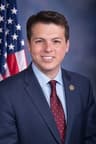 Brendan Boyle
Democrat · Pennsylvania
 Greg Casar
Democrat · Texas
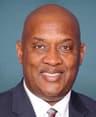 Dwight Evans
Democrat · Pennsylvania
 Pramila Jayapal
Democrat · Washington
 Eleanor Norton
Democrat · District of Columbia
 Bonnie Watson Coleman
Democrat · New Jersey