
A Democratic bill with 20 Democratic cosponsors · See all 20 cosponsors
Last activity — Referred to the House Committee on Energy and Commerce.
In committee
Introduced and handed to a committee in the chamber it started in.
The committee holds it, and most bills are never heard from again. A hearing or a committee vote would be news; silence is the usual outcome, and it kills the bill without anyone voting against it.
Its path through Congress
- Introduced
- In Committee
What this bill would do
The Closing the HPV Testing Gap Act directs the Director of the National Institutes of Health to study the development of a standardized, noninvasive HPV test for men. The Director must coordinate with agencies like the FDA and CDC and consult with clinical experts. The study will assess current research, test methodologies, and the feasibility of testing in diverse populations. Within 30 months of enactment, the Director must submit a report to Congress with findings and recommendations. The goal is to address the lack of an FDA-approved HPV diagnostic test for men.
Yes· 3 of 22
- Scored +9
Would men be better off under this?
Directly addresses the lack of FDA-approved HPV diagnostic tests for men to prevent cancer.
- Scored +6
Would people in middle age be better off under this?
Improves cancer prevention and detection for men at higher risk ages.
- Scored +6
Does this narrow the gap between how men and women are treated?
Specifically aims to promote gender equity in cancer prevention by expanding detection to men.
The opposite
No question was scored the opposite.
Who it would affect, and how
Potential Positive Impacts for People
-
Improved Cancer Prevention for Men: By exploring the development of a standardized, noninvasive test, the bill aims to address the gap in public health surveillance and treatment for HPV-related cancers, such as oropharyngeal cancers, in men (Sec. 2).
-
Benefit to Women's Health: The bill identifies that the lack of testing for men contributes to transmission pathways and delayed detection that impact women's health outcomes, specifically cervical cancer incidence (Sec. 2).
-
Gender Equity in Healthcare: Expanding detection efforts to include men is intended to promote gender equity in cancer prevention and improve national public health outcomes (Sec. 2).
-
Focus on Underserved Communities: The study requires an assessment of the feasibility of conducting implementation studies across diverse populations, including underserved and high-risk communities (Sec. 3(c)(4)).
Potential Negative Impacts for People
- No negative impacts for individuals or groups are explicitly mentioned in the provided text.
Groups and Interests Ranking
Every group the model scored this bill for, from -10 to +10. Tap or hover a score for the reason it gave.
- Demographic And Interest Groups
- Would men be better off under this? — Directly addresses the lack of FDA-approved HPV diagnostic tests for men to prevent cancer. Would people in middle age be better off under this? — Improves cancer prevention and detection for men at higher risk ages. Would women be better off under this? — Reducing transmission from men is noted to improve women's health outcomes and cervical cancer incidence. Would high-income households be better off under this? — Increases overall availability of preventative health screenings. Would LGBTQ people be better off under this? — Provides benefit to high-risk populations and those seeking anal/penile HPV screening. Would households on low incomes be better off under this? — Explicitly mandates the feasibility study include underserved communities. Would middle-income households be better off under this? — Increases overall availability of preventative health screenings. Would retired people be better off under this? — Improves cancer prevention for an aging male population. Would people over 65 be better off under this? — Improves detection of oropharyngeal and other HPV-related cancers. Would people in their twenties and thirties be better off under this? — Increases early detection of HPV-related cancers in a sexually active population. Would Black Americans be better off under this? — Includes underserved populations in the feasibility of testing studies. Would Asian Americans be better off under this? — Includes underserved populations in the feasibility of testing studies. Would Hispanic Americans be better off under this? — Includes underserved populations in the feasibility of testing studies. Would immigrants be better off under this? — Includes underserved populations in the feasibility of testing studies. Would Native Americans be better off under this? — Includes underserved populations in the feasibility of testing studies. Would white Americans be better off under this? — Improves overall public health outcomes for men.
- Healthcare
- Does this make health care easier to get in general? — Aims to close a critical diagnostic gap by developing a standardized HPV test for men. Does this put more money into medical research? — Directs the NIH to conduct a comprehensive study and explore new testing methodologies.
- Social Issues And Justice
- Does this narrow the gap between how men and women are treated? — Specifically aims to promote gender equity in cancer prevention by expanding detection to men. Does this narrow racial gaps in how people are treated? — Requires assessment of test feasibility across diverse, high-risk, and underserved communities.
- Education And Technology
- Does this put more money into scientific research? — Directs NIH to study noninvasive HPV testing methodologies.
- Governance And Ideology
- Does this give the federal government more power? — Directs a federal agency (NIH) to conduct a study and report to Congress.
- 7/9/2026
- 1 Cosponsor added.
- 6/29/2026
- 2 Cosponsors added.
- 6/25/2026
- 1 Cosponsor added.
- 6/23/2026
- 2 Cosponsors added.
- 6/11/2026
- 1 Cosponsor added.
- 6/2/2026
- 3 Cosponsors added.
- 5/21/2026
- 7 Cosponsors added.
- 5/20/2026
- Referred to the House Committee on Energy and Commerce.
- 3 Cosponsors added.
- Introduced in House
 Joyce Beatty
Democrat · Ohio
 Wesley Bell
Democrat · Missouri
 Janelle Bynum
Democrat · Oregon
 Yvette Clarke
Democrat · New York
 Troy Carter
Democrat · Louisiana
 Danny Davis
Democrat · Illinois
 Shomari Figures
Democrat · Alabama
 Al Green
Democrat · Texas
 Henry Johnson
Democrat · Georgia
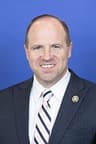 Timothy Kennedy
Democrat · New York
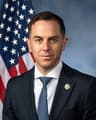 Robert Menendez
Democrat · New Jersey
 Eleanor Norton
Democrat · District of Columbia
 Lateefah Simon
Democrat · California
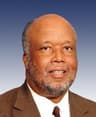 Bennie Thompson
Democrat · Mississippi
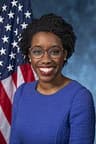 Lauren Underwood
Democrat · Illinois
 Nydia Velázquez
Democrat · New York
 Marc Veasey
Democrat · Texas
 Maxine Waters
Democrat · California
 Nikema Williams
Democrat · Georgia
 Bonnie Watson Coleman
Democrat · New Jersey