
A Republican bill with 2 Democratic cosponsors · See all 2 cosponsors
Last activity — Referred to the Committee on Transportation and Infrastructure, and in addition to the Committee on Financial Services, for a period to be subsequently determined by the Speaker, in each case for consideration of such provisions as fall within the jurisdiction of the committee concerned.
In committee
Introduced and handed to a committee in the chamber it started in.
The committee holds it, and most bills are never heard from again. A hearing or a committee vote would be news; silence is the usual outcome, and it kills the bill without anyone voting against it.
Its path through Congress
- Introduced
- In Committee
What this bill would do
This bill, known as the BIO-SCALE Act, aims to create technology maturation facilities for the bioindustrial sector. These facilities will focus on developing, testing, and scaling technologies like fermentation and biomass processing to prepare them for commercial use. The Secretary of Commerce is directed to establish at least three regional, nonprofit, and open-access facilities. The program seeks to position the United States as a leader in bioindustrial innovation and strengthen national security. Funding will be provided through planning and implementation grants to eligible entities. The authority for these facilities is set to expire 10 years after the act is passed, unless a facility shows successful performance.
Yes· 3 of 16
- Scored +7
Would people in rural areas be better off under this?
The bill explicitly prioritizes the inclusion of rural communities in the facility access and placement process.
- Scored +7
Does this put more money into scientific research?
The bill provides significant funding for the development and testing of new biotechnologies.
- Scored +6
Is this likely to create jobs?
The bill seeks to increase local and regional job opportunities through the development of the bioindustrial sector.
The opposite
No question was scored the opposite.
Who it would affect, and how
Potential Positive Impacts for People
-
Economic Growth and Job Creation: The bill aims to increase local or regional job opportunities and economic growth through the development of new industries (Section 2(d)(5)(C)). It also seeks to enhance leadership in biotechnology through workforce development and job creation (Section 2(g)(3)).
-
Support for Rural Communities: The Secretary is directed to give preference to proposals for facilities located in regions that need enhanced infrastructure, specifically highlighting rural areas (Section 2(e)(2)(B)(i)). Additionally, the Secretary must develop policies to ensure open access to facilities with a focus on including rural communities (Section 2(h)(3)).
-
Open Access to Innovation: Facilities are required to be "open access," meaning their infrastructure, data, or research resources are available without intellectual property barriers and are accessible to both public and private entities on an equitable basis (Section 2(a)(5)).
-
National Security and Leadership: The bill seeks to strengthen national security by accelerating the scaling up of emerging biotechnology processes (Section 2(g)(2)). It also aims to position the U.S. as a leader in bioindustrial innovation (Section 2(b)).
Potential Negative Impacts for People
- Intellectual Property Limitations for Federal Employees: Any intellectual property created by a Federal employee while performing their duties at a facility will be considered part of the public domain (Section 2(i)(1)).
Groups and Interests Ranking
Every group the model scored this bill for, from -10 to +10. Tap or hover a score for the reason it gave.
- Demographic And Interest Groups
- Would people in rural areas be better off under this? — The bill explicitly prioritizes the inclusion of rural communities in the facility access and placement process. Would business owners be better off under this? — Private entities can access expensive industrial infrastructure through the open-access model. Would farmers be better off under this? — The bill prioritizes facilities near major feedstock sources, which includes agricultural products. Would middle-income households be better off under this? — Increased regional job opportunities can benefit middle-income workers in the bioindustrial sector. Would households on low incomes be better off under this? — Job creation in rural areas may provide better economic opportunities for local residents.
- Economy And Finance
- Is this likely to create jobs? — The bill seeks to increase local and regional job opportunities through the development of the bioindustrial sector. Is this likely to grow the economy? — The bill aims to enhance economic growth and international competitiveness through bioindustrial innovation. Does this make it easier to run a small business? — The open-access facilities allow smaller private entities to access high-level infrastructure and data.
- Environment Energy And Infrastructure
- Does this invest in rural communities? — The bill directs the Secretary to give preference to facilities located in rural areas needing enhanced infrastructure. Does this put more money into wind, solar and other renewable power? — The bill focuses on scaling up technologies for bio-based fuels and materials.
- Education And Technology
- Does this put more money into scientific research? — The bill provides significant funding for the development and testing of new biotechnologies. Does this make college cost less? — The bill promotes engagement with academic institutions for workforce development.
- National Security And Foreign Policy
- Does this make trade with other countries easier? — The bill aims to increase the international competitiveness of the United States in biotechnology. Does this increase the pay, pensions or support veterans receive? — The coordination with the Department of Defense may provide future opportunities for veteran-led businesses in the bioindustrial sector.
- Governance And Ideology
- Does this make what the government does easier for the public to see? — The bill requires annual reports to Congress regarding facility progress and financial expenditures.
- Social Issues And Justice
- Does this make housing cost less? — The focus on bio-based materials may indirectly support future manufacturing of sustainable building materials.
- 10/1/2026
- 1 Cosponsor added.
- 5/20/2026
- Referred to the Committee on Transportation and Infrastructure, and in addition to the Committee on Financial Services, for a period to be subsequently determined by the Speaker, in each case for consideration of such provisions as fall within the jurisdiction of the committee concerned.
- 1 Cosponsor added.
- Introduced in House
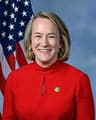 Nikki Budzinski
Democrat · Illinois
 Chrissy Houlahan
Democrat · Pennsylvania