
A Republican bill with 12 Republican cosponsors · See all 12 cosponsors
Last activity — Referred to the House Committee on Ways and Means.
In committee
Introduced and handed to a committee in the chamber it started in.
The committee holds it, and most bills are never heard from again. A hearing or a committee vote would be news; silence is the usual outcome, and it kills the bill without anyone voting against it.
Its path through Congress
- Introduced
- In Committee
What this bill would do
This bill, known as the "Creating Accountability in Loan Repayment Act," aims to amend title XII of the Social Security Act. It requires States to prioritize the repayment of outstanding advances made under section 1201. When a State receives funds from the Federal Government intended to repay these advances, it must use those funds for repayment first. This repayment must happen within 5 business days of the funds becoming available. If a State uses the money for other purposes first, it must pay the full amount back to the Federal Government.
Yes· 3 of 7
- Scored +5
Does this make the government pay for what it commits to?
The bill imposes strict timelines and penalties to ensure states fulfill their financial obligations to the federal government.
- Scored +4
Does this give the federal government more power?
The bill expands federal oversight by allowing the Secretary to determine if a state has violated repayment requirements.
- Scored +3
Does this reduce what the federal government owes?
The bill mandates the repayment of outstanding federal advances to the national treasury.
The opposite
- Scored -4
Does this leave more decisions to the states?
The bill restricts the autonomy of states to decide how to allocate funds received from the federal government.
- Scored -2
Would households on low incomes be better off under this?
By mandating debt repayment over other uses, states may have less immediate liquidity to fund social programs that assist low-income households.
- Scored -1
Is this likely to lift people out of poverty?
The bill reduces state flexibility to use incoming funds for immediate social service needs by prioritizing debt repayment.
Who it would affect, and how
Potential Positive Impacts for People
-
Ensures debt repayment: The bill requires States to use funds to repay outstanding advances before using them for any other purpose (Section 2(a)(1)). This ensures that money owed to the Federal Government for unemployment insurance advances is handled first.
-
Establishes accountability for fund usage: If a State uses funds for other purposes instead of paying back advances, the Secretary can determine a violation has occurred (Section 2(a)(2)). This requires the State to pay the full amount back to the Federal Government within 5 business days of that determination.
Potential Negative Impacts for People
- Limits State flexibility in fund usage: The bill mandates that States must use certain funds to repay outstanding advances prior to using the grant for any other purpose (Section 2(a)(1)). This limits how a State can utilize received funds if they have outstanding balances.
Groups and Interests Ranking
Every group the model scored this bill for, from -10 to +10. Tap or hover a score for the reason it gave.
- Economy And Finance
- Does this make the government pay for what it commits to? — The bill imposes strict timelines and penalties to ensure states fulfill their financial obligations to the federal government. Does this reduce what the federal government owes? — The bill mandates the repayment of outstanding federal advances to the national treasury. Does this increase support for people who lose their jobs? — By ensuring the repayment of unemployment insurance advances, the bill helps stabilize the long-term availability of unemployment insurance funds. Does this reduce what the federal government spends? — The bill ensures that funds owed to the federal government are returned rather than being spent on other state-level programs.
- Governance And Ideology
- Does this give the federal government more power? — The bill expands federal oversight by allowing the Secretary to determine if a state has violated repayment requirements. Does this make what the government does easier for the public to see? — The bill creates clear, enforceable rules for how states handle federal funds related to unemployment advances. Does this leave more decisions to the states? — The bill restricts the autonomy of states to decide how to allocate funds received from the federal government.
- Demographic And Interest Groups
- Would union members be better off under this? — The bill helps ensure the long-term solvency of unemployment insurance systems which workers rely upon. Would households on low incomes be better off under this? — By mandating debt repayment over other uses, states may have less immediate liquidity to fund social programs that assist low-income households.
- Social Issues And Justice
- Is this likely to lift people out of poverty? — The bill reduces state flexibility to use incoming funds for immediate social service needs by prioritizing debt repayment.
- 8/27/2026
- 1 Cosponsor added.
- 7/22/2026
- 1 Cosponsor added.
- 7/9/2026
- 1 Cosponsor added.
- 6/30/2026
- 1 Cosponsor added.
- 6/29/2026
- 1 Cosponsor added.
- 6/24/2026
- 1 Cosponsor added.
- 6/11/2026
- 1 Cosponsor added.
- 6/8/2026
- 3 Cosponsors added.
- 6/3/2026
- 1 Cosponsor added.
- 5/20/2026
- 1 Cosponsor added.
- 5/19/2026
- Referred to the House Committee on Ways and Means.
- Introduced in House
 Ken Calvert
Republican · California
 Mike Carey
Republican · Ohio
 Jake Ellzey
Republican · Texas
 James Gallagher
Republican · California
 Darrell Issa
Republican · California
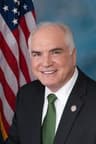 Mike Kelly
Republican · Pennsylvania
 Young Kim
Republican · California
 Max Miller
Republican · Ohio
 Jay Obernolte
Republican · California
 Lloyd Smucker
Republican · Pennsylvania
 Beth Van Duyne
Republican · Texas
 Rudy Yakym
Republican · Indiana