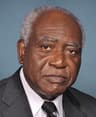
Danny Davis (D-IL)
Julius Rosenwald and Rosenwald Schools National Historical Park Act
A Democratic bill with 1 Republican cosponsor · See all 7 cosponsors
Last activity — Referred to the House Committee on Natural Resources.
In committee
Introduced and handed to a committee in the chamber it started in.
The committee holds it, and most bills are never heard from again. A hearing or a committee vote would be news; silence is the usual outcome, and it kills the bill without anyone voting against it.
Its path through Congress
- Introduced
- In Committee
What this bill would do
This bill seeks to establish the Julius Rosenwald and Rosenwald Schools National Historical Park. The legislation aims to commemorate the life of philanthropist Julius Rosenwald and the impact of the Rosenwald Schools on African American education. The park would include specific school sites in Maryland, South Carolina, and Virginia, along with a headquarters near the former Sears Merchandising Complex in Chicago. Additionally, the bill creates the Rosenwald Schools National Network to connect various sites and disseminate the history of these schools throughout the country. The Secretary of the Interior is tasked with administering the park and managing this new network.
Yes· 3 of 23
- Scored +9
Would Black Americans be better off under this?
Directly commemorates the educational legacy and civil rights impact of Rosenwald Schools for African Americans.
- Scored +7
Does this narrow racial gaps in how people are treated?
The bill honors the history of African American education and recognizes the contributions of civil rights leaders.
- Scored +5
Would students be better off under this?
Creates educational resources and sites dedicated to the history of education.
The opposite
- Scored -1
Does this reduce what the federal government owes?
The bill authorizes federal spending for land acquisition and park administration, which slightly increases government expenditure.
- Scored -1
Does this reduce what the federal government spends?
The bill authorizes the use of appropriated funds for park establishment and grants.
Who it would affect, and how
Potential Positive Impacts for People
-
Preservation of History: The bill establishes a park to preserve representative sites of the Rosen0wald Schools, such as the San Domingo School, the Saint George Rosenwald School, and the Woodville Rosenwald School (Section 2(1)(A) and Section 4(b)(1)).
-
Educational Enrichment: The creation of a headquarters and visitor center is intended to enlighten visitors on the legacy of Julius Rosenwald and how the Rosenwald Schools improved African American education (Section 2(1)(A) and Section 2(2)(A)).
-
Support for Educational Programs: Through the Rosenwald Schools National Network, the Secretary can provide assistance and enter into cooperative agreements to support educational and interpretive programs (Section 5(b)(3) and Section 5(d)).
-
Historical Connectivity: The establishment of a National Network aims to connect remaining Rosenwald Schools to more fully share their story throughout the United States (Section 2(3)).
Potential Negative Impacts for People
-
Strict Acquisition Limits: For the San Domingo School in Maryland, the Secretary is restricted from acquiring the property through standard federal means, limiting acquisition only to donation, purchase with donated funds, or exchange (Section 4(a)(5)(C)).
-
Financial Reimbursement Risk: If a project receives funds for preservation but later converts, uses, or disposes of that property for purposes inconsistent with the bill, the United States has the right to seek reimbursement for the full amount of the funds or the increase in the project's value (Section 4(a)(4)(B)).
Groups and Interests Ranking
Every group the model scored this bill for, from -10 to +10. Tap or hover a score for the reason it gave.
- Demographic And Interest Groups
- Would Black Americans be better off under this? — Directly commemorates the educational legacy and civil rights impact of Rosenwald Schools for African Americans. Would students be better off under this? — Creates educational resources and sites dedicated to the history of education. Would people in rural areas be better off under this? — Provides preservation and funding for sites in rural Maryland, South Carolina, and Virginia. Would people in cities be better off under this? — Establishes a headquarters and visitor center in Chicago's North Lawndale neighborhood. Would children be better off under this? — Provides educational resources and historical context regarding the education of children. Would immigrants be better off under this? — Commemorates the legacy of Jewish immigrants through the life of Julius Rosenwald. Would households on low incomes be better off under this? — Provides free or low-cost access to historical education. Would people in their twenties and thirties be better off under this? — Provides educational and historical resources. Would business owners be better off under this? — Potential for increased local business revenue due to tourism. Would high-income households be better off under this? — General public benefit from historical preservation. Would men be better off under this? — General public benefit from historical preservation. Would people in middle age be better off under this? — General public benefit from historical preservation. Would middle-income households be better off under this? — General public benefit from historical preservation. Would retired people be better off under this? — General public benefit from historical preservation. Would people over 65 be better off under this? — General public benefit from historical preservation. Would white Americans be better off under this? — General public benefit from expanded national park system. Would women be better off under this? — General public benefit from historical preservation.
- Environment Energy And Infrastructure
- Does this better protect public land such as parks and forests? — It expands the National Park System by preserving specific historic landmarks and coordinating land management. Does this invest in rural communities? — The bill provides funding and technical assistance for restoring school sites in rural areas of Maryland, South Carolina, and Virginia.
- Social Issues And Justice
- Does this narrow racial gaps in how people are treated? — The bill honors the history of African American education and recognizes the contributions of civil rights leaders.
- Economy And Finance
- Is this likely to create jobs? — Establishing a new National Historical Park and visitor center may create employment opportunities in park management and tourism. Is this likely to grow the economy? — Tourism associated with new national park sites can provide local economic boosts to the affected communities. Does this reduce what the federal government spends? — The bill authorizes the use of appropriated funds for park establishment and grants. Does this reduce what the federal government owes? — The bill authorizes federal spending for land acquisition and park administration, which slightly increases government expenditure.
- Governance And Ideology
- Does this give the federal government more power? — Increases federal oversight through the establishment of a new National Park unit.
- 7/20/2026
- 2 Cosponsors added.
- 7/9/2026
- 1 Cosponsor added.
- 6/8/2026
- 2 Cosponsors added.
- 5/19/2026
- Referred to the House Committee on Natural Resources.
- 2 Cosponsors added.
- Introduced in House
2 bills Congress.gov lists as related to this one — companions in the other chamber, earlier versions, and bills this one absorbed or was folded into.
 Julia Brownley
Democrat · California
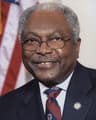 James Clyburn
Democrat · South Carolina
 Steve Cohen
Democrat · Tennessee
 Sarah Elfreth
Democrat · Maryland
 Eleanor Norton
Democrat · District of Columbia
 Joe Neguse
Democrat · Colorado
 Robert Wittman
Republican · Virginia