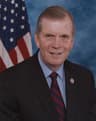
Tim Walberg (R-MI)
Aquatic Invasive Species Control and Prevention Act of 2026
A Republican bill with 6 Democratic cosponsors · See all 10 cosponsors
Last activity — Subcommittee Hearings Held
In committee
Introduced and handed to a committee in the chamber it started in.
The committee holds it, and most bills are never heard from again. A hearing or a committee vote would be news; silence is the usual outcome, and it kills the bill without anyone voting against it.
Its path through Congress
- Introduced
- In Committee
What this bill would do
The Aquatic Invasive Species Control and Prevention Act of 2026 aims to amend the Nonindigenous Aquatic Nuisance Prevention and Control Act of 1990. It focuses on providing better prevention, management, and eradication of aquatic invasive species. The bill establishes new grant programs to fund the research and development of cost-effective, environmentally sound technologies. It also directs the creation of a plan for watercraft inspections and decontaminations at various stations. Additionally, the legislation mandates a study on federal laws to expedite rapid response activities. Finally, it establishes an interbasin and intrabasin monitoring program to track species movement.
Yes· 3 of 5
- Scored +7
Does this better protect air, water and wildlife?
The bill funds the management, control, and eradication of invasive species to protect ecosystems.
- Scored +5
Does this put more money into scientific research?
The bill establishes a grant program to fund research and development of invasive species control technologies.
- Scored +4
Does this better protect public land such as parks and forests?
The bill enhances monitoring and control of aquatic ecosystems through federal agency coordination.
The opposite
No question was scored the opposite.
Who it would affect, and how
Potential Positive Impacts for People
-
Funding for New Technologies: The bill establishes a grant program to fund the research, development, and verification of environmentally sound and cost-effective ways to control and eradicate invasive species (Section 1105(a)).
-
Support for Local Organizations: Grants under the new program are intended to support Federal, State, Tribal, regional, or local officials and nongovernmental organizations (Section 1105(b)(1)).
-
Rapid Response Capabilities: The bill defines "rapid response activities" as actions taken to eradicate invasive species, protect noninvasive species and their habitats, and mitigate economic harms (Section 2(a)(20)).
-
Protection of Ecosystems and Economy: Rapid response actions are designed to maintain ecosystem functions and avoid or reduce significant economic consequences (Section 2(a)(20)).
-
Improved Monitoring: The creation of an interbasin and intrabasin monitoring program will track species moving through specific waterways like the Chicago Sanitary and Ship Canal and the Mississippi River (Section 2(k)(1)(2)(A)).
-
Streamlined Boating Access: The bill directs the development of an interagency certification system for watercraft decontaminations to minimize disruption to public access for boating and recreation (Section 2(k)(2)(B)).
Potential Negative Impacts for People
-
Increased Penalties for Boaters: The bill includes a requirement to recommend a penalty structure for people who do not comply with watercraft inspections and decontaminations (Section 2(k)(2)(C)).
-
Potential Disruptions to Recreation: While the bill aims to minimize disruption, it still requires the development of plans for inspections and decontaminations at boat launches and access points (Section 2(k)(2)(A)).
Groups and Interests Ranking
Every group the model scored this bill for, from -10 to +10. Tap or hover a score for the reason it gave.
- Environment Energy And Infrastructure
- Does this better protect air, water and wildlife? — The bill funds the management, control, and eradication of invasive species to protect ecosystems. Does this better protect public land such as parks and forests? — The bill enhances monitoring and control of aquatic ecosystems through federal agency coordination.
- Education And Technology
- Does this put more money into scientific research? — The bill establishes a grant program to fund research and development of invasive species control technologies.
- Governance And Ideology
- Does this give the federal government more power? — The bill expands federal task force capabilities and inspection/decontamination planning.
- Economy And Finance
- Is this likely to grow the economy? — The bill seeks to mitigate significant economic harms associated with invasive species.
- 11/5/2026
- 1 Cosponsor added.
- 9/15/2026
- 2 Cosponsors added.
- 7/21/2026
- Subcommittee Hearings Held
- 7/15/2026
- 2 Cosponsors added.
- 7/14/2026
- Referred to the Subcommittee on Water, Wildlife and Fisheries.
- 6/2/2026
- 2 Cosponsors added.
- 5/21/2026
- 2 Cosponsors added.
- 5/19/2026
- Referred to the Committee on Transportation and Infrastructure, and in addition to the Committee on Natural Resources, for a period to be subsequently determined by the Speaker, in each case for consideration of such provisions as fall within the jurisdiction of the committee concerned.
- 1 Cosponsor added.
- Introduced in House
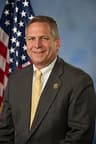 Mike Bost
Republican · Illinois
 Troy Carter
Democrat · Louisiana
 Debbie Dingell
Democrat · Michigan
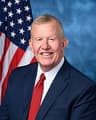 Mike Ezell
Republican · Mississippi
 Sarah Elfreth
Democrat · Maryland
 Bill Huizenga
Republican · Michigan
 John Mannion
Democrat · New York
 Joe Neguse
Democrat · Colorado
 Jill Tokuda
Democrat · Hawaii
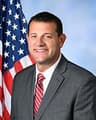 David Valadao
Republican · California