
A Republican bill with 3 Republican cosponsors · See all 3 cosponsors
Last activity — Referred to the House Committee on the Judiciary.
In committee
Introduced and handed to a committee in the chamber it started in.
The committee holds it, and most bills are never heard from again. A hearing or a committee vote would be news; silence is the usual outcome, and it kills the bill without anyone voting against it.
Its path through Congress
- Introduced
- In Committee
What this bill would do
This bill, known as the "Federal Halo Act," aims to amend title 18 of the United States Code. It seeks to establish a safety buffer zone to protect certain Federal law enforcement officers. The legislation introduces a new criminal offense for obstructing law enforcement activities. Specifically, it targets individuals who ignore verbal warnings to stay away from officers performing legal duties. This includes staying within a 15-foot distance with specific harmful intents.
Yes
- Scored +5
Does this change how police departments operate?
The bill enhances officer safety by establishing a legal buffer zone against harassment and physical threats.
The opposite· 3 of 5
- Scored -3
Would immigrants be better off under this?
New federal criminal prohibitions regarding interaction with law enforcement may create additional legal risks for immigrant populations.
- Scored -2
Would households on low incomes be better off under this?
The new criminal penalties and potential imprisonment could disproportionately impact lower-income individuals who interact more frequently with federal law enforcement.
- Scored -2
Would Black Americans be better off under this?
The imposition of new criminal penalties for proximity violations could increase legal risks for heavily policed communities.
Who it would affect, and how
Potential Positive Impacts for People
-
Protection for Federal officers: The bill creates a safety buffer by making it unlawful to approach or remain within 15 feet of an officer after a warning, which aims to protect officers engaged in the lawful performance of their duties (Section 2(a)(b)).
-
Prevention of harassment and threats: By criminalizing actions intended to harass or threaten officers with physical harm, the bill seeks to reduce intentional emotional distress and physical interference (Section 2(a)(b)(2-3)).
Potential Negative Impacts for People
-
Criminal penalties and imprisonment: Individuals found in violation of these new rules could face significant punishments, including fines and imprisonment for up to 5 years (Section 2(a)(b)(c)).
-
New restrictions on proximity: People may face legal consequences for being within 15 feet of a Federal law enforcement officer if they have received a verbal warning and are deemed to have certain intents (Section 2(a)(b)).
Groups and Interests Ranking
Every group the model scored this bill for, from -10 to +10. Tap or hover a score for the reason it gave.
- Demographic And Interest Groups
- Would immigrants be better off under this? — New federal criminal prohibitions regarding interaction with law enforcement may create additional legal risks for immigrant populations. Would Black Americans be better off under this? — The imposition of new criminal penalties for proximity violations could increase legal risks for heavily policed communities. Would households on low incomes be better off under this? — The new criminal penalties and potential imprisonment could disproportionately impact lower-income individuals who interact more frequently with federal law enforcement. Would people with disabilities be better off under this? — The proximity restrictions could potentially create legal vulnerabilities for individuals whose behaviors or needs may be misinterpreted by law enforcement.
- Social Issues And Justice
- Does this change how police departments operate? — The bill enhances officer safety by establishing a legal buffer zone against harassment and physical threats.
- Governance And Ideology
- Does this protect the right to fair treatment by the courts? — The bill creates a new criminal offense with significant prison time that may impact due process during interactions with law enforcement.
- 8/27/2026
- 1 Cosponsor added.
- 5/13/2026
- Referred to the House Committee on the Judiciary.
- 2 Cosponsors added.
- Introduced in House
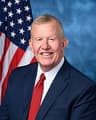 Mike Ezell
Republican · Mississippi
 Michael Lawler
Republican · New York
 John McGuire
Republican · Virginia