
A Democratic bill with 12 Democratic cosponsors · See all 12 cosponsors
Last activity — Referred to the Committee on Education and Workforce, and in addition to the Committee on Ways and Means, for a period to be subsequently determined by the Speaker, in each case for consideration of such provisions as fall within the jurisdiction of the committee concerned.
In committee
Introduced and handed to a committee in the chamber it started in.
The committee holds it, and most bills are never heard from again. A hearing or a committee vote would be news; silence is the usual outcome, and it kills the bill without anyone voting against it.
Its path through Congress
- Introduced
- In Committee
What this bill would do
The Afterschool for All Act aims to amend the Elementary and Secondary Education Act of 1965. It specifically seeks to reauthorize the Nita M. Lowey Community Learning Centers program for fiscal years 2026 through 2035. The bill proposes a significant increase in the authorization of appropriations for this program. Additionally, it includes a provision to amend the corporate tax rate within the Internal Revenue Code of 1986.
Yes· 3 of 9
- Scored +10
Would children be better off under this?
The bill greatly expands funding for afterschool community learning centers which benefit children.
- Scored +10
Would students be better off under this?
The bill provides a massive increase in funding for afterschool learning and programs.
- Scored +10
Does this put more money into public schools?
The bill significantly increases funding for the Nita M. Lowey Community Learning Centers program to $10 billion annually.
The opposite
- Scored -1
Would high-income households be better off under this?
The bill increases the corporate tax rate.
- Scored -1
Would business owners be better off under this?
The bill raises the corporate tax rate from 21 to 22 percent.
- Scored -1
Does this reduce what the federal government spends?
The bill increases government spending by authorizing $10 billion annually for community learning centers.
Who it would affect, and how
Potential Positive Impacts for People
- Increased funding for community learning centers: The bill replaces previous funding levels with $10,000,000,000 for each of fiscal years 2026 through 2035, and these funds remain available until expended (Section 2(a)).
Potential Negative Impacts for People
- Changes to corporate tax rates: The bill amends Section 11(b) of the Internal Revenue Code of 1986 by striking "21" and inserting "22," which applies to taxable years beginning after the enactment of the Act (Section 2(c)(1)).
Groups and Interests Ranking
Every group the model scored this bill for, from -10 to +10. Tap or hover a score for the reason it gave.
- Demographic And Interest Groups
- Would children be better off under this? — The bill greatly expands funding for afterschool community learning centers which benefit children. Would students be better off under this? — The bill provides a massive increase in funding for afterschool learning and programs. Would households on low incomes be better off under this? — The increased funding for community learning centers provides significant resources for low-income families. Would middle-income households be better off under this? — The bill provides expanded community learning resources for families. Would women be better off under this? — The bill provides increased support for community-based learning programs. Would people in their twenties and thirties be better off under this? — The bill provides expanded resources for community learning programs. Would business owners be better off under this? — The bill raises the corporate tax rate from 21 to 22 percent. Would high-income households be better off under this? — The bill increases the corporate tax rate.
- Education And Technology
- Does this put more money into public schools? — The bill significantly increases funding for the Nita M. Lowey Community Learning Centers program to $10 billion annually.
- Social Issues And Justice
- Is this likely to lift people out of poverty? — The increased funding for community learning centers can help support families and reduce poverty through educational resources.
- Economy And Finance
- Does this raise the taxes companies pay? — The bill increases the corporate tax rate from 21 percent to 22 percent. Does this reduce what the federal government spends? — The bill increases government spending by authorizing $10 billion annually for community learning centers.
- 7/16/2026
- 1 Cosponsor added.
- 5/13/2026
- 1 Cosponsor added.
- 5/4/2026
- Referred to the Committee on Education and Workforce, and in addition to the Committee on Ways and Means, for a period to be subsequently determined by the Speaker, in each case for consideration of such provisions as fall within the jurisdiction of the committee concerned.
- 10 Cosponsors added.
- Introduced in House
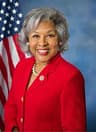 Joyce Beatty
Democrat · Ohio
 Steve Cohen
Democrat · Tennessee
 André Carson
Democrat · Indiana
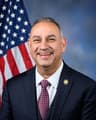 Gilbert Cisneros
Democrat · California
 Cleo Fields
Democrat · Louisiana
 Jimmy Gomez
Democrat · California
 Adelita Grijalva
Democrat · Arizona
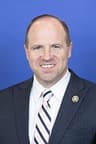 Timothy Kennedy
Democrat · New York
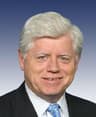 John Larson
Democrat · Connecticut
 George Latimer
Democrat · New York
 Seth Moulton
Democrat · Massachusetts
 Eleanor Norton
Democrat · District of Columbia