
A Republican bill with 1 Democratic cosponsor · See all 12 cosponsors
Last activity — Referred to the House Committee on Energy and Commerce.
In committee
Introduced and handed to a committee in the chamber it started in.
The committee holds it, and most bills are never heard from again. A hearing or a committee vote would be news; silence is the usual outcome, and it kills the bill without anyone voting against it.
Its path through Congress
- Introduced
- In Committee
What this bill would do
This bill, known as the "Protecting Equal Access to Thyroid Act of 2026" or the "PEAT Act of 2026," seeks to amend the Public Health Service Act. It specifically targets how biologics are classified. The bill proposes a prohibition on treating a biologic as a biological product based only on the presence of a protein that is a clinically inactive component. This change would alter the existing definitions within the Public Health Service Act.
Yes· 3 of 4
- Scored +4
Does this lower the price of prescription medicines?
By preventing certain proteins from disqualifying products from being classified as biologics, the bill may facilitate the entry of more cost-effective treatments into the market.
- Scored +3
Does this make health care easier to get in general?
The bill's reclassification of biologics could potentially lower barriers to accessing specific types of therapeutic products.
- Scored +2
Would households on low incomes be better off under this?
Changes in biologic classification may eventually lead to lower costs for essential medications used by low-income populations.
The opposite
No question was scored the opposite.
Who it would affect, and how
Potential Positive Impacts for People
- Prohibition of specific classification criteria: The bill adds a rule that a biologic cannot be treated as a biological product based solely on the presence of a protein that is a clinically inactive component in that biologic (Section 2(a)).
Potential Negative Impacts for People
- No specific negative impacts are identified in the provided text.
Groups and Interests Ranking
Every group the model scored this bill for, from -10 to +10. Tap or hover a score for the reason it gave.
- Healthcare
- Does this lower the price of prescription medicines? — By preventing certain proteins from disqualifying products from being classified as biologics, the bill may facilitate the entry of more cost-effective treatments into the market. Does this make health care easier to get in general? — The bill's reclassification of biologics could potentially lower barriers to accessing specific types of therapeutic products.
- Demographic And Interest Groups
- Would households on low incomes be better off under this? — Changes in biologic classification may eventually lead to lower costs for essential medications used by low-income populations. Would people with disabilities be better off under this? — Expanded competition in the biologics market could improve access to necessary treatments for people with chronic conditions.
- 8/13/2026
- 1 Cosponsor added.
- 7/20/2026
- 1 Cosponsor added.
- 7/16/2026
- 1 Cosponsor added.
- 6/29/2026
- 1 Cosponsor added.
- 6/24/2026
- 1 Cosponsor added.
- 6/23/2026
- 1 Cosponsor added.
- 6/8/2026
- 1 Cosponsor added.
- 6/2/2026
- 1 Cosponsor added.
- 5/15/2026
- 1 Cosponsor added.
- 5/14/2026
- 1 Cosponsor added.
- 5/13/2026
- 1 Cosponsor added.
- 4/30/2026
- Referred to the House Committee on Energy and Commerce.
- 1 Cosponsor added.
- Introduced in House
 Brian Babin
Republican · Texas
 John Carter
Republican · Texas
 Earl Carter
Republican · Georgia
 Diana Harshbarger
Republican · Tennessee
 Abraham Hamadeh
Republican · Arizona
 Ro Khanna
Democrat · California
 Mike Kennedy
Republican · Utah
 Nicholas Langworthy
Republican · New York
 Morgan Luttrell
Republican · Texas
 Michael McCaul
Republican · Texas
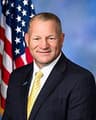 Troy Nehls
Republican · Texas
 Randy Weber
Republican · Texas