
A Republican bill with 7 Republican cosponsors · See all 7 cosponsors
Last activity — Referred to the House Committee on Foreign Affairs.
In committee
Introduced and handed to a committee in the chamber it started in.
The committee holds it, and most bills are never heard from again. A hearing or a committee vote would be news; silence is the usual outcome, and it kills the bill without anyone voting against it.
Its path through Congress
- Introduced
- In Committee
What this bill would do
The FLEETS Now Act aims to combat the People's Republic of China's non-market-oriented trade practices in the shipbuilding industry. The bill seeks to rebuild United States domestic shipbuilding capacity and maritime strength through coordinated action and international partnerships. It proposes creating a new Assistant Secretary for Water, Environment, and Space Affairs within the Department of State. Additionally, the act establishes mechanisms for international shipbuilding coordination and an exchange program for industry experts. The legislation also directs efforts to influence the International Maritime Organization to protect United States interests. Ultimately, the bill intends to reduce dependencies on China and strengthen the American maritime workforce.
Yes· 3 of 9
- Scored +7
Does this strengthen ties with allied countries?
The bill promotes an Allied Maritime Framework and coordination with partner nations to ensure supply chain resilience.
- Scored +6
Is this likely to create jobs?
The bill aims to restore the American maritime workforce and increase domestic shipbuilding capacity through skill development.
- Scored +6
Would business owners be better off under this?
The bill provides support for domestic shipbuilding enterprises and protects them from non-market competition.
The opposite
- Scored -5
Does this cut the pollution that drives climate change?
The bill urges the IMO to withdraw or phase out certain regional emissions reduction schemes.
Who it would affect, and how
Potential Positive Impacts for People
-
Workforce Development: The bill promotes knowledge transfer and skill development for the shipbuilding labor force to increase domestic capacity (Section 201).
-
Job Creation and Wages: By addressing the loss of American jobs and lower wages caused by foreign competition, the act aims to restore the domestic maritime workforce (Section s 2 and 18).
-
Industry Expertise Exchange: The act authorizes an exchange program for technical shipbuilding experts, including marine engineers and deck-plate professionals, to increase knowledge and training in the American workforce (Section 204).
-
Economic Security: The policy aims to develop a domestic capacity to produce ships independent of supply chains that include materials from the People's Republic of China (Section 201).
-
Increased Investment: The bill seeks to secure direct investment in United States shipyards by allies and partners (Section 201).
Potential Negative Impacts for People
-
Increased Regulation and Costs: The bill includes efforts to modernize procurement processes and streamline regulations, which may impact how businesses operate (Section 2, paragraph 21).
-
Workforce Transition: The act notes that the United States currently lacks the capacity to scale up the domestic shipbuilding industry at the required rate (Section 2, paragraph 15).
Groups and Interests Ranking
Every group the model scored this bill for, from -10 to +10. Tap or hover a score for the reason it gave.
- National Security And Foreign Policy
- Does this strengthen ties with allied countries? — The bill promotes an Allied Maritime Framework and coordination with partner nations to ensure supply chain resilience. Does this favour talking over confrontation abroad? — The creation of an Assistant Secretary for Water, Environment, and Space Affairs enhances maritime diplomacy. Does this make trade with other countries easier? — The bill seeks to counter unfair trade practices and promote procompetitive industrial collaboration.
- Economy And Finance
- Is this likely to create jobs? — The bill aims to restore the American maritime workforce and increase domestic shipbuilding capacity through skill development. Is this likely to grow the economy? — By countering non-market advantages and protecting enterprises, the bill seeks to bolster domestic economic strength.
- Demographic And Interest Groups
- Would business owners be better off under this? — The bill provides support for domestic shipbuilding enterprises and protects them from non-market competition.
- Governance And Ideology
- Does this make what the government does easier for the public to see? — The bill mandates specific briefings and annual reports to congressional committees. Does this give the federal government more power? — The bill expands the roles and authority of the Department of State regarding maritime and space affairs.
- Education And Technology
- Does this put more into space exploration? — The bill includes responsibilities for maritime and space affairs within the State Department.
- Environment Energy And Infrastructure
- Does this cut the pollution that drives climate change? — The bill urges the IMO to withdraw or phase out certain regional emissions reduction schemes.
- 9/15/2026
- 1 Cosponsor added.
- 8/20/2026
- 1 Cosponsor added.
- 7/21/2026
- 1 Cosponsor added.
- 7/13/2026
- 1 Cosponsor added.
- 5/12/2026
- 1 Cosponsor added.
- 4/30/2026
- Referred to the House Committee on Foreign Affairs.
- 2 Cosponsors added.
- Introduced in House
 Bill Huizenga
Republican · Michigan
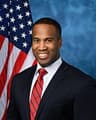 John James
Republican · Michigan
 Michael Lawler
Republican · New York
 Ryan Mackenzie
Republican · Pennsylvania
 Mark Messmer
Republican · Indiana
 Aumua Amata Radewagen
Republican · American Samoa
 Joe Wilson
Republican · South Carolina