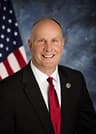
John Moolenaar (R-MI)
Community Multi-Share Coverage Program Act of 2026
A Republican bill with 1 Republican cosponsor · See the cosponsor
Last activity — Referred to the Committee on Energy and Commerce, and in addition to the Committee on Education and Workforce, for a period to be subsequently determined by the Speaker, in each case for consideration of such provisions as fall within the jurisdiction of the committee concerned.
In committee
Introduced and handed to a committee in the chamber it started in.
The committee holds it, and most bills are never heard from again. A hearing or a committee vote would be news; silence is the usual outcome, and it kills the bill without anyone voting against it.
Its path through Congress
- Introduced
- In Committee
What this bill would do
This bill, known as the "Community Multi-Share Coverage Program Act of 2026," directs the Secretary of Health and Human Services to award between 3 and 5 grants to support community-based health programs. These programs are designed to provide health coverage and integrated social services to qualifying individuals and small business workers. The goal is to reduce the number of uninsured people while promoting workforce development and economic self-sufficiency. Programs must include physical community presences and establish connections with local hospitals and employers. The initiative aims to help small businesses remain competitive in hiring by providing affordable coverage.
Yes· 3 of 13
- Scored +7
Would households on low incomes be better off under this?
The bill provides affordable health coverage and services targeting individuals with limited income and assets.
- Scored +7
Does this make health care easier to get in general?
The bill creates a community-based program to reduce the number of uninsured individuals through affordable coverage options.
- Scored +5
Would middle-income households be better off under this?
The program targets individuals with incomes exceeding Medicaid limits but below 400 percent of the federal poverty line.
The opposite
No question was scored the opposite.
Who it would affect, and how
Potential Positive Impacts for People
-
Improved Health Access: The program provides coverage for various services including physician services, hospital services, behavioral health, preventative services, prescription drugs, and emergency services (Section 2(b)(2)(A)).
-
Reduced Financial Barriers to Care: The health coverage required by the program imposes no deductible and limits co-payments to levels that do not prevent patient access (Section 2(b)(2)(B)).
-
Economic Support and Workforce Development: Programs aim to promote long-term economic self-sufficiency and address psycho-social barriers that impact employment success (Section 2(a)(2)).
-
Support for Small Businesses: The bill seeks to support small business economic recovery by helping these businesses be competitive in hiring and providing high-quality coverage to workers (Section 2(a)(3)).
-
Personalized Care Planning: Each enrollee receives an individualized plan and assessments to identify negative influences on their physical, emotional, and economic health (Section 2(b)(4)(C)).
Potential Negative Impacts for People
-
Risk of Losing Coverage: A program may rescind an individual's enrollment if they fail to meet minimum engagement and personal growth thresholds (Section 2(b)(6)(B)).
-
Potential for Limited Enrollment: If a program cannot serve everyone in its area, it will have a policy to determine which individuals are offered enrollment (Section 2(b)(6)(A)).
-
Financial Obligations: The program's costs are shared among several entities, including the enrollees themselves (Section 2(b)(5)(A)(iii)).
Groups and Interests Ranking
Every group the model scored this bill for, from -10 to +10. Tap or hover a score for the reason it gave.
- Demographic And Interest Groups
- Would households on low incomes be better off under this? — The bill provides affordable health coverage and services targeting individuals with limited income and assets. Would business owners be better off under this? — Small business owners benefit from improved workforce retention and competitive hiring capabilities. Would middle-income households be better off under this? — The program targets individuals with incomes exceeding Medicaid limits but below 400 percent of the federal poverty line. Would union members be better off under this? — The bill mentions support through skilled trade organizations for workers. Would people in their twenties and thirties be better off under this? — The workforce development and occupational training focus may benefit younger workers entering the labor market.
- Healthcare
- Does this make health care easier to get in general? — The bill creates a community-based program to reduce the number of uninsured individuals through affordable coverage options. Does this lower the price of prescription medicines? — The covered services explicitly include prescription drugs with limited co-payments. Does this put more money into Medicaid, the health coverage for people on low incomes? — The bill provides a transition coverage option for individuals moving away from Medicaid eligibility.
- Economy And Finance
- Does this make it easier to run a small business? — The bill provides small businesses with a mechanism to offer affordable health coverage to employees, aiding recruitment and retention. Is this likely to grow the economy? — The program aims to promote economic self-sufficiency and support small business economic recovery. Is this likely to create jobs? — The bill promotes workforce development and helps small businesses be more competitive in hiring.
- Social Issues And Justice
- Is this likely to lift people out of poverty? — The bill addresses psycho-social barriers and promotes economic self-sufficiency to help individuals improve their financial status.
- Education And Technology
- Does this make it easier to use public money at a school other than the local one? — The bill coordinates with entities that provide educational and occupational training to enhance work preparedness.
- 4/29/2026
- Referred to the Committee on Energy and Commerce, and in addition to the Committee on Education and Workforce, for a period to be subsequently determined by the Speaker, in each case for consideration of such provisions as fall within the jurisdiction of the committee concerned.
- 1 Cosponsor added.
- Introduced in House
 Bill Huizenga
Republican · Michigan