
A Republican bill with 2 Democratic cosponsors · See all 3 cosponsors
Last activity — Referred to the House Committee on Education and Workforce.
In committee
Introduced and handed to a committee in the chamber it started in.
The committee holds it, and most bills are never heard from again. A hearing or a committee vote would be news; silence is the usual outcome, and it kills the bill without anyone voting against it.
Its path through Congress
- Introduced
- In Committee
What this bill would do
This bill, known as the "Protecting Sibling Relationships in Foster Care Act," aims to encourage specialized foster care programs. The Secretary of Health and Human Services would establish a competitive grant pilot program over a five-year period. This program would provide up to five grants to eligible entities to develop programs specifically for certain sibling groups. These groups include those with three or more siblings, wide age ranges, or complex needs. The funds are intended to help identify and place these sibling groups together using evidence-based methods.
Yes· 3 of 6
- Scored +5
Would children be better off under this?
The bill provides resources to keep siblings together in the foster care system.
- Scored +3
Would households on low incomes be better off under this?
The bill assists children in the foster care system, who are among the most economically vulnerable populations.
- Scored +3
Would people with disabilities be better off under this?
The bill provides specialized support for youth with disabilities in the foster care system.
The opposite
- Scored -1
Does this reduce what the federal government spends?
The bill authorizes a specific limited appropriation of up to $10,000,000 for a new grant program.
Who it would affect, and how
Potential Positive Impacts for People
-
Support for Sibling Groups: The bill encourages the development of specialized foster care programs designed for groups of 3 or more siblings, those with wide age ranges, and those with complex needs (Section 2(a)). This is intended to help place these specific sibling groups together.
-
Focus on High-Need Youth: The program targets youth with complex needs, which includes those exhibiting challenging behaviors, severe mental health needs, disabilities, or life-threatening illnesses (Section 2(a)).
-
Addressing Complex Family Dynamics: The bill recognizes that complex needs can arise from siblings in foster care having different parents, which could impact their ability to be placed together (Section 2(a)).
Potential Negative Impacts for People
-
Limited Number of Grants: The Secretary is authorized to make not more than 5 grants (Section 2(a)). This limit means only a small number of entities will receive this specific type of support.
-
Funding Caps: The total amount authorized to be appropriated for this program is not more than $10,000,000 (Section 2(g)).
Groups and Interests Ranking
Every group the model scored this bill for, from -10 to +10. Tap or hover a score for the reason it gave.
- Demographic And Interest Groups
- Would children be better off under this? — The bill provides resources to keep siblings together in the foster care system. Would households on low incomes be better off under this? — The bill assists children in the foster care system, who are among the most economically vulnerable populations. Would people with disabilities be better off under this? — The bill provides specialized support for youth with disabilities in the foster care system.
- Social Issues And Justice
- Does this expand the rights of people with disabilities? — The bill includes youth with disabilities as a priority group for specialized foster care programming. Is this likely to lift people out of poverty? — By improving stability for siblings in foster care, the bill supports family cohesion for vulnerable youth.
- Healthcare
- Does this make mental health care easier to get? — The bill specifically targets youth with severe mental health needs within the foster care system.
- Economy And Finance
- Does this reduce what the federal government spends? — The bill authorizes a specific limited appropriation of up to $10,000,000 for a new grant program.
- 7/20/2026
- 1 Cosponsor added.
- 4/29/2026
- Referred to the House Committee on Education and Workforce.
- 2 Cosponsors added.
- Introduced in House
 Gwen Moore
Democrat · Wisconsin
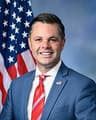 Zachary Nunn
Republican · Iowa
 Debbie Wasserman Schultz
Democrat · Florida