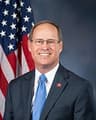
Gregory Murphy (R-NC)
POPCaP Authorization Act of 2026
A Republican bill with 2 Democratic cosponsors · See all 2 cosponsors
Last activity — Referred to the Subcommittee on Health.
In committee
Introduced and handed to a committee in the chamber it started in.
The committee holds it, and most bills are never heard from again. A hearing or a committee vote would be news; silence is the usual outcome, and it kills the bill without anyone voting against it.
Its path through Congress
- Introduced
- In Committee
What this bill would do
This bill directs the Secretary of Veterans Affairs to establish a precision oncology program specifically for prostate cancer and non-prostate genitourinary cancer. The program relies on designated Centers of Excellence to provide specialized medical services, genetic sequencing, and clinical trials. These centers must employ a specific team of medical specialists and participate in a national registry and telemedicine boards. The Secretary is required to maintain at least 21 such centers across various Veterans Integrated Service Networks. A Program Leadership team will oversee strategic planning, research, and coordination among the centers. The act also authorizes specific funding levels to implement and sustain these initiatives.
Yes· 3 of 6
- Scored +9
Would veterans be better off under this, taking everything together?
The bill directly enhances medical services and research access for veterans facing prostate cancer.
- Scored +8
Does this increase the pay, pensions or support veterans receive?
The bill creates a precision oncology program to provide advanced cancer care and research opportunities for veterans.
- Scored +7
Does this make health care easier to get in general?
The bill establishes specialized Centers of Excellence to provide advanced oncology services and genetic sequencing to veterans.
The opposite
No question was scored the opposite.
Who it would affect, and how
Potential Positive Impacts for People
-
Enhanced Specialized Care: Eligible veterans with a diagnosis of prostate cancer or non-prostate genitourinary cancer can enroll in additional medical services through this program (Section 2(b)).
-
Advanced Medical Research Access: Centers of Excellence are required to establish genetic sequencing, develop biomarker-specific clinical trials, and participate in industry-sponsored studies (Section 2(c)(1)(A, F, G)).
-
Financial Assistance for Treatment Access: The program provides travel support to eligible veterans with specific genetic mutations to help them access important studies (Section 2(c)(1)(E)).
-
Coordinated Medical Oversight: The establishment of a Program Leadership team ensures strategic liaison services, coordination with National Cancer Institute studies, and a uniform genetic sequencing platform to connect different centers (Section 2(g)(4)(A, B, H)).
Potential Negative Impacts for People
- No specific negative impacts are explicitly detailed in the provided text.
Groups and Interests Ranking
Every group the model scored this bill for, from -10 to +10. Tap or hover a score for the reason it gave.
- Demographic And Interest Groups
- Would veterans be better off under this, taking everything together? — The bill directly enhances medical services and research access for veterans facing prostate cancer. Would people over 65 be better off under this? — The bill provides advanced prostate cancer treatment which benefits the aging veteran population.
- National Security And Foreign Policy
- Does this increase the pay, pensions or support veterans receive? — The bill creates a precision oncology program to provide advanced cancer care and research opportunities for veterans.
- Healthcare
- Does this make health care easier to get in general? — The bill establishes specialized Centers of Excellence to provide advanced oncology services and genetic sequencing to veterans.
- Social Issues And Justice
- Is this likely to lift people out of poverty? — The bill provides travel support for eligible veterans to access medical studies.
- Economy And Finance
- Does this make the government pay for what it commits to? — The bill authorizes specific appropriations of $15.5 million annually for the program.
- 7/30/2026
- 1 Cosponsor added.
- 6/12/2026
- Referred to the Subcommittee on Health.
- 4/28/2026
- Referred to the House Committee on Veterans' Affairs.
- 1 Cosponsor added.
- Introduced in House
 Herbert Conaway
Democrat · New Jersey
 Josh Riley
Democrat · New York