
Debbie Dingell (D-MI)
Communications, Video, and Technology Accessibility Act of 2026
A Democratic bill with 1 Republican cosponsor · See all 6 cosponsors
Last activity — Referred to the House Committee on Energy and Commerce.
In committee
Introduced and handed to a committee in the chamber it started in.
The committee holds it, and most bills are never heard from again. A hearing or a committee vote would be news; silence is the usual outcome, and it kills the bill without anyone voting against it.
Its path through Congress
- Introduced
- In Committee
What this bill would do
This bill, known as the "Communications, Video, and Technology Accessibility Act of 2026," aims to update the 21st Century Communications and Video Accessibility Act of 2010. It focuses on enhancing accessibility through stricter requirements for closed captioning, audio description, and sign language in video programming. The legislation also addresses video playback apparatuses, video conferencing services, and telecommunications relay services. Furthermore, it establishes an advisory committee to guide these accessibility efforts. The bill includes provisions to address emerging technologies and ensures better customer service accessibility for people with disabilities.
Yes· 3 of 7
- Scored +9
Would people with disabilities be better off under this?
The bill significantly expands accessibility features for video, audio description, sign language, and telecommunications services.
- Scored +8
Does this expand the rights of people with disabilities?
The bill mandates expanded accessibility for closed captioning, audio description, sign language, and video conferencing for people with disabilities.
- Scored +5
Does this get reliable internet to more people?
The bill enhances the accessibility of online video programming and digital communication services.
The opposite
- Scored -2
Does this make it easier to run a small business?
The bill imposes new accessibility requirements on media providers and manufacturers that may result in significant expense.
Who it would affect, and how
Potential Positive Impacts for People
-
Improved access to online media: The bill requires new regulations for closed captioning on online video programming and consumer generated media to ensure they are fully accessible (Sec. 102).
-
Enhanced television accessibility: New regulations will require television programming to include audio description and closed captioning to help viewers (Sec. 102, Sec. 103).
-
Better sign language availability: The bill mandates regulations for sign language presentation to be visible on screens during video programming (Sec. 105).
-
Improved video conferencing: Providers will be required to offer features like voice recognition, simplified interfaces, and screen-reader capabilities for video conferencing (Sec. 301).
-
Enhanced emergency and relay services: The bill expands telecommunications relay services to include direct video calling and support for communication facilitators and Deaf interpreters (Sec. 302).
-
Increased support for the DeafBlind community: The National DeafBlind equipment distribution program will receive increased funding, rising to $20,000,000 (Sec. 303).
-
Accessible customer service: Manufacturers and service providers must make customer assistance usable for individuals who rely on sign language via direct video calling (Sec. 401).
-
Future-proofing accessibility: The Commission will assess how emerging technologies, like artificial intelligence and augmented reality, impact accessibility for people with disabilities (Sec. 501).
Potential Negative Impacts for People
-
Economic burdens on entities: The bill allows the Commission to exempt certain programs or media from accessibility requirements if providing them is determined to be economically burdensome (Sec. 103, Sec. 104).
-
Potential difficulty for providers: The law acknowledges that complying with requirements for audio description or closed captioning may result in significant difficulty or expense for some entities (Sec. 104).
Groups and Interests Ranking
Every group the model scored this bill for, from -10 to +10. Tap or hover a score for the reason it gave.
- Demographic And Interest Groups
- Would people with disabilities be better off under this? — The bill significantly expands accessibility features for video, audio description, sign language, and telecommunications services. Would retired people be better off under this? — Enhanced video and communication accessibility benefits retirees who may rely on these services. Would people over 65 be better off under this? — Improved accessibility in video programming and communication services benefits older Americans. Would households on low incomes be better off under this? — Increased funding for the National DeafBlind equipment distribution program supports low-income individuals in that community.
- Social Issues And Justice
- Does this expand the rights of people with disabilities? — The bill mandates expanded accessibility for closed captioning, audio description, sign language, and video conferencing for people with disabilities.
- Education And Technology
- Does this get reliable internet to more people? — The bill enhances the accessibility of online video programming and digital communication services.
- Governance And Ideology
- Does this make what the government does easier for the public to see? — The bill requires the FCC to submit regular reports to Congress regarding accessibility complaints and technological assessments.
- Economy And Finance
- Does this make it easier to run a small business? — The bill imposes new accessibility requirements on media providers and manufacturers that may result in significant expense.
- 8/17/2026
- 1 Cosponsor added.
- 8/3/2026
- 1 Cosponsor added.
- 5/13/2026
- 1 Cosponsor added.
- 5/12/2026
- 2 Cosponsors added.
- 4/16/2026
- Referred to the House Committee on Energy and Commerce.
- 1 Cosponsor added.
- Introduced in House
One bill Congress.gov lists as related to this one — companions in the other chamber, earlier versions, and bills this one absorbed or was folded into.
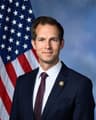 Jake Auchincloss
Democrat · Massachusetts
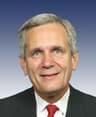 Lloyd Doggett
Democrat · Texas
 Brian Fitzpatrick
Republican · Pennsylvania
 George Latimer
Democrat · New York
 James McGovern
Democrat · Massachusetts
 Lateefah Simon
Democrat · California