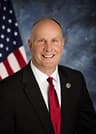
A Republican bill with no cosponsors
Last activity — Referred to the Committee on Foreign Affairs, and in addition to the Committee on Intelligence (Permanent Select), for a period to be subsequently determined by the Speaker, in each case for consideration of such provisions as fall within the jurisdiction of the committee concerned.
In committee
Introduced and handed to a committee in the chamber it started in.
The committee holds it, and most bills are never heard from again. A hearing or a committee vote would be news; silence is the usual outcome, and it kills the bill without anyone voting against it.
Its path through Congress
- Introduced
- In Committee
What this bill would do
The SCALE Act requires the Secretary of Commerce and the Director of National Intelligence to create a process for regulating the sale of certain AI hardware. The bill establishes objective performance metrics to track the AI hardware capabilities and quantities held by entities of concern. Using these metrics, the Secretary will set annual upper limits on the export of AI hardware to these entities. The policy aims to prevent foreign adversaries from matching the AI hardware capacity of the United States. It also includes a system for reviewing license applications through a presumption of denial.
Yes· 3 of 6
- Scored +8
Does this better protect the country from computer attacks?
Strengthens national security by tightly regulating advanced AI hardware exports and preventing foreign adversaries from acquiring military-applicable technology.
- Scored +5
Does this give the federal government more power?
Grants the Secretary of Commerce and Director of National Intelligence extensive new authorities to set rolling annual export thresholds.
- Scored +4
Does this put more rules on large technology companies?
Imposes stringent reporting, performance metrics, and licensing restrictions on the export of advanced AI hardware.
The opposite
- Scored -2
Does this make trade with other countries easier?
Imposes strict export limitations and third-party testing requirements that may increase regulatory friction for international tech trade.
- Scored -2
Would business owners be better off under this?
Increases compliance costs and restricts foreign sales channels for domestic artificial intelligence hardware companies.
Who it would affect, and how
Potential Positive Impacts for People
-
Business Stability: The bill intends to provide business stability in export controls by using a systematic and repeatable process that annually assesses the indigenous capability of entities of concern to produce AI hardware (Section 2).
-
National Security and Leadership: The policy aims to ensure the United States leads in the global diffusion of AI hardware and software while preventing foreign adversaries from accumulating hardware that approaches parity with the United States (Section 2).
-
Market Shaping: The act seeks to shape international markets so that foreign adversaries remain reliant on United States and allied supply chains for AI hardware and software (Section 2).
-
Preventing Backfill: The policy works to ensure that the United States and its allies consistently apply export restrictions to prevent backfill amongst allied and partner nations (Section 2).
Potential Negative Impacts for People
-
Export Restrictions on Entities: The bill establishes a policy of denial for license applications to export, reexport, transfer, or provide remote access to AI hardware to entities of concern once certain thresholds are met (Section 3(c)(1)(A)).
-
Strict Licensing Requirements: Any license application for the export of AI hardware to an entity of concern will be reviewed under a presumption of denial if the export would cause the aggregate amount of adversary AI hardware to exceed 5 percent of the amount physically present and intended for use within the United States (Section 3(c)(2)).
-
Increased Compliance Burdens: Applicants seeking a license under a non-presumption of denial basis must provide various certifications, including ensuring the hardware is not for military use and arranging for review by a qualified independent third-party testing laboratory (Section 3(e)).
Groups and Interests Ranking
Every group the model scored this bill for, from -10 to +10. Tap or hover a score for the reason it gave.
- National Security And Foreign Policy
- Does this better protect the country from computer attacks? — Strengthens national security by tightly regulating advanced AI hardware exports and preventing foreign adversaries from acquiring military-applicable technology. Does this strengthen ties with allied countries? — Aims to align export restrictions with allies to prevent backfilling of critical artificial intelligence technologies. Does this make trade with other countries easier? — Imposes strict export limitations and third-party testing requirements that may increase regulatory friction for international tech trade.
- Governance And Ideology
- Does this give the federal government more power? — Grants the Secretary of Commerce and Director of National Intelligence extensive new authorities to set rolling annual export thresholds. Does this make what the government does easier for the public to see? — Requires regular, detailed reporting to congressional committees on AI hardware diffusion and performance metrics.
- Education And Technology
- Does this put more rules on large technology companies? — Imposes stringent reporting, performance metrics, and licensing restrictions on the export of advanced AI hardware.
- Demographic And Interest Groups
- Would business owners be better off under this? — Increases compliance costs and restricts foreign sales channels for domestic artificial intelligence hardware companies.
- Economy And Finance
- Is this likely to grow the economy? — Establishes systematic export controls that protect domestic semiconductor supply chains and high-tech market leadership.
- 4/15/2026
- Referred to the Committee on Foreign Affairs, and in addition to the Committee on Intelligence (Permanent Select), for a period to be subsequently determined by the Speaker, in each case for consideration of such provisions as fall within the jurisdiction of the committee concerned.
- Introduced in House