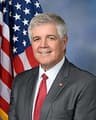
Cliff Bentz (R-OR)
Federal Water Projects Consultation Improvement Act of 2026
A Republican bill with 1 Republican cosponsor · See the cosponsor
Last activity — Subcommittee Hearings Held
In committee
Introduced and handed to a committee in the chamber it started in.
The committee holds it, and most bills are never heard from again. A hearing or a committee vote would be news; silence is the usual outcome, and it kills the bill without anyone voting against it.
Its path through Congress
- Introduced
- In Committee
What this bill would do
The Federal Water Projects Consultation Improvement Act of 2026 aims to ensure meaningful consultation and cooperation between Federal and local entities regarding Federal water projects in Reclamation States. It focuses on increasing the involvement of contractors during the biological assessment and opinion processes required by the Endangered Species Act. The bill mandates that action agencies and the Secretary provide specific information and engagement opportunities to covered entities. This includes transparency regarding water delivery, legal authority, and scientific data. It also requires agencies to communicate schedules and provide opportunities for review and comment on biological opinions.
Yes· 3 of 7
- Scored +5
Would farmers be better off under this?
The bill improves water security transparency for irrigation districts and water users associations vital to agriculture.
- Scored +5
Does this make what the government does easier for the public to see?
The bill mandates specific information sharing and engagement opportunities regarding water delivery and biological opinions.
- Scored +4
Would business owners be better off under this?
The bill provides formal mechanisms for water contractors to protect their economic interests during federal consultations.
The opposite
- Scored -2
Does this better protect air, water and wildlife?
The bill increases the procedural burden on agencies conducting biological assessments and opinions required for species protection.
Who it would affect, and how
Potential Positive Impacts for People
-
Increased Transparency and Communication: Covered entities will have routine opportunities to discuss and submit information during the development of biological assessments (Section 2(a)(1)). This allows for more direct input into the process.
-
Better Information on Water Delivery: If an agency considers actions that would not result in full water delivery, they must inform and engage the contractor regarding the legal authority and scientific data used (Section 2(a)(2)). This helps contractors understand why their water supply might be impacted.
-
Economic and Water Supply Protection: The bill requires agencies to explain why other actions with fewer adverse water supply and economic impacts were not used (Section 2(a)(2) and Section 2(a)(7)). This aims to address potential economic harms more directly.
-
Improved Review Processes: Contractors can receive copies of draft biological opinions and provide comments that must be afforded due consideration (Section 2(a)(5)). This provides a mechanism for local entities to voice concerns before a final decision is made.
-
Clearer Understanding of Mitigation Measures: The bill requires that agencies inform and engage contractors regarding how reasonable and prudent measures relate to avoiding or minimizing the "take" of species (Section 2(a)(8)).
Potential Negative Impacts for People
- No specific negative impacts are explicitly stated within the provided text.
Groups and Interests Ranking
Every group the model scored this bill for, from -10 to +10. Tap or hover a score for the reason it gave.
- Demographic And Interest Groups
- Would farmers be better off under this? — The bill improves water security transparency for irrigation districts and water users associations vital to agriculture. Would business owners be better off under this? — The bill provides formal mechanisms for water contractors to protect their economic interests during federal consultations. Would people in rural areas be better off under this? — The bill provides better engagement and information for local water entities often located in rural Reclamation States.
- Governance And Ideology
- Does this make what the government does easier for the public to see? — The bill mandates specific information sharing and engagement opportunities regarding water delivery and biological opinions. Does this leave more decisions to the states? — The bill enhances the ability of local water entities to engage with and influence federal agencies regarding water projects.
- Economy And Finance
- Does this make it easier to run a small business? — The bill provides water contractors with more opportunities to influence agency decisions regarding water delivery and economic impacts.
- Environment Energy And Infrastructure
- Does this invest in rural communities? — The bill empowers water users associations and irrigation districts in Reclamation States through increased transparency and consultation regarding their water supplies. Does this better protect air, water and wildlife? — The bill increases the procedural burden on agencies conducting biological assessments and opinions required for species protection.
- 4/29/2026
- Subcommittee Hearings Held
- 4/22/2026
- Referred to the Subcommittee on Water, Wildlife and Fisheries.
- 4/14/2026
- Referred to the House Committee on Natural Resources.
- 1 Cosponsor added.
- Introduced in House
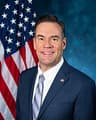 Russ Fulcher
Republican · Idaho