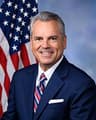
Mark Alford (R-MO)
Strategic Assets Protection Act
A Republican bill with 1 Republican cosponsor · See the cosponsor
Last activity — Referred to the Committee on Financial Services, and in addition to the Committees on Foreign Affairs, and Energy and Commerce, for a period to be subsequently determined by the Speaker, in each case for consideration of such provisions as fall within the jurisdiction of the committee concerned.
In committee
Introduced and handed to a committee in the chamber it started in.
The committee holds it, and most bills are never heard from again. A hearing or a committee vote would be news; silence is the usual outcome, and it kills the bill without anyone voting against it.
Its path through Congress
- Introduced
- In Committee
What this bill would do
This bill, known as the "Strategic Assets Protection Act," directs the Committee on Foreign Investment in the United States to conduct a specific review. The review targets all transactions completed on or after January 1, 2017, involving real estate, businesses, or critical infrastructure near United States nuclear triad facilities. This includes areas near missile facilities, submarine bases, bomber bases, and nuclear research or production sites. The review must assess if these transactions pose a risk to national security. Based on this, the committee may suggest mitigation or presidential action. Finally, the Secretary of the Treasury must submit a report on these findings to specific congressional committees.
Yes
- Scored +4
Does this give the federal government more power?
The bill expands federal oversight through the CFIUS review process regarding strategic assets.
- Scored +3
Does this make what the government does easier for the public to see?
The bill includes a requirement for a report to Congressional committees regarding findings.
The opposite
- Scored -2
Would business owners be better off under this?
The bill may create uncertainty for business owners involved in large-scale real estate or infrastructure transactions near military sites.
Who it would affect, and how
Potential Positive Impacts for People
-
National Security Risk Assessment: The bill requires the Committee on Foreign Investment in the United States to assess if past transactions present a risk to national security (Section 2, subsection a and b). This could benefit the public by identifying potential vulnerabilities in the protection of nuclear triad facilities, such as missile facilities or submarine bases.
-
Actionable Oversight: The review allows for the recommendation of mitigation measures or presidential action under the Defense Production Act of 1950 (Section 2, subsection b). This provides a mechanism to address identified risks to critical infrastructure and assets supporting nuclear command and control.
-
Congressional Accountability: The Secretary of the Treasury is required to submit a report detailing findings and recommended actions to the Committees on Appropriations and the Committees on Armed Services (Section 2, subsection c). This ensures that elected officials are informed about the security of strategic assets.
Potential Negative Impacts for People
- No specific negative impacts are mentioned in the text provided.
Groups and Interests Ranking
Every group the model scored this bill for, from -10 to +10. Tap or hover a score for the reason it gave.
- Governance And Ideology
- Does this give the federal government more power? — The bill expands federal oversight through the CFIUS review process regarding strategic assets. Does this make what the government does easier for the public to see? — The bill includes a requirement for a report to Congressional committees regarding findings.
- Demographic And Interest Groups
- Would business owners be better off under this? — The bill may create uncertainty for business owners involved in large-scale real estate or infrastructure transactions near military sites.
- 8/31/2026
- 1 Cosponsor added.
- 4/14/2026
- Referred to the Committee on Financial Services, and in addition to the Committees on Foreign Affairs, and Energy and Commerce, for a period to be subsequently determined by the Speaker, in each case for consideration of such provisions as fall within the jurisdiction of the committee concerned.
- Introduced in House
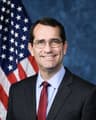 Derek Schmidt
Republican · Kansas