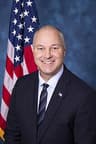
A Republican bill with 3 Democratic cosponsors · See all 5 cosponsors
Last activity — Received in the Senate and Read twice and referred to the Committee on Small Business and Entrepreneurship.
In the other chamber's committee
Passed one chamber and has been handed to a committee in the other.
The committee decides whether it goes any further, and most bills that reach a committee never leave it. A committee that simply does nothing kills a bill without anyone ever voting against it, so no news from here is usually the news.
Its path through Congress
- Introduced
- Passed House 384–25
- In Senate committee
What this bill would do
This bill, known as the "Small Business Procurement and Utilization Reform Act of 2025" or the "SPUR Act," aims to amend the Small Business Act. It seeks to change the requirements for the federal agency scorecard program. Specifically, it adds requirements to track the number of new small business entrants receiving prime contracts. This includes specific groups such as service-disabled veterans, qualified HUBZone concerns, socially and economically disadvantaged individuals, and women-owned businesses. The bill also requires a comparison to the number of prime contracts awarded in the prior fiscal year.
Yes· 3 of 11
- Scored +3
Would business owners be better off under this?
The bill improves the tracking of new business entrants seeking prime contracts.
- Scored +3
Would women be better off under this?
The bill requires tracking of new small business entrants owned and controlled by women.
- Scored +3
Would veterans be better off under this, taking everything together?
The bill requires tracking of new small business entrants owned by service-disabled veterans.
The opposite
No question was scored the opposite.
What Congress actually voted on
One recorded vote has been taken on this bill.
- The House: a fast-track vote, needing two-thirds to pass The House sets aside its normal procedure to move quickly: no amendments, little debate, and a two-thirds bar instead of a simple majority. It is used for measures expected to be uncontroversial, so a bill that fails here failed despite broad expectations that it would not. Passed 384 yes · 25 no
02/24/2025 · Roll call 45 · recorded as “On Motion to Suspend the Rules and Pass”
Who it would affect, and how
Potential Positive Impacts for People
-
Improved Tracking of New Small Business Entrants: The bill adds a requirement to track the number of new small business entrants awarded prime contracts in each North American Industry Classification System code (Section 2, paragraph (1)(A)). This provides data on how many new businesses are successfully entering the federal contracting market.
-
Visibility for Specific Groups: The provision includes tracking for specific groups, including service-disabled veterans, qualified HUBZone small business concerns, socially and economically disadvantaged individuals, and women-owned small business concerns (Section 2, paragraph (1)(A)). This ensures these specific groups are accounted for within the new entrant metrics.
-
Performance Comparison: The act requires a comparison of new small business entrants to the number awarded prime contracts during the prior fiscal year, if available (Section 2, paragraph (1)(A)). This allows for a comparison of trends in new business participation over time.
Potential Negative Impacts for People
- No Additional Funding Authorized: The act explicitly states that no additional amounts are authorized to be appropriated to carry out the Act or its amendments (Section 3). This means there is no new money allocated for the implementation of these new requirements.
Groups and Interests Ranking
Every group the model scored this bill for, from -10 to +10. Tap or hover a score for the reason it gave.
- Demographic And Interest Groups
- Would business owners be better off under this? — The bill improves the tracking of new business entrants seeking prime contracts. Would veterans be better off under this, taking everything together? — The bill requires tracking of new small business entrants owned by service-disabled veterans. Would women be better off under this? — The bill requires tracking of new small business entrants owned and controlled by women. Would Black Americans be better off under this? — The bill tracks the participation of socially and economically disadvantaged individuals in prime contracting. Would Hispanic Americans be better off under this? — The bill tracks the participation of socially and economically disadvantaged individuals in prime contracting. Would households on low incomes be better off under this? — The bill tracks participation of socially and economically disadvantaged individuals in federal contracting.
- Economy And Finance
- Does this make it easier to run a small business? — The bill enhances the visibility and tracking of new small business entrants, including those owned by veterans, women, and disadvantaged individuals. Is this likely to create jobs? — By tracking new small business entrants, the bill provides data to better integrate new businesses into the federal contracting market.
- Social Issues And Justice
- Does this narrow the gap between how men and women are treated? — The bill mandates the tracking of new small business entrants owned and controlled by women. Does this narrow racial gaps in how people are treated? — The bill mandates the tracking of new small business entrants owned by socially and economically disadvantaged individuals.
- Governance And Ideology
- Does this make what the government does easier for the public to see? — The bill increases transparency by requiring federal agencies to report on the entry of new small businesses into prime contracting.
- 2/25/2025
- Received in the Senate and Read twice and referred to the Committee on Small Business and Entrepreneurship.
- 2/24/2025
- Motion to reconsider laid on the table Agreed to without objection.
- Passed/agreed to in House: On motion to suspend the rules and pass the bill Agreed to by the Yeas and Nays: (2/3 required): 384 - 25 (Roll no. 45). (text: CR H740)
- On motion to suspend the rules and pass the bill Agreed to by the Yeas and Nays: (2/3 required): 384 - 25 (Roll no. 45). (text: CR H740)
- Considered as unfinished business. (consideration: CR S749-750)
- At the conclusion of debate, the Yeas and Nays were demanded and ordered. Pursuant to the provisions of clause 8, rule XX, the Chair announced that further proceedings on the motion would be postponed.
- DEBATE - The House proceeded with forty minutes of debate on H.R. 818.
- Considered under suspension of the rules. (consideration: CR H740-742)
- Mr. Williams (TX) moved to suspend the rules and pass the bill.
- 3 Cosponsors added.
- 1/28/2025
- Referred to the House Committee on Small Business.
- 2 Cosponsors added.
- Introduced in House
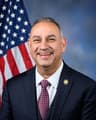 Gilbert Cisneros
Democrat · California
 Marie Perez
Democrat · Washington
 Maggie Goodlander
Democrat · New Hampshire
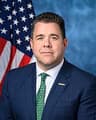 Nick LaLota
Republican · New York
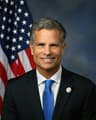 Daniel Meuser
Republican · Pennsylvania