
A Republican bill with 3 Democratic cosponsors · See all 6 cosponsors
Last activity — Referred to the Committee on Energy and Commerce, and in addition to the Committee on Ways and Means, for a period to be subsequently determined by the Speaker, in each case for consideration of such provisions as fall within the jurisdiction of the committee concerned.
In committee
Introduced and handed to a committee in the chamber it started in.
The committee holds it, and most bills are never heard from again. A hearing or a committee vote would be news; silence is the usual outcome, and it kills the bill without anyone voting against it.
Its path through Congress
- Introduced
- In Committee
What this bill would do
This bill, known as the "Facilitating Access to Innovation in Cancer Care Act," seeks to amend the Social Security Act. It focuses on the Medicare hospital outpatient prospective payment system. The goal is to ensure equitable payment and preserve access to cancer treatments. Specifically, it mandates that certain cancer treatments be paid for separately rather than being packaged into a single payment for other services. This applies to treatments meeting specific cost thresholds starting in 2026.
Yes· 3 of 8
- Scored +8
Would people over 65 be better off under this?
Directly benefits Medicare beneficiaries by preserving access to innovative cancer care.
- Scored +8
Would retired people be better off under this?
Directly benefits retirees who rely on Medicare for cancer treatment.
- Scored +7
Does this make health care easier to get in general?
Ensures equitable payment for expensive cancer treatments, preserving Medicare beneficiary access to innovative therapies.
The opposite
No question was scored the opposite.
Who it would affect, and how
Potential Positive Impacts for People
-
Preservation of Access to Treatments: The bill aims to preserve Medicare beneficiary access to cancer treatments under the Medicare hospital outpatient prospective payment system (Section 2).
-
Equitable Payment for Cancer Care: The legislation intends to ensure equitable payment for specified cancer treatments (Section 2).
-
Separate Payment for High-Cost Treatments: For treatments with an estimated mean per day product cost equal to or exceeding a specific threshold, the Secretary will make a separate payment instead of packaging it into a covered outpatient service payment (Section 2(H)(i)). For 2026, this threshold is $350 (Section 2(H)(iii)).
Potential Negative Impacts for People
- Expenditure Limits: The Secretary is required to make adjustments to ensure that the total amount of expenditures under this new subparagraph remains equal to the amount that would have been made without these changes, a process referred to as budget neutrality (Section 2(H)(iv)).
Groups and Interests Ranking
Every group the model scored this bill for, from -10 to +10. Tap or hover a score for the reason it gave.
- Demographic And Interest Groups
- Would retired people be better off under this? — Directly benefits retirees who rely on Medicare for cancer treatment. Would people over 65 be better off under this? — Directly benefits Medicare beneficiaries by preserving access to innovative cancer care. Would high-income households be better off under this? — Ensures continued access to innovative cancer treatments. Would households on low incomes be better off under this? — Helps low-income seniors maintain access to essential cancer treatments via Medicare. Would people in middle age be better off under this? — Improves access to cancer treatments for adults eligible for Medicare. Would middle-income households be better off under this? — Protects access to high-cost cancer treatments for middle-class Medicare patients.
- Healthcare
- Does this make health care easier to get in general? — Ensures equitable payment for expensive cancer treatments, preserving Medicare beneficiary access to innovative therapies.
- Economy And Finance
- Does this make the government pay for what it commits to? — The bill includes a budget neutrality requirement to ensure expenditures remain equal to current levels.
- 7/20/2026
- 1 Cosponsor added.
- 5/19/2026
- 1 Cosponsor added.
- 5/14/2026
- 1 Cosponsor added.
- 4/29/2026
- 1 Cosponsor added.
- 4/14/2026
- 1 Cosponsor added.
- 3/20/2026
- Referred to the Committee on Energy and Commerce, and in addition to the Committee on Ways and Means, for a period to be subsequently determined by the Speaker, in each case for consideration of such provisions as fall within the jurisdiction of the committee concerned.
- 1 Cosponsor added.
- Introduced in House
 Josh Gottheimer
Democrat · New Jersey
 Jennifer Kiggans
Republican · Virginia
 Ted Lieu
Democrat · California
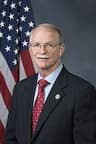 John Rutherford
Republican · Florida
 Darren Soto
Democrat · Florida
 Claudia Tenney
Republican · New York