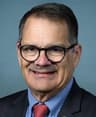
A Republican bill with 9 Republican cosponsors · See all 9 cosponsors
Last activity — Referred to the Committee on Energy and Commerce, and in addition to the Committee on the Judiciary, for a period to be subsequently determined by the Speaker, in each case for consideration of such provisions as fall within the jurisdiction of the committee concerned.
In committee
Introduced and handed to a committee in the chamber it started in.
The committee holds it, and most bills are never heard from again. A hearing or a committee vote would be news; silence is the usual outcome, and it kills the bill without anyone voting against it.
Its path through Congress
- Introduced
- In Committee
What this bill would do
This bill is known as the End Needless Distribution of 7-OH Act or the END 7-OH Act. It was introduced in the House of Representatives on March 19, 2026, by Mr. Bilirakis. The legislation amends the Controlled Substances Act. Its main purpose is to add synthetic 7-hydroxymitragynine to the list of Schedule I controlled substances. However, the bill explicitly states that it does not include 7-hydroxymitragynine naturally contained in the plant known as kratom.
Yes
- Scored +5
Does this give people more protection from unfair business practices?
The regulation of synthetic substances may increase consumer safety and oversight.
- Scored +4
Does this do more about addiction and overdose deaths?
By scheduling synthetic 7-hydroxymitragynine, the bill may assist in curbing the distribution of potent synthetic substances.
- Scored +3
Does this give the federal government more power?
The bill expands federal control by adding a substance to the Controlled Substances Act.
The opposite
- Scored -2
Would business owners be better off under this?
The scheduling may create new regulatory burdens for manufacturers of synthetic substances.
Who it would affect, and how
Potential Positive Impacts for People
- Exemption for Natural Plant Material: Section 2 of the bill specifies that the scheduling restriction does not apply to 7-hydroxymitragynine naturally contained in the plant Mitragyna speciosa Korth, also known as kratom. This is a positive outcome because it protects the natural form of the substance from being classified under Schedule I.
Potential Negative Impacts for People
- Strict Scheduling for Synthetics: Section 2 of the bill places synthetic equivalents of 7-hydroxymitragynine into Schedule I of the Controlled Substances Act. This could be viewed as a negative outcome or burden by individuals or groups who utilize or manufacture these synthetic equivalents, as Schedule I substances are heavily restricted.
Groups and Interests Ranking
Every group the model scored this bill for, from -10 to +10. Tap or hover a score for the reason it gave.
- Economy And Finance
- Does this give people more protection from unfair business practices? — The regulation of synthetic substances may increase consumer safety and oversight.
- Healthcare
- Does this do more about addiction and overdose deaths? — By scheduling synthetic 7-hydroxymitragynine, the bill may assist in curbing the distribution of potent synthetic substances.
- Governance And Ideology
- Does this give the federal government more power? — The bill expands federal control by adding a substance to the Controlled Substances Act.
- Demographic And Interest Groups
- Would business owners be better off under this? — The scheduling may create new regulatory burdens for manufacturers of synthetic substances.
- 9/28/2026
- 1 Cosponsor added.
- 9/16/2026
- 5 Cosponsors added.
- 8/13/2026
- 1 Cosponsor added.
- 3/25/2026
- 1 Cosponsor added.
- 3/20/2026
- 1 Cosponsor added.
- 3/19/2026
- Referred to the Committee on Energy and Commerce, and in addition to the Committee on the Judiciary, for a period to be subsequently determined by the Speaker, in each case for consideration of such provisions as fall within the jurisdiction of the committee concerned.
- Introduced in House
 Stephanie Bice
Republican · Oklahoma
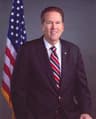 Vern Buchanan
Republican · Florida
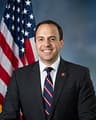 Lance Gooden
Republican · Texas
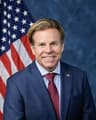 Mike Haridopolos
Republican · Florida
 Mike Kelly
Republican · Pennsylvania
 Darin LaHood
Republican · Illinois
 Laurel Lee
Republican · Florida
 Richard McCormick
Republican · Georgia
 Mark Messmer
Republican · Indiana