
James Baird (R-IN)
Bioindustrial Scale-Up for Supply Chains and Energy Resiliency Act of 2026
A Republican bill with 7 Democratic cosponsors · See all 9 cosponsors
Last activity — Referred to the House Committee on Science, Space, and Technology.
In committee
Introduced and handed to a committee in the chamber it started in.
The committee holds it, and most bills are never heard from again. A hearing or a committee vote would be news; silence is the usual outcome, and it kills the bill without anyone voting against it.
Its path through Congress
- Introduced
- In Committee
What this bill would do
This bill, titled the "Bioindustrial Scale-Up for Supply Chains and Energy Resiliency Act of 2026," aims to amend the Energy Policy Act of 2005. It focuses on supporting the development and commercial application of biotechnology products to increase energy resiliency. The legislation directs the Secretary to establish at least two bioindustrial technology maturation facilities by September 30, 2030. These facilities are intended to help scale up products and processes to move them toward commercial readiness. The bill also seeks to address current gaps in biomanufacturing capacity and infrastructure.
Yes· 3 of 13
- Scored +7
Does this put more money into scientific research?
The bill authorizes $225.5 million for the development and demonstration of biotechnology products.
- Scored +6
Would business owners be better off under this?
The bill provides infrastructure to help biotechnology innovators reach commercial scale.
- Scored +6
Is this likely to grow the economy?
The bill aims to help biotechnology innovators scale products toward commercial readiness and financial return.
The opposite
No question was scored the opposite.
Who it would affect, and how
Potential Positive Impacts for People
-
Workforce Development and Job Creation: The Secretary must consider how covered facilities align with local workforce needs and the potential for job creation (Section 3, subsection (2)(A)(iv)). Additionally, facilities may specifically support training and workforce development in bioindustrial manufacturing (Section 3, subsection (3)(A)(E)).
-
Increased Access to Innovation: The bill promotes "open access" to infrastructure, data, or research resources, meaning they are available without intellectual property barriers and accessible to public and private entities on an equitable basis (Section 3, subsection (3)(1)(8)).
-
Support for Rural Communities: Covered facilities may develop policies to ensure open access with a specific focus on including rural communities (Section 3, subsection (3)(4)(A)).
-
Economic and Industrial Growth: The facilities are designed to help biotechnology innovators prove their products can scale, providing a path to financial return (Section 3, subsection (2)(1)) and addressing the current lack of sufficient biomanufacturing capacity (Section 3, subsection (2)(2)(A)).
Potential Negative Impacts for People
- Loss of Intellectual Property Rights for Federal Employees: Any intellectual property created by a Federal employee at a covered facility during their duties will be considered part of the public domain (Section 3, subsection (3)(7)(A)).
Groups and Interests Ranking
Every group the model scored this bill for, from -10 to +10. Tap or hover a score for the reason it gave.
- Demographic And Interest Groups
- Would business owners be better off under this? — The bill provides infrastructure to help biotechnology innovators reach commercial scale. Would people in rural areas be better off under this? — The bill specifically instructs facilities to include rural communities in their access policies. Would union members be better off under this? — The bill emphasizes alignment with local workforce needs and training. Would households on low incomes be better off under this? — The emphasis on rural community inclusion may benefit low-income rural areas.
- Economy And Finance
- Is this likely to grow the economy? — The bill aims to help biotechnology innovators scale products toward commercial readiness and financial return. Is this likely to create jobs? — The bill directs the Secretary to consider how facilities align with regional workforce needs and the potential for job creation. Does this make it easier to run a small business? — The bill promotes open access to infrastructure and research resources for both public and private entities.
- Environment Energy And Infrastructure
- Does this invest in rural communities? — The bill directs covered facilities to focus on including rural communities in their open access policies. Does this better protect air, water and wildlife? — The bill focuses on using biotechnology and waste streams to increase energy resiliency.
- Education And Technology
- Does this put more money into scientific research? — The bill authorizes $225.5 million for the development and demonstration of biotechnology products.
- Governance And Ideology
- Does this protect people from being watched or searched? — The bill mandates the development of secure, digital infrastructure for data exchange.
- National Security And Foreign Policy
- Does this increase the pay, pensions or support veterans receive? — The bill includes coordination with the Department of Defense to support the industrial base.
- Social Issues And Justice
- Does this make housing cost less? — The bill's focus on bioindustrial scaling could indirectly impact various material supply chains.
- 11/9/2026
- 1 Cosponsor added.
- 10/1/2026
- 1 Cosponsor added.
- 8/3/2026
- 1 Cosponsor added.
- 4/27/2026
- 1 Cosponsor added.
- 4/15/2026
- 1 Cosponsor added.
- 4/6/2026
- 1 Cosponsor added.
- 3/16/2026
- Referred to the House Committee on Science, Space, and Technology.
- 3 Cosponsors added.
- Introduced in House
 Jake Auchincloss
Democrat · Massachusetts
 Stephanie Bice
Republican · Oklahoma
 Donald Davis
Democrat · North Carolina
 Chrissy Houlahan
Democrat · Pennsylvania
 Ro Khanna
Democrat · California
 April McClain Delaney
Democrat · Maryland
 Josh Riley
Democrat · New York
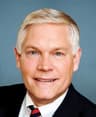 Pete Sessions
Republican · Texas
 Eugene Vindman
Democrat · Virginia