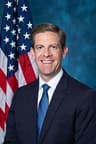
A Democratic bill with 2 Republican cosponsors · See all 3 cosponsors
Last activity — Referred to the House Committee on Foreign Affairs.
In committee
Introduced and handed to a committee in the chamber it started in.
The committee holds it, and most bills are never heard from again. A hearing or a committee vote would be news; silence is the usual outcome, and it kills the bill without anyone voting against it.
Its path through Congress
- Introduced
- In Committee
What this bill would do
This bill, known as the "SUPER BUGS Act of 2026," directs the Secretary of State to create a formal strategy for the Federal Government. This strategy aims to secure support from foreign countries, multilateral organizations, and other entities to help develop and commercialize products meant for pandemics or epidemics. The Secretary must work in consultation with the Secretary of Health and Human Services and other relevant agencies. The strategy must address qualified pandemic or epidemic products, including those targeting antimicrobial resistant pathogens. Once formulated, the strategy must be submitted to the appropriate committees of Congress within 18 months.
Yes· 3 of 11
- Scored +8
Does this make the country readier for the next outbreak?
The bill explicitly mandates a strategy to develop products for pandemic and epidemic threats, including antimicrobial resistance.
- Scored +5
Does this strengthen ties with allied countries?
The bill emphasizes strengthening international collaboration and securing support from multilateral organizations.
- Scored +4
Does this make health care easier to get in general?
The strategy aims to develop and commercialize products to treat and prevent infectious diseases.
The opposite
No question was scored the opposite.
Who it would affect, and how
Potential Positive Impacts for People
-
Enhanced National Security and Stability: The bill finds that infectious diseases pose threats to national security, critical infrastructure, and economic stability; by creating this strategy, the government aims to reduce these risks (Section 2).
-
Improved Global Health Defense: Strengthening international collaboration to develop and deploy products is intended to help prevent, detect, and contain infectious disease threats before they reach United States borders (Section 2).
-
Strengthened Partner Capabilities: The strategy seeks to support efforts that strengthen partner countries' public health capabilities, which contributes to United States homeland security (Section 2, Section 4(a)(2)(D)).
-
Efficient Use of Funds: The strategy is required to identify priority actions so that scarce domestic and international funds are used to develop products that achieve the greatest positive impact on human health (Section 4(a)(2)(H)).
-
Economic and Regulatory Support: The strategy considers ways to work with United States companies and the private sector through partnerships, alternative payment models, and streamlined regulatory processes (Section 4(a)(2)(I)).
Potential Negative Impacts for People
- No specific negative impacts are explicitly detailed in the provided text.
Groups and Interests Ranking
Every group the model scored this bill for, from -10 to +10. Tap or hover a score for the reason it gave.
- Healthcare
- Does this make the country readier for the next outbreak? — The bill explicitly mandates a strategy to develop products for pandemic and epidemic threats, including antimicrobial resistance. Does this make health care easier to get in general? — The strategy aims to develop and commercialize products to treat and prevent infectious diseases.
- National Security And Foreign Policy
- Does this strengthen ties with allied countries? — The bill emphasizes strengthening international collaboration and securing support from multilateral organizations. Does this send more money or help to other countries? — The strategy involves entering into arrangements with foreign countries to strengthen their public health capabilities. Does this increase the pay, pensions or support veterans receive? — The bill notes that infectious diseases can undermine the readiness of the United States Armed Forces abroad.
- Demographic And Interest Groups
- Would business owners be better off under this? — The bill encourages public-private partnerships and engagement with the private sector for product development. Would people in cities be better off under this? — The bill aims to mitigate global health threats that can impact domestic stability and infrastructure.
- Economy And Finance
- Is this likely to create jobs? — The bill seeks to facilitate the development and commercialization of medical products, which involves private sector engagement. Does this make it easier to run a small business? — The bill considers ways to work with the broader private sector to develop medical products.
- Education And Technology
- Does this put more money into scientific research? — The bill focuses on the development and commercialization of new medical products and technologies to combat pathogens.
- Governance And Ideology
- Does this make what the government does easier for the public to see? — The bill requires the strategy to be submitted to appropriate committees of Congress.
- 4/30/2026
- 1 Cosponsor added.
- 3/19/2026
- 1 Cosponsor added.
- 3/9/2026
- Referred to the House Committee on Foreign Affairs.
- 1 Cosponsor added.
- Introduced in House
 Jim Costa
Democrat · California
 Brian Fitzpatrick
Republican · Pennsylvania
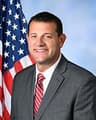 David Valadao
Republican · California