
Warren Davidson (R-OH)
American Lending Fairness Act of 2026
A Republican bill with 4 Democratic cosponsors · See all 7 cosponsors
Last activity — Ordered to be Reported (Amended) by the Yeas and Nays: 31 - 18.
Introduced, nothing more yet
Formally proposed, and not yet handed to a committee.
Nearly every bill is sent to a committee within days. Introduction alone is not a sign of support, of momentum, or of any likelihood of passing — any member may introduce any bill.
Its path through Congress
- Introduced
What this bill would do
This bill is known as the American Lending Fairness Act of 2026. It changes how Federal interest rate rules apply to state-chartered banks and insured credit unions. The bill allows individual States to opt out of certain preemption rules regarding loans. Specifically, a State can adopt a law or certify a voter decision stating it does not want the subsection to apply. This opt-out only applies to loans made by institutions chartered by that specific State. Additionally, the bill repeals an older section of the Depository Institutions Deregulation and Monetary Control Act of 1980.
Yes· 3 of 6
- Scored +5
Does this leave more decisions to the states?
The bill explicitly empowers states to opt out of federal preemption regarding loans made by their own chartered institutions.
- Scored +3
Does this make it easier to run a small business?
By allowing states to opt out of certain preemption rules, it may provide more localized control over lending practices for state-chartered institutions.
- Scored +3
Does this give people more protection from unfair business practices?
States could use this authority to implement interest rate limits or other protections for their residents through their own chartered banks.
The opposite
- Scored -3
Does this give the federal government more power?
This bill reduces federal preemption, thereby decreasing federal control over state-chartered banking regulations.
Who it would affect, and how
Potential Positive Impacts for People
- Section 2(a) and Section 2(b) allow States to adopt a law or certify that voters voted in favor of a provision stating the State does not want the federal interest rate exportation rules to apply to loans made by its own chartered institutions. This gives States a clear mechanism to act if their residents vote to change how loan rules apply to institutions chartered within their borders.
Potential Negative Impacts for People
- Based strictly on the provided text, no specific negative consequences or burdens for individuals or groups of people are mentioned.
Groups and Interests Ranking
Every group the model scored this bill for, from -10 to +10. Tap or hover a score for the reason it gave.
- Economy And Finance
- Does this give people more protection from unfair business practices? — States could use this authority to implement interest rate limits or other protections for their residents through their own chartered banks. Does this make it easier to run a small business? — By allowing states to opt out of certain preemption rules, it may provide more localized control over lending practices for state-chartered institutions.
- Demographic And Interest Groups
- Would business owners be better off under this? — State-chartered banks may see more competitive advantages under local regulations. Would households on low incomes be better off under this? — If states use this power to cap interest rates, it could provide relief to low-income borrowers. Would middle-income households be better off under this? — The impact on the middle class is potentially positive if states implement consumer-friendly lending standards.
- Governance And Ideology
- Does this leave more decisions to the states? — The bill explicitly empowers states to opt out of federal preemption regarding loans made by their own chartered institutions. Does this give the federal government more power? — This bill reduces federal preemption, thereby decreasing federal control over state-chartered banking regulations.
- 9/16/2026
- Committee Consideration and Mark-up Session Held
- Ordered to be Reported (Amended) by the Yeas and Nays: 31 - 18.
- 9/8/2026
- 2 Cosponsors added.
- 7/27/2026
- 1 Cosponsor added.
- 6/8/2026
- 1 Cosponsor added.
- 5/7/2026
- 2 Cosponsors added.
- 3/9/2026
- Referred to the House Committee on Financial Services.
- 1 Cosponsor added.
- Introduced in House
One bill Congress.gov lists as related to this one — companions in the other chamber, earlier versions, and bills this one absorbed or was folded into.
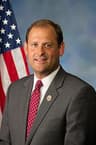 Andy Barr
Republican · Kentucky
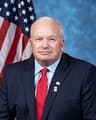 Scott Fitzgerald
Republican · Wisconsin
 Vicente Gonzalez
Democrat · Texas
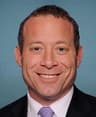 Josh Gottheimer
Democrat · New Jersey
 Steven Horsford
Democrat · Nevada
 Young Kim
Republican · California
 Sarah McBride
Democrat · Delaware