
A Democratic bill with 1 Republican cosponsor · See all 2 cosponsors
Last activity — Referred to the House Committee on Education and Workforce.
In committee
Introduced and handed to a committee in the chamber it started in.
The committee holds it, and most bills are never heard from again. A hearing or a committee vote would be news; silence is the usual outcome, and it kills the bill without anyone voting against it.
Its path through Congress
- Introduced
- In Committee
What this bill would do
The Lowering Student Loans Act seeks to amend the Higher Education Act of 1965. It establishes a fixed 2 percent interest rate for several types of Federal Direct loans, including Stafford and PLUS loans, for disbursements made on or after July 1, 2026. This 2 percent rate also applies to new and existing Federal Direct Consolidation Loans. For certain existing loans, the interest rate will be adjusted to 2 percent starting July 1, 2026. The bill includes provisions for borrower notice and an opt-out process regarding these interest rate adjustments.
Yes· 3 of 11
- Scored +9
Would students be better off under this?
Students benefit directly through significantly reduced interest rates on current and future loans.
- Scored +8
Would people in their twenties and thirties be better off under this?
Young adults seeking higher education will benefit significantly from much lower interest rates.
- Scored +8
Does this make college cost less?
By capping interest rates at 2%, the bill significantly reduces the total cost of higher education for borrowers.
The opposite
- Scored -3
Does this reduce what the federal government owes?
Lowering interest rates on existing federal debt through student loans may increase the federal deficit.
- Scored -3
Does this reduce what the federal government spends?
The reduction in interest income for the government effectively increases the cost of the student loan program.
- Scored -3
Does this make the government pay for what it commits to?
The bill reduces the interest revenue the government receives from its loan portfolio.
Who it would affect, and how
Potential Positive Impacts for People
-
Lower Interest Rates for New Loans: For Federal Direct Stafford, Unsubsidized Stafford, and PLUS loans where the first disbursement is on or after July 1, 2026, the interest rate is set at 2 percent (Section 2(a)(1)(A)(i)).
-
Lower Interest Rates for Existing Loans: For certain existing loans where the interest rate was higher than 2 percent, the rate will be adjusted to 2 percent starting July 1, 2026 (Section 2(a)(1)(A)(ii)).
-
Lower Interest Rates for Consolidation Loans: New Federal Direct Consolidation Loans applied for on or after July 1, 2026, will bear a 2 percent annual interest rate (Section 2(a)(1)(B)(i)).
-
Rate Reduction for Existing Consolidation Loans: Existing Federal Direct Consolidation Loans with interest rates higher than 2 percent will have their rates adjusted to 2 percent starting July 1, 2026 (Section 2(a)(1)(B)(ii)).
-
Consolidation Options for FFEL Borrowers: Borrowers of loans made, insured, or guaranteed under part B may consolidate those loans into a Federal Direct Consolidation Loan (Section 2(a)(1)(B)(iii)).
Potential Negative Impacts for People
-
Loss of Control Over Rate Adjustments: Borrowers with certain existing loans or consolidation loans will have their interest rates adjusted to 2 percent, though they are provided a way to opt out (Section 2(a)(1)(C)).
-
Requirement to Opt Out: To avoid the interest rate adjustment, borrowers must receive a notice and then opt out no later than 90 days after receiving that notice (Section 2(a)(1)(C)(ii)).
Groups and Interests Ranking
Every group the model scored this bill for, from -10 to +10. Tap or hover a score for the reason it gave.
- Demographic And Interest Groups
- Would students be better off under this? — Students benefit directly through significantly reduced interest rates on current and future loans. Would people in their twenties and thirties be better off under this? — Young adults seeking higher education will benefit significantly from much lower interest rates. Would households on low incomes be better off under this? — Lower interest rates reduce the long-term financial burden on low-income students and their families. Would middle-income households be better off under this? — Middle-class borrowers will see reduced total loan repayment amounts due to lower interest. Would people in middle age be better off under this? — Middle-aged parents may benefit from lower interest rates on PLUS loans used for their children.
- Education And Technology
- Does this make college cost less? — By capping interest rates at 2%, the bill significantly reduces the total cost of higher education for borrowers. Does this reduce what student borrowers owe or repay? — The bill provides substantial relief to both new and existing borrowers through lower interest rates.
- Economy And Finance
- Does this give people more protection from unfair business practices? — The bill provides predictable, low-interest fixed rates for student borrowers. Is this likely to grow the economy? — Lower debt service for students may increase their future discretionary spending power. Does this make the government pay for what it commits to? — The bill reduces the interest revenue the government receives from its loan portfolio. Does this reduce what the federal government spends? — The reduction in interest income for the government effectively increases the cost of the student loan program. Does this reduce what the federal government owes? — Lowering interest rates on existing federal debt through student loans may increase the federal deficit.
- Governance And Ideology
- Does this give the federal government more power? — The bill expands the scope of federal student loan terms through centralized interest rate setting.
- Social Issues And Justice
- Is this likely to lift people out of poverty? — Lowering the cost of education debt can help improve the long-term financial stability of low-income households.
- 4/9/2026
- 1 Cosponsor added.
- 3/4/2026
- Referred to the House Committee on Education and Workforce.
- 1 Cosponsor added.
- Introduced in House
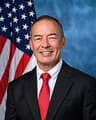 James Moylan
Republican · Guam
 Eleanor Norton
Democrat · District of Columbia