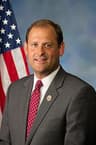
Andy Barr (R-KY)
Afghanistan Vetting and Accountability Act of 2026
A Republican bill with 2 Republican cosponsors · See all 2 cosponsors
Last activity — Referred to the House Committee on the Judiciary.
In committee
Introduced and handed to a committee in the chamber it started in.
The committee holds it, and most bills are never heard from again. A hearing or a committee vote would be news; silence is the usual outcome, and it kills the bill without anyone voting against it.
Its path through Congress
- Introduced
- In Committee
What this bill would do
The Afghanistan Vetting and Accountability Act of 2026 requires the Secretary of Homeland Security to verify the personal and biometric information of all individuals evacuated from Afghanistan between January 20, 2021, and January 20, 2022. This process includes conducting in-person vetting and maintaining a database of the individuals' information and criminal records. The Secretary must submit quarterly reports to Congress regarding the progress of this verification and a final certification once completed. Additionally, the Comptroller General is tasked with conducting audits of the Secretary's compliance. Finally, the bill restricts access to specific federal assistance for those who do not complete the vetting process.
Yes· 3 of 4
- Scored +3
Does this tighten control of the border?
The bill enhances security through mandatory biometric verification and in-person vetting of individuals evacuated from Afghanistan.
- Scored +2
Does this reduce what the federal government spends?
The bill reduces government spending by prohibiting certain individuals from receiving federal means-tested benefits.
- Scored +2
Does this make what the government does easier for the public to see?
The bill requires quarterly reports to Congress regarding the progress of the vetting process.
The opposite· 3 of 5
- Scored -6
Would immigrants be better off under this?
The bill creates barriers to essential federal assistance for specific immigrant populations through mandatory in-person interviews and biometric requirements.
- Scored -5
Would households on low incomes be better off under this?
The bill restricts eligibility for federal means-tested public benefits for Afghan evacuees who have not completed vetting.
- Scored -5
Does this increase support for people who lose their jobs?
The bill restricts access to unemployment compensation for Afghan evacuees who fail to complete the required vetting process.
Who it would affect, and how
Potential Positive Impacts for People
-
Increased oversight and accountability: The Secretary of Homeland Security is required to verify personal and biometric information and conduct in-person vetting for each individual evacuated from Afghanistan (Section 2(b)(1)).
-
Detailed record keeping: The Secretary must develop and maintain a database containing personal information, biometric information, criminal records, and benefit history (Section 2(b)(2)).
-
Congressional oversight: The Secretary is required to submit quarterly reports to Congress detailing the status of the vetting process and the individuals involved (Section 2(c)(1)).
-
Independent investigations: The Comptroller General is required to conduct audits and investigations regarding compliance with the Act (Section 2(e)(1)).
Potential Negative Impacts for People
- Restriction of financial assistance: Individuals evacuated from Afghanistan who do not provide required personal/biometric information or undergo in-person vetting are prohibited from receiving unemployment compensation or any Federal means-tested public benefit (Section 2(f)).
Groups and Interests Ranking
Every group the model scored this bill for, from -10 to +10. Tap or hover a score for the reason it gave.
- Demographic And Interest Groups
- Would immigrants be better off under this? — The bill creates barriers to essential federal assistance for specific immigrant populations through mandatory in-person interviews and biometric requirements. Would households on low incomes be better off under this? — The bill restricts eligibility for federal means-tested public benefits for Afghan evacuees who have not completed vetting. Would Asian Americans be better off under this? — The bill imposes restrictive requirements on a specific group of immigrants that may impact their access to social safety nets.
- Economy And Finance
- Does this reduce what the federal government spends? — The bill reduces government spending by prohibiting certain individuals from receiving federal means-tested benefits. Does this increase support for people who lose their jobs? — The bill restricts access to unemployment compensation for Afghan evacuees who fail to complete the required vetting process.
- Governance And Ideology
- Does this make what the government does easier for the public to see? — The bill requires quarterly reports to Congress regarding the progress of the vetting process.
- Social Issues And Justice
- Does this tighten control of the border? — The bill enhances security through mandatory biometric verification and in-person vetting of individuals evacuated from Afghanistan. Is this likely to lift people out of poverty? — The bill may increase poverty by denying federal means-tested public benefits to individuals who do not complete the vetting process.
- National Security And Foreign Policy
- Does this better protect the country from computer attacks? — The creation of a biometric database may improve security data management.
- 3/3/2026
- Referred to the House Committee on the Judiciary.
- 2 Cosponsors added.
- Introduced in House
One bill Congress.gov lists as related to this one — companions in the other chamber, earlier versions, and bills this one absorbed or was folded into.
 Andy Biggs
Republican · Arizona
 August Pfluger
Republican · Texas