
A Republican bill with 1 Republican cosponsor · See the cosponsor
Last activity — Referred to the House Committee on the Judiciary.
In committee
Introduced and handed to a committee in the chamber it started in.
The committee holds it, and most bills are never heard from again. A hearing or a committee vote would be news; silence is the usual outcome, and it kills the bill without anyone voting against it.
Its path through Congress
- Introduced
- In Committee
What this bill would do
The Securing Our Streets Act of 2026 directs the Attorney General to administer a grant program for States. To be eligible, States must have specific laws or policies regarding repeat offenders, including sentencing requirements and pretrial detention for certain individuals. Funds provided through these grants must be used for building secure correctional facilities, expanding incarceration capacity, and supporting staff. The bill authorizes up to $10,000,000,000 for fiscal years 2027 through 2031.
Yes
- Scored +5
Is this likely to create jobs?
The bill provides funding to train and support correctional staff, which likely leads to increased employment in the correctional sector.
- Scored +4
Does this give the federal government more power?
The bill expands federal influence over state criminal justice policies by using grant eligibility to mandate specific state laws.
- Scored +3
Would union members be better off under this?
The requirement to train and support correctional staff provides opportunities for unionized correctional workers.
The opposite· 3 of 7
- Scored -7
Does this shorten or soften prison sentences?
The bill mandates harsher sentencing requirements, including life imprisonment for certain repeat offenders and a minimum of 85 percent of sentence time served.
- Scored -5
Would Black Americans be better off under this?
Stricter sentencing and expanded incarceration capacity may disproportionately impact Black communities.
- Scored -5
Would Hispanic Americans be better off under this?
Stricter sentencing and expanded incarceration capacity may disproportionately impact Hispanic communities.
Who it would affect, and how
Potential Positive Impacts for People
- Funding for Infrastructure and Staffing: States receiving these grants can use the money to construct secure correctional facilities, expand the capacity to incarcerate those who commit crimes of violence, and train and support correctional staff (Section 2, SEC. 3061(d)).
Potential Negative Impacts for People
- Strict Sentencing and Detention Requirements: To receive funding, States must implement specific policies such as requiring repeat offenders to serve at least 85 percent of their sentence, requiring pretrial detention for individuals charged with crimes of violence who pose a threat to public safety, and requiring life imprisonment for those convicted of three distinct crimes of violence (Section 2, SEC. 3061(c)).
Groups and Interests Ranking
Every group the model scored this bill for, from -10 to +10. Tap or hover a score for the reason it gave.
- Demographic And Interest Groups
- Would union members be better off under this? — The requirement to train and support correctional staff provides opportunities for unionized correctional workers. Would Black Americans be better off under this? — Stricter sentencing and expanded incarceration capacity may disproportionately impact Black communities. Would Hispanic Americans be better off under this? — Stricter sentencing and expanded incarceration capacity may disproportionately impact Hispanic communities. Would white Americans be better off under this? — Stricter sentencing and expanded incarceration capacity may disproportionately impact White communities. Would households on low incomes be better off under this? — Increased incarceration and strict sentencing often disproportionately affect low-income populations.
- Social Issues And Justice
- Does this shorten or soften prison sentences? — The bill mandates harsher sentencing requirements, including life imprisonment for certain repeat offenders and a minimum of 85 percent of sentence time served. Is this likely to lift people out of poverty? — Increased incarceration rates and stricter sentencing can negatively impact family economic stability.
- Governance And Ideology
- Does this give the federal government more power? — The bill expands federal influence over state criminal justice policies by using grant eligibility to mandate specific state laws.
- Economy And Finance
- Is this likely to create jobs? — The bill provides funding to train and support correctional staff, which likely leads to increased employment in the correctional sector. Does this reduce what the federal government spends? — The bill authorizes $10,000,000,000 in new federal grant spending.
- 2/25/2026
- Referred to the House Committee on the Judiciary.
- 1 Cosponsor added.
- Introduced in House
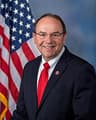 Thomas Tiffany
Republican · Wisconsin