
A Democratic bill with 4 Republican cosponsors · See all 8 cosponsors
Last activity — Referred to the House Committee on the Judiciary.
In committee
Introduced and handed to a committee in the chamber it started in.
The committee holds it, and most bills are never heard from again. A hearing or a committee vote would be news; silence is the usual outcome, and it kills the bill without anyone voting against it.
Its path through Congress
- Introduced
- In Committee
What this bill would do
The Justice for Allie Act aims to amend title 18 of the United States Code. It proposes to prohibit the coercion of protected adults into sending or transmitting intimate visual depictions. A protected adult is defined as an individual 18 years or older who is unable to protect themselves from abuse, neglect, or exploitation due to specific conditions. The bill targets those who use mail or interstate commerce to persuade, induce, entice, or coerce these individuals with the intent to cause harm. Penalties include fines and imprisonment for up to one year for a first offense, or up to two years for subsequent offenses.
Yes· 3 of 5
- Scored +8
Would people with disabilities be better off under this?
The bill provides specific criminal protections for adults with cognitive, developmental, and physical disabilities against sexual exploitation.
- Scored +7
Does this expand the rights of people with disabilities?
The bill provides legal protections against sexual exploitation specifically for individuals with various disabilities.
- Scored +5
Would people over 65 be better off under this?
The bill protects seniors with neurocognitive disorders like Dementia or Alzheimer's from exploitation.
The opposite
No question was scored the opposite.
Who it would affect, and how
Potential Positive Impacts for People
-
Protection of vulnerable individuals: The bill establishes a new offense under section 2245A to protect adults who are unable to protect themselves from abuse, neglect, or exploitation due to conditions like Autism spectrum disorder, intellectual developmental disorders, Cerebral palsy, Down syndrome, major neurocognitive disorders, Dementia, Alzheimer's disease, or Schizophrenia or another psychotic disorder (Section 2, subsection a).
-
Prevention of various forms of harm: The bill defines harm broadly to include physical, psychological, financial, or reputational harm, providing a legal mechanism to address these issues when they stem from the coercion of an intimate visual depiction (Section 2, subsection b, paragraph 2).
Potential Negative Impacts for People
- Criminal penalties for offenders: Individuals found guilty of these actions face fines and potential imprisonment of up to 1 year for a first offense, or up to 2 years for second or subsequent offenses (Section 2, subsection a, paragraph 1 and 2).
Groups and Interests Ranking
Every group the model scored this bill for, from -10 to +10. Tap or hover a score for the reason it gave.
- Demographic And Interest Groups
- Would people with disabilities be better off under this? — The bill provides specific criminal protections for adults with cognitive, developmental, and physical disabilities against sexual exploitation. Would retired people be better off under this? — The bill protects seniors suffering from dementia or Alzheimer's from exploitation. Would people over 65 be better off under this? — The bill protects seniors with neurocognitive disorders like Dementia or Alzheimer's from exploitation.
- Social Issues And Justice
- Does this expand the rights of people with disabilities? — The bill provides legal protections against sexual exploitation specifically for individuals with various disabilities.
- Governance And Ideology
- Does this give the federal government more power? — The bill expands federal criminal jurisdiction by adding a new offense to the United States Code.
- 6/23/2026
- 1 Cosponsor added.
- 5/29/2026
- 1 Cosponsor added.
- 5/19/2026
- 2 Cosponsors added.
- 5/12/2026
- 1 Cosponsor added.
- 5/7/2026
- 2 Cosponsors added.
- 2/25/2026
- Referred to the House Committee on the Judiciary.
- 1 Cosponsor added.
- Introduced in House
 Jack Bergman
Republican · Michigan
 Tom Barrett
Republican · Michigan
 Debbie Dingell
Democrat · Michigan
 Bill Huizenga
Republican · Michigan
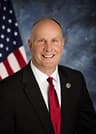 John Moolenaar
Republican · Michigan
 Seth Moulton
Democrat · Massachusetts
 Kristen McDonald Rivet
Democrat · Michigan
 Hillary Scholten
Democrat · Michigan