
Warren Davidson (R-OH)
DPA Modernization Act of 2026
A Republican bill with 2 Democratic cosponsors · See all 4 cosponsors
Last activity — Placed on the Union Calendar, Calendar No. 529.
Cleared committee, waiting for its first floor vote
A committee approved it and it is on the calendar of the chamber it started in.
This is further than most bills get, and still no promise of a vote: the calendar is a queue, and the majority leadership decides what is called. A bill can sit here until the Congress ends.
Its path through Congress
- Introduced
- On Calendar
What this bill would do
The DPA Modernization Act of 2026 seeks to modernize and reauthorize the Defense Production Act of 1950. It updates the authority of the President to include addressing natural disasters and public health emergencies. The bill establishes a Critical Minerals Resilience Initiative to ensure the supply of strategic materials is not dominated by foreign adversaries. Additionally, it creates a National Defense Executive Reserve to improve government preparedness through expert volunteers. The legislation also includes new provisions for loan guarantees, equity investments, and workforce development.
Yes· 3 of 12
- Scored +6
Does this make what the government does easier for the public to see?
Enhances oversight, reporting requirements, public dashboards, and fraud risk management frameworks.
- Scored +5
Is this likely to create jobs?
The bill invests in domestic critical mineral supply chains and workforce training programs, supporting domestic employment.
- Scored +4
Does this make the government pay for what it commits to?
Increases transparency, reporting requirements, and fraud prevention measures for federal spending.
The opposite
No question was scored the opposite.
Who it would affect, and how
Potential Positive Impacts for People
-
Expanded Emergency Response: The President can now use priorities and allocations to address natural disasters and public health emergencies (Section 3).
-
Resource Security: The Critical Minerals Resilience Initiative aims to ensure the mining and processing of critical materials are not controlled by foreign adversaries (Section s 4, subsection (b)(1)).
-
Workforce Development: Federal agencies can use financial assistance to recruit, train, place, or retain workers in defense-critical occupations (Section 4, subsection (j)(2)).
-
Economic Preparedness through Expertise: The National Defense Executive Reserve allows private persons with unique expertise to serve in Federal positions during national defense emergencies (Section 4, Section 208).
-
Job Protections for Volunteers: Individuals serving in the National Defense Executive Reserve are provided with employment and reemployment protections (Section 4, Section 209(g)).
Potential Negative Impacts for People
-
Restrictions on Market Control: The President's power to control the general distribution of materials in the civilian market is limited to a period of 1 year, with a possible 180-day extension (Section 3).
-
Investment Limitations: The Government is prohibited from holding 15 percent or more of the equity shares of an entity through equity investments (Section 4, Section 203(a)(7)).
-
Restrictions on Assistance: Entities in which a "covered individual" (such as the President or a member of the DPA Committee) holds a significant interest are not eligible for assistance (Section 4, Section 209).
-
Information Privacy Protections: The Act includes a specific restriction that the authority to obtain information may not be used to obtain sensitive personally identifiable information (Section 5, Section 305(f)).
Groups and Interests Ranking
Every group the model scored this bill for, from -10 to +10. Tap or hover a score for the reason it gave.
- Economy And Finance
- Is this likely to create jobs? — The bill invests in domestic critical mineral supply chains and workforce training programs, supporting domestic employment. Does this make the government pay for what it commits to? — Increases transparency, reporting requirements, and fraud prevention measures for federal spending. Does this make it easier to run a small business? — Establishes a dashboard and online toolkit to improve small business access to federal contracting opportunities. Is this likely to grow the economy? — Supports domestic industrial base resilience and supply chain security.
- Governance And Ideology
- Does this make what the government does easier for the public to see? — Enhances oversight, reporting requirements, public dashboards, and fraud risk management frameworks. Does this protect people from being watched or searched? — Explicitly prohibits using authorities to gather sensitive personally identifiable information.
- Demographic And Interest Groups
- Would business owners be better off under this? — Provides online toolkits and dashboards that make federal contracting and small business opportunities more accessible. Would union members be better off under this? — Supports workforce training and apprenticeship programs in critical defense occupations.
- Healthcare
- Does this make the country readier for the next outbreak? — Includes provisions focused on securing supply chains for medical materials and enhancing public health emergency response coordination. Does this make health care easier to get in general? — Incorporates public health emergency preparedness and medical supply resilience into emergency authorities.
- National Security And Foreign Policy
- Does this strengthen ties with allied countries? — Collaborates with NATO and major allies on critical minerals resilience and supply chain security.
- Education And Technology
- Does this give people more control over their personal data? — Protects individuals by restricting the use of authorities to obtain sensitive personally identifiable information.
- 4/15/2026
- Reported (Amended) by the Committee on Financial Services. H. Rept. 119-611.
- Placed on the Union Calendar, Calendar No. 529.
- 3/4/2026
- Committee Consideration and Mark-up Session Held
- Ordered to be Reported by the Yeas and Nays: 41 - 0.
- 2/25/2026
- Referred to the House Committee on Financial Services.
- 4 Cosponsors added.
- Introduced in House
3 bills Congress.gov lists as related to this one — companions in the other chamber, earlier versions, and bills this one absorbed or was folded into.
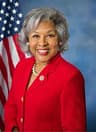 Joyce Beatty
Democrat · Ohio
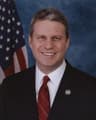 Bill Huizenga
Republican · Michigan
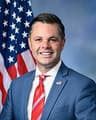 Zachary Nunn
Republican · Iowa
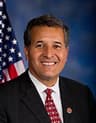 Juan Vargas
Democrat · California